Editor's choiceOpinion
An admiral remembered
YOU KNOW what? You can learn something new every day if you want to, and this week I learned that the plant we know as a bougainvillea does not, as I thought, come from the East Indies island of Bougainville. I was thinking about this plant because they’re in flower currently, and there are some …
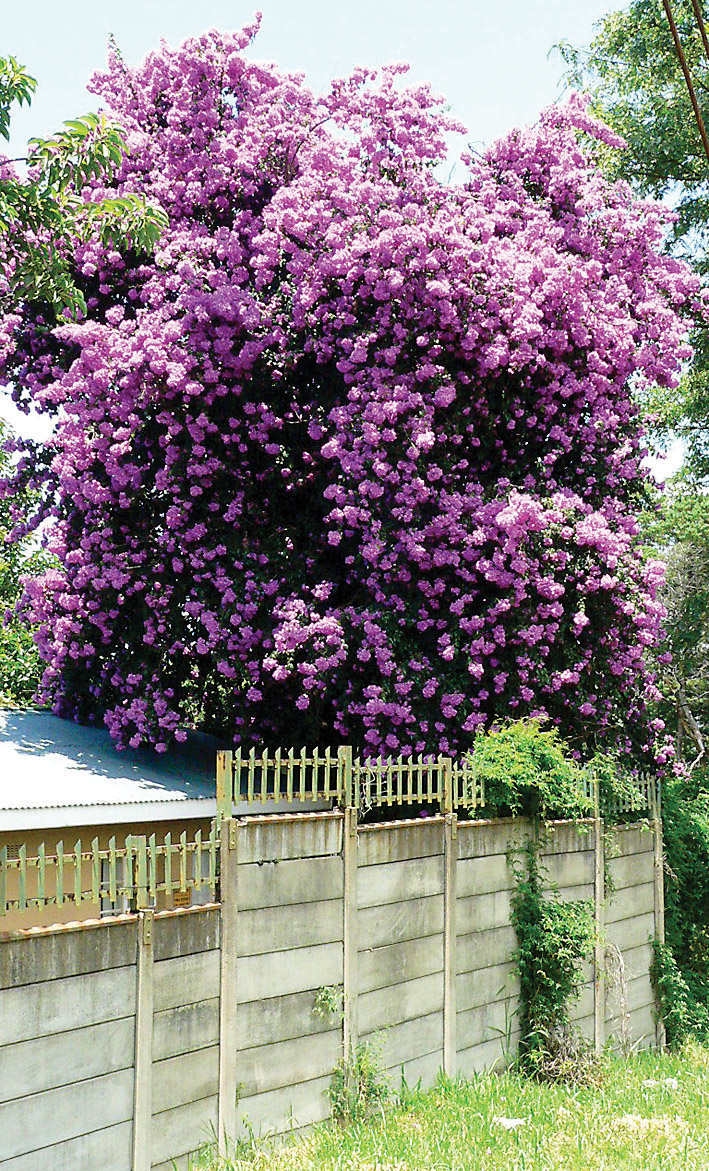

I was thinking about this plant because they’re in flower currently, and there are some magnificent specimens
in Vryheid. One in particular that caught my eye is in East Street, a purple one, on the left as you come down
from the hospital, in the last house’s yard before the railway bridge.
The bougainvillea was probably the first non-vegetable, non-flower, nonreal tree plant that I knew the name of,
the bougainvillea, the hibiscus and the gardenia, and possibly also the poinsettia. We had them in the garden, and as kids we just knew their names. Nothing, of course, can match the smell of a gardenia blossom, and nothing in our gogga ravaged garden could equal the glorious sprays of bougainvillea that burst out each year, and provided an ideal habitat for assorted snakes.
Bougainville, the island, is part of Papua New Guinea and is due east of the main island. I know nothing about
it except that it was occupied by Japan during the Second World War, and only liberated by the Americans and
Australians late in 1945. But being a Pacific island with striking flora and fauna, it just seemed likely, even obvious, even logical, that the bougainvillea bush came from Bougainville. But that’s not so. In the same way that
Bombay duck is actually fish, the bougainvillea plant comes originally from South America.
Why, then, is it called what it’s called?
Well, let me tell you. (Like I said, you can learn something new every day.) Back in the 1700s, there was a
French dude, who like the Englishman Captain Cook at about the same time, combined his career in the navy with
his penchant for exploration. This dude was an admiral in the French navy, and he set off to circumnavigate the world in 1766. His name was Louis Antoine de (wait for it…) Bougainville. I kid you not.
Now, Louis Antoine (“Bogey” to his pals down at the Frog & Bucket) and his crew were the first Frenchmen to sail round the world, and the fourteenth western expedition to do so. Among the people on board ship with Bogey was a botanist, one Philibert Commerçon (“Sherbert” to his mates down at the Rat & Carrot), and it was ol’ Sherbert who presumably came across this exotic looking plant when they stopped in at South America to top up their supplies. The plant is native to Brazil and Peru and south to southern Argentina. So Sherbert, in honour of the admiral,
named the plant Bougainvillea, and I suppose we should be grateful that it wasn’t a botanist on Captain Cook’s
ship, in which case the bougainvillea plant would have been called “Cook”, or “Cookea”, or “Cookerasie”, or
“Cook-a-doodle-do”, I dunno.
What was really interesting about ol’ Bogey’s voyage around the world (or at least I find it interesting), was
that old Philibert Commerçon was interested in a lot more than botany, the dirty old dog. Yeah, he was into a bit of the old “how’s-yer-father”, know what I mean, nudge, nudge, wink, wink, say no more. In those days, women on
ships were considered very bad luck, but ol’ Sherbert, the randy ol’ frog, disguised his mistress as his manservant and smuggled her aboard.
Yep, home comforts on the high seas, yo, ho, ho and a bit of the old slap and tickle down the bilges, giving
a whole new meaning to a crow’s nest up the spanker-mast, or splicing the mainbrace, me hearties, arrgg. Her
name was, and this is another bit of useless information because she is the first woman known to have gone round
the world (as opposed to round the bend), her name was Doris… no hold on, her name was Jeanne Baré.
Anyway, the voyage continued round Cape Horn, and in 1768 in the Pacific Ocean, Bogey bumped into an island which presumably did not appear on his rudimentary chart, so he named it after himself, which may have come as a surprise to the Austronesian peoples on the island who’d been there for, I dunno, 20, 30-thousand years.
Anyway, that’s why a South American plant and a Pacific Ocean island share a name, although in the countries
in which the plant is indigenous, Argentina, Bolivia, Brazil, Paraguay and Uruguay, it is known as Santa Rita,
among other names.
But whether it’s mauve or purple, pink, red, orange, yellow or white, to me it’s the bougainvillia which I have
known virtually all my life. There are, I’ve read, 18 recognised species and over 300 varieties of bougainvillea,
and apparently it’s a plant that tends to mutate naturally and spontaneously. I wonder if this accounts for the colours of the one in Mark Street between the Vryheid Herald and Andre Dreyer Attorneys. It’s basically a white specimen, but some, a very few, of the bracts around the actual flower look like they’ve been randomly dipped in
ink the colour they use on the official stamp pads at the Magistrate Court.
Yep, you can learn something every day.
At Caxton, every story is written by humans. We use AI only to perform quality checks - never to generate the news. Happy reading!