Watermelon bread, a story you should not read!
Why does the internet keep telling us stuff we really do not need to know?
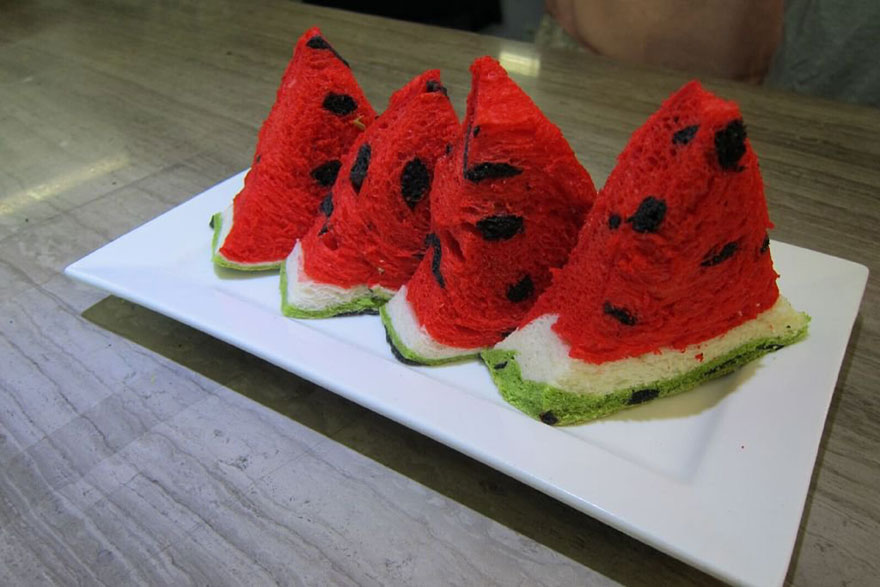
Imagine if you will, scrolling down your Facebook page and you come across a story about ‘Watermelon bread’.
The headline screams out at you “Taiwan Invents Square Watermelon Bread That Is Delicious And Confusing” and below it is this photo…

Guess what? Seconds later, you will be reading the article.
So are you a victim or a smart reader? Well, like with beauty, everything is in the eye of the beholder.
Now don’t get us wrong, the article is a good read, but still, did you really need to know about square watermelon bread and is the story so-called click bait (in layman’s terms, a scam to get you onto another site)?
To be honest, the story is not pure ‘click bait’, but it comes damn close. In this case, it is not ‘click bait’ because there is an actual interesting story on the other end of your click.
But before we go any further, let’s explain what ‘click bait’ is and how it affects your internet reading patterns.
Click bait can fall into two categories:
1) An eye-catching link on a website from another website or posted on Facebook which encourages people to click on the link to read more. It is often paid for by the advertiser (“paid” click bait) or generates income based on the number of clicks (click through’s) it gets.
2) A clearly misleading headline and photo that draws you to a site you never intentionally would have visited. Once there, you realise the story is not what you thought it was.
But as we have stated, this story is not truly click bait. It is, however, a well-crafted story designed to draw you onto a particular site, in this case BoredPanda.com.
Once there, they hope you will follow other stories deeper into the site.
So why would someone desperately hunt down some obscure bread-making fetish just to attract you to their site?
The simple answer is that the more likes they have, the more page views they get and the more click-through’s they have, the more advertisers will pay to be on their site.
What is nice about the Ladysmith Gazette webpage , Facebook page or Twitter feed is that we will never post anything or any link we have not tested ourselves so that you know there is news value in every link.
We follow the links and only after we are certain there is a story worth your valuable time to read will we publish it.
It is why we are Ladysmith’s leading news site and newspaper. We do not need to trick you into reading about watermelon bread.
That said, if you have 10 minutes to waste gaining some useless knowledge you can probably do without, please feel free to click on the watermelon story.
You will never get those 10 minutes back, but I am sure you will be re-sharing the story anyway. It is in our very nature to find the quirky, odd, funny or downright bizarre worth sharing with our friends.
Please, if you did follow the link post on our Facebook page, why? Was it the headline or the photo that caused you to click on the link?
For the latest news, visit our webpage or follow us on Facebook and Twitter.