En Passant: All about ‘The Cabbage Patch’
SOME battlefields take on a life of their own, in fact, maybe all battlefields take on a life of their own, so that when the name of the battle is mentioned there is an immediate association with the field in which, or at which the battle took place. We have a number of these battlefields …
SOME battlefields take on a life of their own, in fact, maybe all battlefields take on a life of their own, so that when the name of the battle is mentioned there is an immediate association with the field in which, or at which the battle took place.
We have a number of these battlefields in South Africa, whose names ring with the ghosts of past conflicts – Loftus Versfeld, Newlands, Ellis Park and our very own King’s Park. Excuse me if I don’t call them by their sponsors’ names, those to me are just temporary monikers, borrowed for a time by the highest bidders, and in history mean nothing.
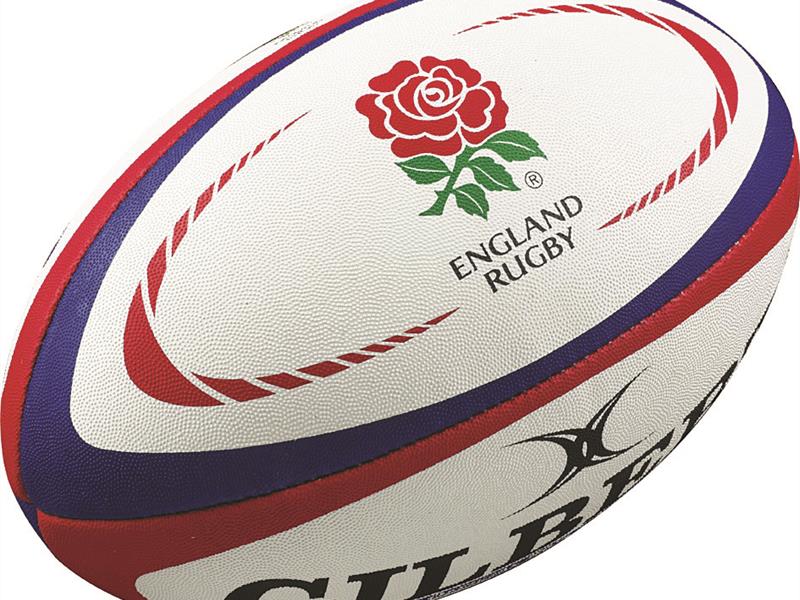
We need to add Twickenham to our common knowledge list of battlefields. Like Loftus and King’s Park it is a noble name, I suppose together with Cardiff Arms and Murrayfield.
Twickenham – it sounds very English, doesn’t it? Twickenham. Like Loftus Versfeld sounds Afrikaans. The odd thing about Loftus is that it should by rights be called Robert, or in full, Robert Versfeld, not Loftus Versfeld.
It’s named after a bloke called Robert Loftus Owen Versfeld who kicked off the Pretoria Rugby Club back in 1888. And if it’s for no other reason, ol’ Robert should be honoured because it was he who introduced grass playing fields to the Transvaal. As I understand it, he imported kikuyu grass from Kenya in 1919/20 for that purpose. Hats off to Bob Versfeld, all you rugby players.
Anyway, back to Twickenham; it’s the name of the stadium because the stadium is in the part of Greater London that was once a separate town called Twickenham. London is like that – it expanded from what was once a small City of London, and as it expanded it swallowed all these surrounding towns. I suppose Jo’burg did the same thing. And Durban. (Stone me, I remember, back in the 1950s, driving at night between Durban and Umhlanga Rocks, and it felt like you were travelling through the bush to a remote dorp.)
Because of the underlying geology, London was one of those cities that expanded outwards as opposed to upwards. Until very recently you couldn’t build a skyscraper there because it would topple over in the clay, and there was, apparently, a height restriction imposed so that developers could not ruin someone else’s view. So, outwards it sprawled.
So the town of Twickenham used to be about 16km south-west of the City of London. It’s an ancient settlement, even by European standards. Called Tuican hom and Tuiccanham, it is first mentioned in a charter dated June, 704AD, which is before even my mother-in-law was born.
It was farmlands, and being located on the River Thames there was fishing going on, boat building and I suppose it was pretty easy to send a boat downriver to trade farm produce with the folks in the City. There’s an island at this point in the river called Eel Pie Island, I kid you not, Eel Pie Island, which apparently now is regarded as an exclusive address by the inhabitants of the 50 houses.
So, once known as Tuican hom and Tuiccanham, the stadium is also referred to sometimes simply as Twickers, and occasionally as “The Cabbage Patch”. Why The Cabbage Patch?
Well, that’s what the ground was being used for, to grow cabbages, when it was bought by the Rugby Football Union back in 1907. There had been a couple of touring rugby sides in England – us and New Zealand – and the matches played elsewhere were sold out. The Union obviously thought, This is stoopid, we should be pocketing the proceeds ourselves, and decided to acquire its own stadium.
The Union bought the 10.25 acres at Twickenham for £5,500 12s 6d (that’s five-and-a-half thousands pounds, 12 shillings and sixpence, and don’t ask me what the sixpence was for), and the rest is history.
Vryheid resident Peter Mattheyse was among the 79,572 people who packed into Twickenham to watch the Rugby World Cup quarter-final between us and the Welsh, on that Saturday, October 17. A Blue Bulls fan, Peter says that in comparison to Loftus, Twickenham is modern, and a lot bigger.
He says the grass is beautiful, “it’s a perfect green”, and that “there’s an aura in Twickenham that’s difficult to describe, like it’s the home of rugby”.
He says the seats are “tiny”, much smaller than Loftus’ seats – there’s no bum room and no leg room, and you can’t wriggle past. “If one oke wants to move then the whole row has to stand up”.
Peter estimates that on the day he was there, there were 30,000 Springbok fans in the stadium, but they were drowned out by the Welsh fans. And in the stadium “they have these okies with a fridge on their backs, and with like an aerial with a Heineken flag on the end, selling beer, but it’s flippen expensive – R105 per beer, more or less”.
His seat at Twickenham was in the corner where Fourie du Preez scored the last minute try that gave the Boks their victory. It was a victory that crowned his visit to the home of rugby, a visit that he says he’ll never forget.
“It was absolutely fantastic, but flippen expensive,” Peter says, which sums it up, I’d say.