Romans vs romance: Forget what you thought you knew about Valentine’s Day
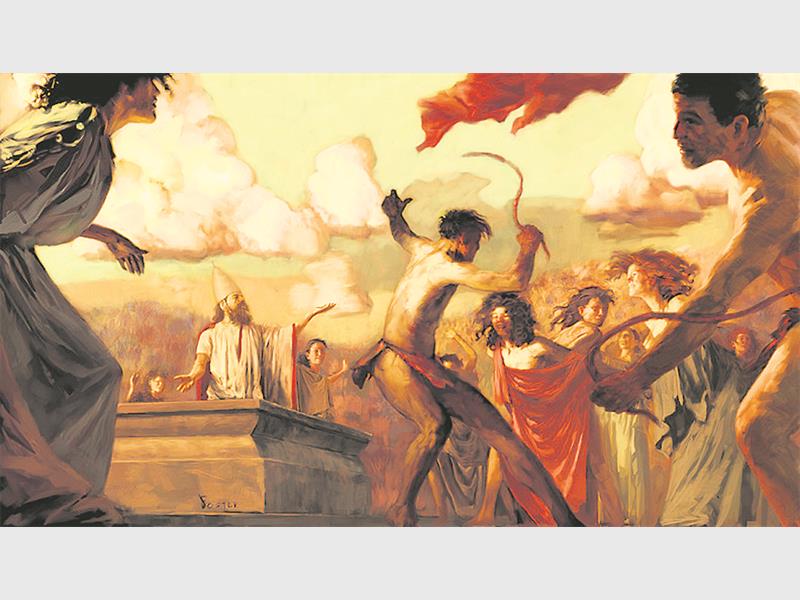
V-Day can be traced back to the days where young maidens looked longingly forward to being whipped with the skins of sacrificial goats in an unashamed Pagan festival, known as ‘Lupercalia’.
WHEN Valentine’s Day comes around on February 14, it’s not difficult for most to fall headlong into the seemingly romantic sentiment that accompanies the annual celebration of what many consider to be love… or something to that effect.
For those who fall into the category of hopeless romantics, the annual festivities that fall on February 14 conjure up the somewhat misguided notion of hearts and flowers and all things soppy and sentimental. In most cases, the dark origins of this centuries-old tradition are far less about romance and much more aligned with Romans instead… Namely naked, partying Pagans with a substantially differing outlook on courtship and matters of the heart, at least as far as Valentine’s Day is concerned.
ALSO READ: Epic Fail: When Valentine’s Day goes awry
AND: Valentine’s day do’s and don’ts for men and women
The roots of this lovers’ holiday can be traced back to the days where young maidens looked longingly forward to being whipped with the skins of sacrificial goats and dogs by naked men in the hope of increasing their fertility in an unashamed Pagan festival, known as ‘Lupercalia’, which was held every year on February 15.

Far from being fearful, the young Roman women of the city welcomed this ancient form of sadomasochism and, rumour has it, ended the day off by placing their names in an urn, to be drawn by one of the animal-hide bearing bachelors, and then paired with each other for the year, until the next festival, unless their union ended in marriage.
So, like a swingers’ party, but with animal skins, right?
“What does this have to do with Valentine’s Day?” one may ask… “Wasn’t Saint Valentine a martyred priest?”
Well, yes… Yes, he was.
According to legend, Saint Valentine, the priest, was put to death by Roman Emperor Claudius II in the third century AD after he defied the ban on marriage for young men by the Emperor, who believed that they made better soldiers if they were single. While Claudius may have been onto something there, Saint Vale decided, in the name of justice and true love, to perform marriages between young lovers in secret. Until his well-meaning defiance got him executed on February 14, AD 270, that is.

In commemoration of the romantic radical’s death, St Valentine’s Day came about, falling conveniently around the time of Lupercalia, only centuries later, and the Pagan celebration just sort of fell into place to be adopted by the Christians of the day who were having none of the S&M shenanigans of the Romans who came before them, but were eager to ‘Christianise’ the Pagan celebration.
And the rest, as they say, is history…