KZN still tops in national indigenous games
KZN is looking forward to next year's Indigenous Games and a possible eight year of success.
The annual South African indigenous games took place in Polokwane from 21 to 29 September 2017. In each province, trials were held on Municipal level followed by District level trials, culminating in provincial trials where the best provincial participants were selected.
Provincial teams under the guidance of the Department of Sport and Recreation were transported from all over South Africa to Polokwane to participate in the Indigenous Games festival.
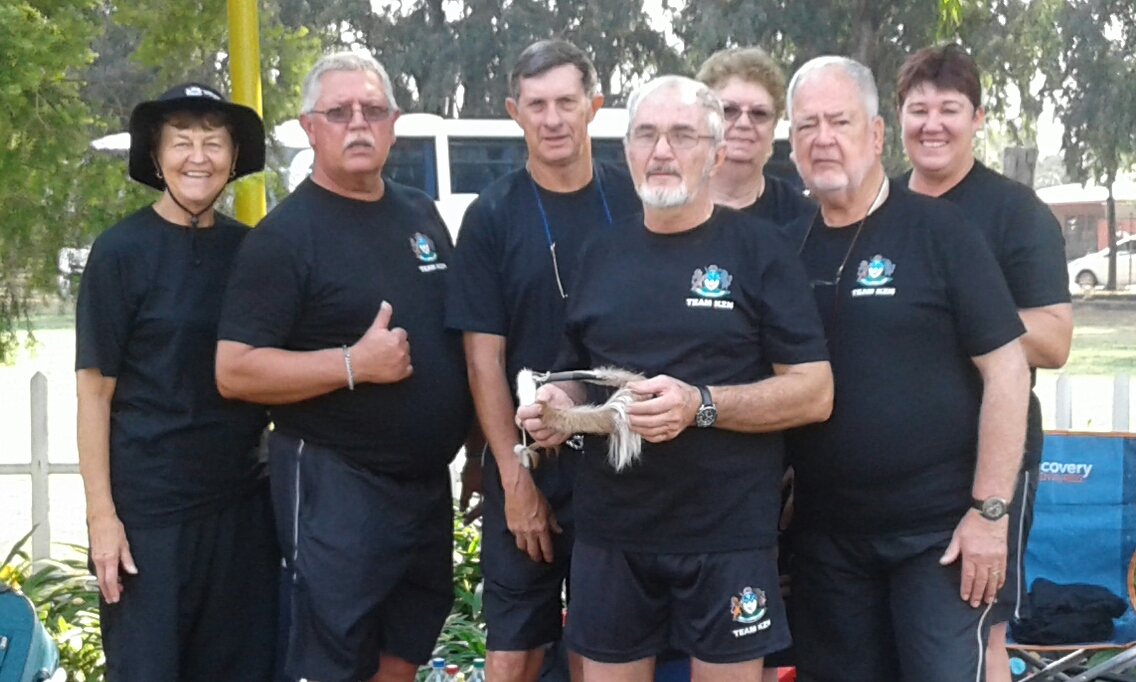
Congratulations to the KZN Indigenous Game team who for the seventh year running was crowned as the top province in the South African Indigenous Games festival, beating Limpopo Province by one point, followed by Western Cape in third position.
Indigenous games are made up of the following games.
Iintonga
This is stick fighting game where two sticks are used, a longer one for attacking and a short one for defending. Age eligibility starts from 5 upwards.
Diketo
Diketo is a game that tests one’s hand to eye coordination. The game is played with 10 small stones or marbles placed in a round shallow (5cm deep) hole and one hand held ghoen or bigger stone. The game can be played by both girls and boys of any age. Only two players can compete at a time.
Dibeke
This is a kick and run ball game pitting two teams of twelve players each against each other. Each team must have an equal representation of male and female players. The team captains have the responsibility of liaising with the match officials. Also required is a scorekeeper from each team to count team and individual player runs during the game. The teams take turns to attack and defend. A player from the defending team is deployed in a central role as a roller of the ball and players from the attacking team take turns as kickers as and when they are called out by the roller to do so.
Morabaraba
This is a board game played with 12 tokens (also known as “cows”) each per player (2 players’ maximum per game). To distinguish between the opposing players, their tokens must be of different shape or of different colour if the shape is the same. Three squares/rectangles are drawn on the board such that there is an outer square containing the middle square which in turn contains the third and smallest square. The squares are then further subdivided into 24 equidistant junctions with straight lines.
Jukskei
This is a target game played by two teams of 4 each with 1 leader each. The players use skeets made of rubber, wood or other composite synthetic materials of between 300mm and 460mm in length, weighing no more than 1.8kg for seniors and 1.1kg for juniors. The aim of the game is to score points by using the skeets to hit a target placed on the field.
Ncuva
A board game played by teams of one to 6 players a side per game. Four rows of four circles/holes each are drawn, dug on flat ground or sculpted onto the board (total of 16 holes. A line is used to divide the board into two rows of 8 holes each. To play, each play uses 32 “cows” (tokens) made of marula fruit kernels or small stones. The stones are placed in sets of 4 in the holes for the game to start.
Kgati
This is a skipping rope game wherein several girls can skip the rope simultaneously or one at a time. The skipping rope should not be longer than 5m. Two players swing the rope while the other players take turns to skip accordingly.
Kho Kho
Two teams of 9 players each compete in this running game. The two teams take turns to be runners or chasers in the game. When the game starts, a player from the running team is nominated as the runner and one from the chasing team is selected to chase.
Drie Stokkies
This is running and jumping game pitting two teams of 5 players a side against each other. The game setting comprises 3 sticks placed on the ground approximately 1m apart. Competing players line up to run and jump over the sticks, stepping only once between the sticks.
KZN is looking forward to next year’s Indigenous Games and a possible eight year of success.