South Africa’s top 5 national parks
The most significant find at Mapungubwe was a gold rhinoceros and gold bowl dating back to around 1200 AD
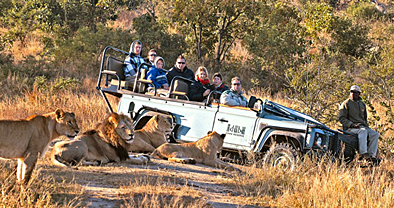
South Africa boasts a huge collection of wildlife regions and game parks, both public and private – encompassing every possible landscape from deserts to forests, mountains to coasts, teeming with wildlife species, including Africa’s Big 5: Leopard, Lion, Buffalo, Elephant and Rhinoceros.

1. Kruger Park
(Mpumalanga and Limpopo Provinces)
The world renowned Kruger Park offers one of the best wildlife experiences in Africa. Established in 1898 to protect the wildlife of the South African Lowveld, this national park of nearly 2 million hectares is beyond compare in the diversity of its life forms and is a world leader in advanced environmental management techniques.
The southern portion of Kruger Park (in Mpumalanga) is more lush and wooded than the drier central and northern regions, and is where most of the camps are situated, as the largest concentrations of game occur there.That Section of the park is accessed by the southern gates, namely: Malelane, Crocodile Bridge, Numbi, Phabeni, and Paul Kruger.
This major international tourist draw card offers a wilderness experience which ranks with the best in Africa.The sight of elephant, lion, leopard, rhino and buffalo is always a thrill, especially at close range on a conducted wilderness trail.

2. Kgalagadi Transfrontier Park
(Northern Cape)
The Kgalagadi Transfrontier Park is situated approximately 250 km from Upington in the far Northern Cape and 904 km from Johannesburg. Transfrontier parks, border parks or transboundary conservation areas are protected areas that stand international boundaries.
The Kgalagadi Transfrontier Park is such a protected area in the southern Kalahari Desert. The absence of man-made barriers (except to the west and south of the Park) has provided a conservation area large enough to maintain examples of two ecological processes that were once widespread in the savannahs and grasslands of Africa.

3. Pilanesberg Game Reserve
(North West Province)
The Pilanesberg National Park, which covers about 55 000 hectares, is the fourth largest in southern Africa. This malaria-free park is perched on the eroded vestiges of an alkaline volcanic crater – one of only three such craters in the world.
Pilanesberg exists within the transition zone between the dry Kalahari and wetter Lowveld vegetation, commonly referred to as “Bushveld”. Unlike any other large park, unique overlaps of mammals, birds and vegetation occur because of this transition zone.

4. Sabi Sands Game Reserve
(Mpumalanga)
The Sabi Sands Game Reserve is undoubtedly the most exclusive private game reserve in South Africa. The 65,000-hectare Sabi Sands Game Reserve is located on the south-western corner of the Kruger National Park.
There are no restricting fences between the Kruger Park and Sabi Sands and the wildlife roams freely between the two game reserves. Some of the best and most exclusive private game lodges in the country are in the Sabi Sands Game Reserve and the chances of seeing the Big 5 animals (lion, leopard, buffalo, elephant and rhino) are excellent.

5. Mapungubwe National Park
(Limpopo)
World Heritage Site/ Mapungubwe National Park: The great ruins at Mapungubwe, in the Limpopo River Valley, show remains of the first and greatest ever South African kingdom to have flourished. Mapungubwe shows remains of human occupation in and around 850 AD (two and a half centuries before Great Zimbabwe).
The most significant find at Mapungubwe was a gold rhinoceros and gold bowl dating back to around 1200 AD. The artefacts at Mapungubwe illustrate a flourishing trade and advanced social systems of African kingdoms in the 13th century.
Located at the meeting of the mighty Shashi and Limpopo Rivers, this forcast transfrontier park embracing South Africa, Botswana and Zimbabwe gives tangible proof by way of the rich fossil deposits, Bushman rock art and gold artefacts of ancient civilisations that once flourished there. The giant baobab trees, riverine forests and associated flood plains provide an intriguing mix of habitat for a tremendous diversity of creatures.