
SANBS calls on South Africans to donate blood this Easter
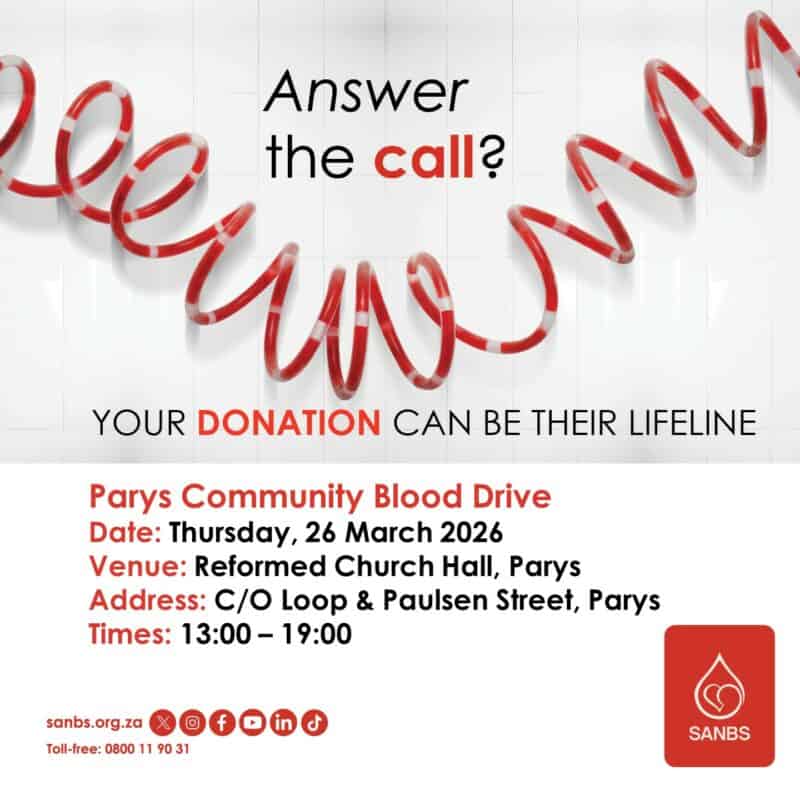
Remember that you can also donate blood today at the mobile clinic in Parys at the Rerformed Church Hall.
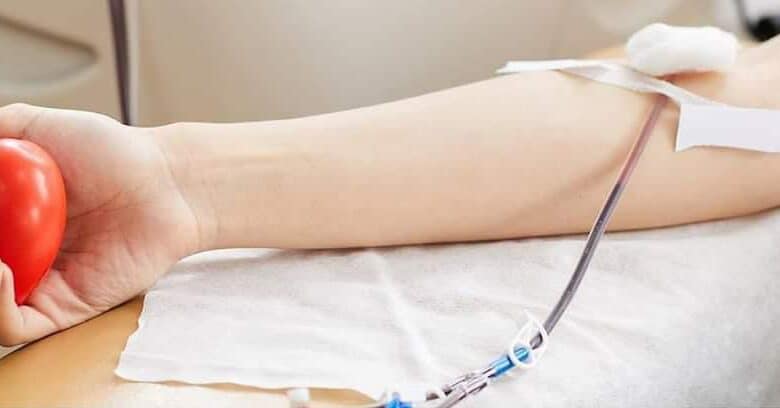
In hospitals across South Africa, there are patients lying in hospital beds whose recovery depends on something many of us can give in just 30 minutes – blood.
As the Easter holidays approach, the South African National Blood Service (SANBS) is urging South Africans to Answer the Call by donating blood on Saturday, 28 March, with a national goal of collecting 6 000 units of blood in a single day.
While many people will be travelling or spending time with loved ones over the long weekend, hospitals continue to treat trauma patients, perform surgeries, and support individuals undergoing cancer treatment and managing chronic illnesses all of which rely on a steady blood supply.
Behind every blood donation is a real life waiting to be saved
For Lezhanne Hartwell, blood donors became the lifeline that helped save her young daughter’s life. Her 18-month-old baby girl was diagnosed with stage 4 Neuroblastoma in October 2020 and required a blood transfusion shortly after.
“I would like to thank all blood donors because of your generosity; you have contributed to saving our little girl’s life,” says Hartwell.
Her daughter received a 200ml blood transfusion at Donald Gordon Hospital, and the experience profoundly changed Hartwell’s perspective on blood donation. Despite being afraid of needles, she has since committed to donating blood regularly after realising how vital it can be for families facing medical emergencies.
Each unit can save up to three lives
Each unit of blood donated can save up to three lives, yet public holidays often place pressure on blood stocks as fewer donors visit collection sites.
SANBS is therefore encouraging both regular donors and first-time donors to take time on 28 March to help ensure that hospitals have the blood they need throughout the Easter period.
Answering the call
Young donors like Sibongeleni Hlongwane, a 23-year-old from Pietermaritzburg, are already answering that call.
Hlongwane began donating blood at the age of 17 while still in school and continues to donate as a way of giving back to society.
“Donating blood is a meaningful way to help others,” he says. “I encourage more young people to get involved and participate in community blood drives.”
Give a gift that lasts this Easter
“Easter is a time associated with giving and renewal,” says Monique Schreiner, Senior Manager: Donor Relations at SANBS. “By donating blood, South Africans can give a gift that lasts far beyond the holiday, the gift of life.”
The donation process takes about 30 minutes, but the impact can last a lifetime.
To participate, South Africans are encouraged to visit their nearest SANBS donor centre or mobile clinic on 28 March.
To find your nearest donor centre, call 0800 11 90 31 or visit www.sanbs.org.za.
This Easter, while baskets may be filled with chocolate, SANBS reminds South Africans that there is another gift that can mean even more.
Parysenaars can also donate today, Thursday March 26
Your donation can be someone’s lifeline.
ABOUT SANBS
The South African National Blood Service (SANBS) is an independent non-profit organisation and a leader in blood transfusion. SANBS operates in eight of the nine provinces in South Africa (except for the Western Cape, which the Western Cape Blood Service services) and provides crucial support to countries in the SADC region.
The organisation prides itself on being the lifeblood of South Africa’s healthcare system, providing over one million world-class blood products. This pedigree comes from world-class testing and collection protocols, ensuring that the transfused blood is always of the highest quality. SANBS operates a vast network of donor centres, including more than 70 fixed centres and over 100 mobile collection sites daily.
SANBS aims to collect 3,500 units of blood daily to ensure a safe and sufficient supply for South Africa’s healthcare system. Regular donations are critical because a unit of blood only lasts 42 days. We encourage donors to commit to giving blood frequently, ensuring a continuous supply for those in need.