The economics of pollution: Why littering holds Parys back
We can continue in a cycle of waste and repetition or we can choose progress.
Every project has a budget
At the Parys Wetland Park, that budget is not abstract. It translates directly into jobs, time, and visible progress in the community. A significant portion of the funding is allocated to labour — local people employed to improve, restore and develop this shared space.
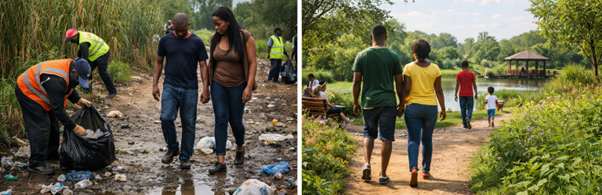
But there is a simple truth we need to face: When we have to pick up litter, we redirect that labour away from progress and we waste our funds.
Instead of building paths, clearing invasive plants, improving safety, and creating a space the community can enjoy, workers are forced to spend their time picking up rubbish — the same rubbish, over and over again.
This is not development
It becomes an endless cycle of repetition. The budget is spent, but no lasting value is created. No forward movement is achieved. In economic terms, littering destroys value.
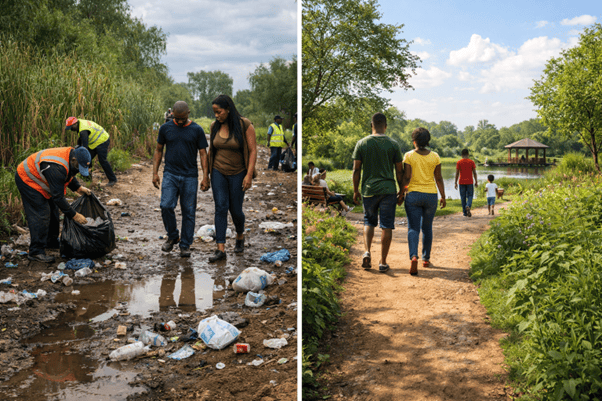
Photo: Supplied
Now consider the alternative
If the environment is respected, that same budget and labour can be used to build. Paths can be laid. Public spaces can be improved. The Wetland Park can grow into a place of pride, recreation, and opportunity for Parys.
This is how communities move forward — not by cleaning up the same mess repeatedly, but by steadily building something better.
Littering is often seen as a small act, but it is not. It has real economic consequences. It wastes limited resources, reduces the impact of public and private investment, and delays meaningful progress.
A clean environment allows every rand to work harder — to create value, to improve quality of life, and to support long-term development. The choice is ours.
Stop littering. Everything goes somewhere!
Let’s allow the work — and our town — to move forward.