Parys: Where heritage, hospitality and the Vaal River meet
Tourism and the river remain the heartbeat of Parys
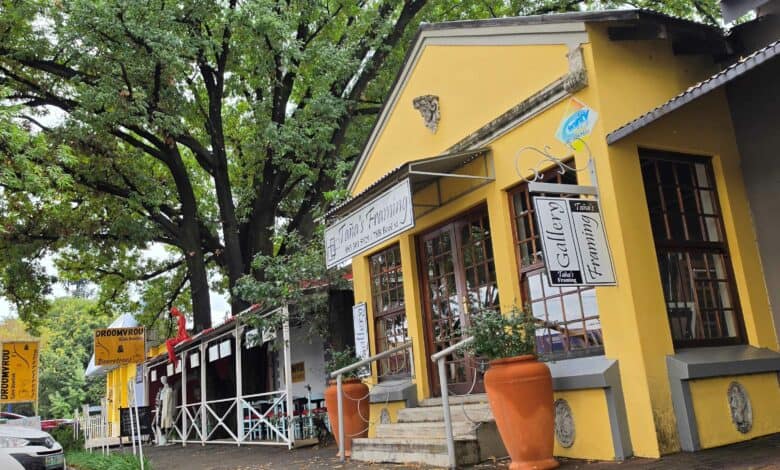
There is something unique about this town on the banks of the Vaal River. For anglers, it’s a paradise, for artists an inspiration, for adventurers a challenge, and for food lovers a delight. Whether you’re passing by or spending a few days, Parys will embrace you with its beauty and hospitality. Over the years Parys changed from a small farming community with activities mostly centered around the church, to a vibrant and popular tourism destination, mostly because of its central location. Today, the town is known for its art, antiques and collectables, the many colourful shops in the main street of Parys, and a variety of adventure activities it has to offer.
The story begins
In the 1870s, when there were few towns in the northern Free State, people travelled long distances to attend communion services. In 1873, a decision was made to establish a new congregation north of Kroonstad, between the Renoster and Vaal rivers.
The choice lay between the farm Vischgat, where Vredefort would later arise, and the farm Klipspruit, where Parys was eventually established in 1876.
Klipspruit belonged to the Van Coller brothers (after whom a street in Parys was later named), as well as the widow W.J.I. Davel, and their brother-in-law, Willem Davel.
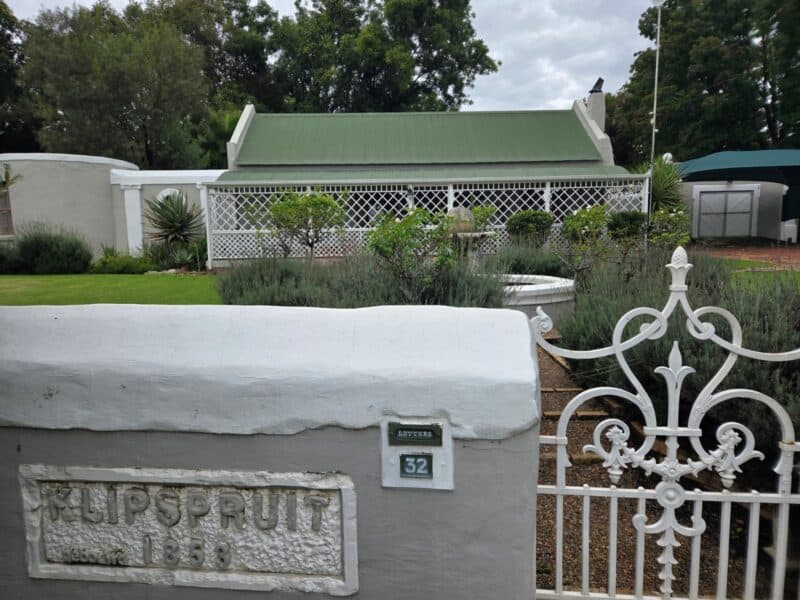
The house in Oranje Street where the Van Coller brothers once lived, is one of the oldest houses in town. Photo: Supplied
First plots
The owners of Klipspruit donated land to the church, which was surveyed in 1876 and sold at £25 per plot. At that stage, however, Parys had not yet been officially recognised as a town. The first attempt to gain recognition came in 1880. By then, 300 plots had already been sold, and residents had built a church at their own expense.
A commission was appointed to investigate the establishment of the towns of Vredefort and Parys. Opinions were divided, and after a long dispute, the farm Klipspruit was finally proclaimed a town under the name Parys.
The name Parys
In 1875, the settlement was still known as Klipdrif/Klipspruit, but it is generally accepted that it ultimately derived its name from the German surveyor Schilbach, to whom the beautiful town on the banks of the Vaal River resembled the French capital on the Seine.
Walking in the main street of Parys, there is quite a lot that will remind you of the French city—from the French colours to the Eiffel Tower.
The name Parys was first officially used in a property transaction in 1882.
The Parys Town Council was established in 1883, and in 1887 it was replaced by a municipality.
Development of Parys
Initially, there was little development. Roads were almost impassable, and the country was struggling through an economic depression. The discovery of gold on the Witwatersrand in 1886 brought a turning point.
Travellers passing through brought income, and suddenly there was a market for local products.
The municipality also began to see potential in marketing the town as a holiday destination. However, plots were sold rapidly and streets laid out with little planning.
Then the Anglo-Boer War broke out, hampering development. Parys truly began to grow after the construction of a railway line, the development of waterworks in the Vaal River, and the building of a bridge across the river, linking the Free State to the Transvaal, which opened up significant trade opportunities.
The Parys area was rich in minerals, and there were few farms where prospecting did not take place. Coal was found, among other resources, near Wolwehoek, not far from Parys.
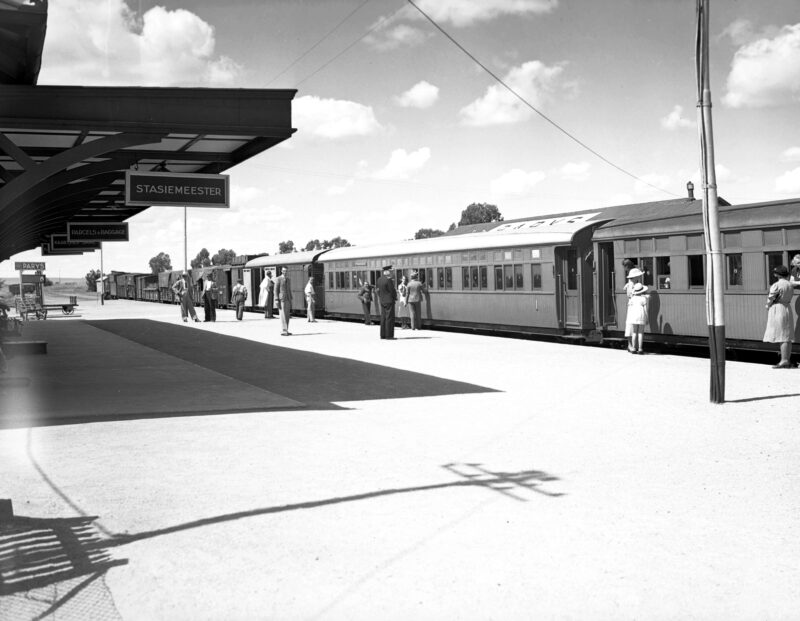
After the war, property values rose, and the town saw the establishment of its first hotels. Shops were built, and before long the town also boasted a soda water, basket, jam, and fruit-preserving factory, with other factories such as Arwa and National Bolts that followed.
Agriculture was a major industry, along with tobacco farming and the large-scale cultivation of fruit and vegetables. The town became known for its large and exceptionally delicious fruit, especially peaches, apricots, and quinces, mostly because of the availability of irrigation water. Farmers sold their fresh produce at a market in town every week
Parys became a bustling holiday destination with the well-known Mimosa Gardens. Train and bus tours were widely advertised.
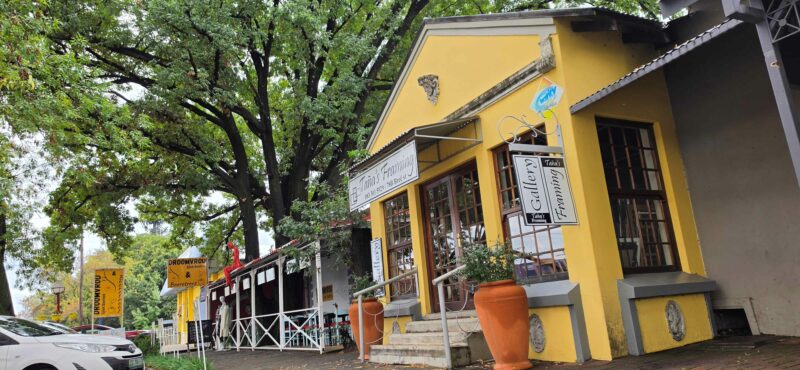
In recent years, shopping centres were developed, and old buildings were transformed, contributing to the unique character of the town. Yet, tourism and the river remain the heartbeat of Parys, welcoming visitors to this beautiful Free State town.