
Are SA malls safe? Apparently not …
More needs to be done to protect shoppers and tenants alike – study.
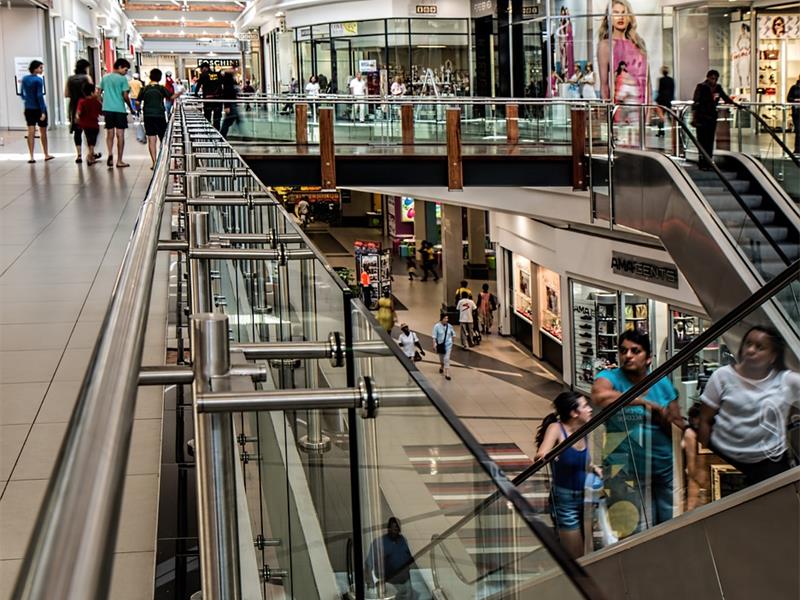
Malls and shopping centres are supposed to be places of safety more especially because they are frequented by families – but this doesn’t seem to be the case.
“Unfortunately, now that these amenities are targeted by criminals, security must be beefed up to secure the safety of both shoppers and tenants,” said Lebogang Mokubela, speaking at the recent South African Council of Shopping Centres’ Annual Research Conference.

Mokubela is also the Lemok Group founder and Chief Executive Officer and emphasised that criminals have no boundaries. He added they have become aggressive, are armed with an array of weapons, and are unafraid to use excessive force.
“Due to the recent spike in armed robberies at shopping centres, shoppers are becoming increasingly reluctant to visit places such as these.”
He said that the study indicated said due to the practice of displaying goods openly to attract consumers, shopping centres and retail stores suffer from a high incidence of theft and other crimes, both violent or non-violent, not only from customers, but also from the retail staff.
Mokubela further asked that the following be addressed when resolving the safety of malls in South Africa:
• Are armed guards a good idea?
On the surface, arming security guards with guns seems like the immediate answer. But is it really? McDermott (2008: 20) states that security guards should not have weapons and believes that having armed security guards would simply increase the danger to the retail staff and customers, as crime patterns show that the size and weaponry of armed gangs just escalates in proportion to your level of armed security.
Mokubela agrees, although there are certain instances where shopping centres have to adopt the services of armed guards.
“Take Groblersdal for instance. Many businesses in the area employ the services of armed guards due to the fact that Groblersdal is known as a ‘dangerous’ region. Even shopping centres have armed guards. Armed guards are a contentious topic indeed, but shopper and tenant safety are of utmost importance,” he said.
• What can be done?
Mokubela said each centre is unique in terms of design, location, offerings and market.
“In order to productively enhance safety for shoppers and tenants, one needs to ‘think like a criminal’. Criminals are often smarter than they are perceived. We see mall robberies as brazen, criminals see opportunities. The opportunistic nature of such crimes revolves around accessibility, visibility, entry points, exit points and timing. Stores closer to entry and exit points as well as tenants in poor visibility areas in centres are often more vulnerable.”
Makubela also mentioned the following points for shopping centre managers to consider:
• Share information and create partnerships
“Partnerships can be created with the police, shopping centre management, retail outlet managers, customers and communities, businesses, research institutions and organisations that assist the retail industry, such as the Consumer Goods Council of South Africa (CGCSA) and Business Against Crime South Africa (BACSA).”
• Emergency plans
“Mall managers need to develop and maintain emergency plans that inform tenants and staff what to do in times of crisis. Tenants themselves need to develop their own individual emergency plans so that staff know what to do as well. These specific plans need to be appropriately and noticeably displayed for further and future reference by the specific staff or groups.
“Further security policies and procedures have to be regularly reviewed and tested in order to maintain the highest possible standards. When considering a procedure for an incident such as an armed robbery, one must take into account the realities of an armed robbery. An armed robbery is a traumatic and emotional event which, in many cases, results in totally unpredictable behaviour.
“The likelihood of emotional and physical injury is high and one must ensure that any proactive action undertaken is designed to minimise the risk of injuries. The preservation of life and the prevention of injury are supreme and no amount of money supports the taking of risks that might lead to serious injury or even death.”
• Education and awareness programmes
“Education and awareness programmes are imperative in reference to armed robberies at shopping centres. All parties involved, from top management filtering right down to the customer in the retail experience at shopping centres, need to be educated and made aware of the ‘good, the bad and the ugly’.”
• Customer safety information
“Customers can have brochures and leaflets handed to them. The information to customers should highlight the measures they need to adhere to in order to protect themselves. Measures such as refraining from carrying large amounts of cash, refraining from wearing expensive jewellery or making it visible while shopping, changing routes within centres as criminals thrive on patterns and may notice routines etc., …
“Shoppers also need to be aware of the measures undertaken by centre management in order to increase their safety. The purpose of brochures on safety being distributed to shoppers is not to create a sense of paranoia but to increase vigilance and overall safety for all.”
• Trauma counselling and onsite first aid representative
“In the event of an incident, trauma counselling, and in some cases first aid, needs to be administered to those affected. Victims and witnesses of armed robberies at shopping centres often suffer considerable trauma from their experience.
“Trauma counselling and first aid is extremely important and recommended in order to prevent the debilitating effects and the long-lasting impact an incident such as an armed robbery at a shopping centre can have on the victims and witnesses. The shopping centre manager and the retail outlet manager should make provision for trauma counselling.”
• Anonymous crime reporting facilities
“Facilities for the reporting of crime, tip-offs and other criminal activity in centres should be created. Avenues should be made available for the reporting of critical information to both retail employees and customers. Interventions such as an anonymous hotline, secure online facilities, text lines and response boxes can be considered. The anonymous avenues available should be advertised widely, as most individuals do not want to be identified or have any connection with providing information, due to possible negative consequences.”
• Adequate training for security guards
“Security guards need to be adequately trained to handle various situations in the shopping centre. Shopping centre managers need to check the efficiency or training levels of the contracted security company and insist on basic security aids such as occurrence books, communications systems and equipment.
“The first aspect that needs to be addressed is that of the screening and vetting systems that management uses when employing security guards. These systems need to be improved upon, allowing for the employment of security guards that can be trusted, that have excellent work ethics and that are professional.
“Finger print security systems can also be used to achieve this. Once employed by a security company, security guards should be trained according to the security needs and changes that arise. Training and retraining with refresher courses are crucial in the security industry because of the ever-changing nature of crime and criminals. The investment made into training of security guards will yield benefits and help with staff morale and motivation. Further, security guards deployed at shopping centres need to be trained on the specifics of guarding a shopping centre.”
Mokubela concluded by adding that shopping centres need to learn from their own past events as well as those experienced by other centres.
Do you perhaps have more information pertaining to this story? Email us at randfonteinherald@caxton.co.za (please remember to include your contact details in the email) or phone us on 011 693 3671.
For free daily local news on the West Rand, also visit our sister newspaper websites
Remember to visit our Facebook, Twitter and Instagram pages to let your voice be heard!