The metro cannot pay workers who work overtime
According to service delivery workers the Tshwane metro is 'bankrupt' because they cannot pay them for overtime.
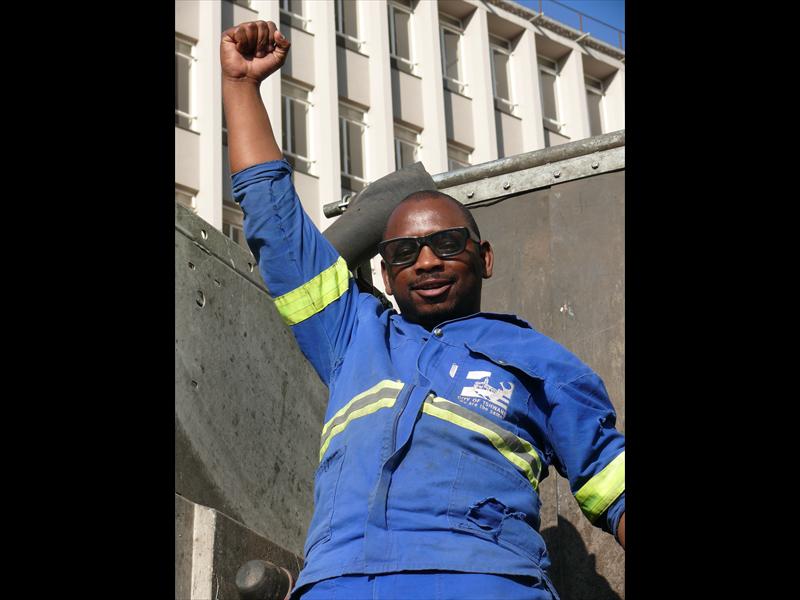
With no money in the kitty to pay Tshwane metro workers of the electricity and water departments for overtime, the workers of these departments now refuse to work any further overtime.
”By not paying the workers what is due to them, the metro is holding Pretoria residents ransom,” a very disgusted Ben Chapman, ward councillor for Murrayfield, said. He said the suburb had been plagued by power failures since the Easter weekend.
A reliable informant told Rekord that more than 10 000 workers of the two departments have not yet received their overtime pay for May, despite repeated assurances by the metro that the back-pay earnings will be paid into their accounts.
”Our trade unions, SAMWU and EMATU, held a meeting with the top brass of the metro about this. The decision was that none of the workers will work more than 40 hours normal overtime in a month. Most workers average about 80 hours overtime a month. Many of them even work 150 hours overtime. As to workers specializing in high voltage electrical work, the decision was that if something went wrong it would not be attended to until the full amount of overtime had been paid to the workers,” the informant told Rekord.
Chapman said ”The same thing happened during the Easter weekend when large parts of Murrayfield was left without electricity. Homeowners phoned the electricity department and me, as their ward councillor, to complain about the electric power breakage then.’’
”We were told there were no standby teams to fix the problem. I also sent a sms to two other people who were in charge of the electricity in this region and I also spoke to a lady. She told me the problem was caused by the metro not paying the electricity workers their overtime and they then refused to work any further overtime. This meant they only worked from 07:00 to 15:00. My concern was, and still is, this is the fourth biggest metro in SA and you cannot run a city of this magnitude from 07:00 to 15:00,” he said.
Chapman also said electrical workers told him there was a big dispute about ‘normal overtime’ and ‘unplanned emergency overtime’. ”The workers can organise themselves to a certain degree to work normal overtime, but the metro is not providing money for emergency overtime,” he said.
”The gist of the matter is the council is holding the whole city ransom should anything happen during the week after 15:00 till 07:00 the next morning. And should anything happen during the weekends on Friday after 15:00 it will have to stand over till Monday. So the past five days all emergency repairs was handled in a go-slow mode,” Chapman said.
Since Monday workers of the two departments have been going on a go-slow strike. Rekord spoke to several workers to find out what exactly was promised by the metro.
One of the workers Jim (not his real name) said: ”The Tshwane metro is broke. They did not pay any overtime for May. This is a new month and we heard there was no money allocated for overtime this month. Last week they promised to pay us by Wednesday, but they extended this to last week Friday, when once again they did no pay us. When we phoned to find out why the overtime was not paid they said it would be in our bank accounts today (Thursday 5 June). Yet, when I drew a bank statement today, the money was still not there. We told the metro we, as workers, would only work overtime again if the outstanding money had been paid into our bank accounts in full,” Jim said.
According to Jim, the metro told the high voltage operators that they could only afford to pay them 60 hours overtime a month.
”By the mere nature of our work we are more or less a selected group of workers attending to emergency breakdowns in the supply of electricity and most of us work about 150 hours a month. If we cannot attend to the high voltage matters, the low voltage to numerous households are going to be affected,” he said.
According to Jim, there are about 10 000 electrical workers who are in the same predicament, and about the same number in the water department who also have not yet received any overtime pay. ”This problem is not only our problem, but also a problem for workers of the water and sewage department. I phoned a colleague of mine and he told me they were experiencing the same problem,” he said.
”For electrical work at single houses, the metro are using contractors to do our work. How they are paying them, I don’t know. But with high voltage you cannot use any contractor. For instance, yesterday they failed to get a suitably qualified high voltage contractor with the result the power remained of,” he said.
Another senior informant also confirmed that the department of water works are having the exact same problem.
”I have discussed this with my colleagues in that department. Aside from the overtime issue they, like us, are also hampered by the lack of essentials to do emergency repairs. This is the new financial year, but the cupboards are still empty and without the commodities to do repair works, and, like us, they also have to scrounge around for essentials. To give you an example, we need low voltage cables, which we do not have, and in place of that we then use high voltage cables which obviously cost much more to get the job done,” he said.
Municipal workers confirmed on Friday, 6 June that the promised overtime payment has not been made yet.
It also came to light that the municipality has asked the Gauteng governments department of human settlements and local government R1 billion. This is in the wake of the financial year end books showing that last year the city experienced a shortfall of R4.7 billion on water and electricity arrears.
According to media reports, this money will be used for the costs incurred for the merger between the metro and Metsweding and its two municipalities, Nokeng Tsa Taemane and Kungwini, in 2011.