Complete regeneration of CBD
Tshwane has embarked on a massive project to remake and regenerate the inner city into a user-friendly, aesthetically pleasing and safe public area for all citizens.
Pretoria’s lack of distinct architectural character and unique design guidelines and symbols portraying authority, belies the city’s status as the capital of South Africa and the power that accompanies the title.
To remedy the situation, Tshwane metro has released details of a plan to completely remake the inner city aimed at changing the soul and aesthetics of each precinct and redefining the character of the capital through urban design, streetscape guidelines, architectural typology and street furniture.
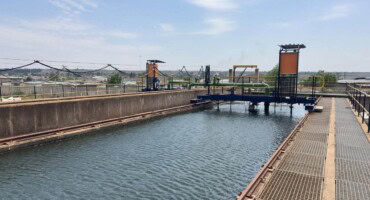
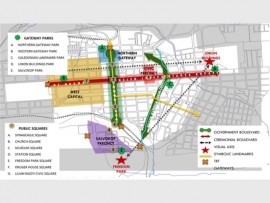
Several significant concepts are planned including the Northern Gateway, the Salvokop Gateway, Government Boulevard, Ceremonial Boulevard, the Nelson Mandela Corridor and the upgrading and damming of the Apies River.
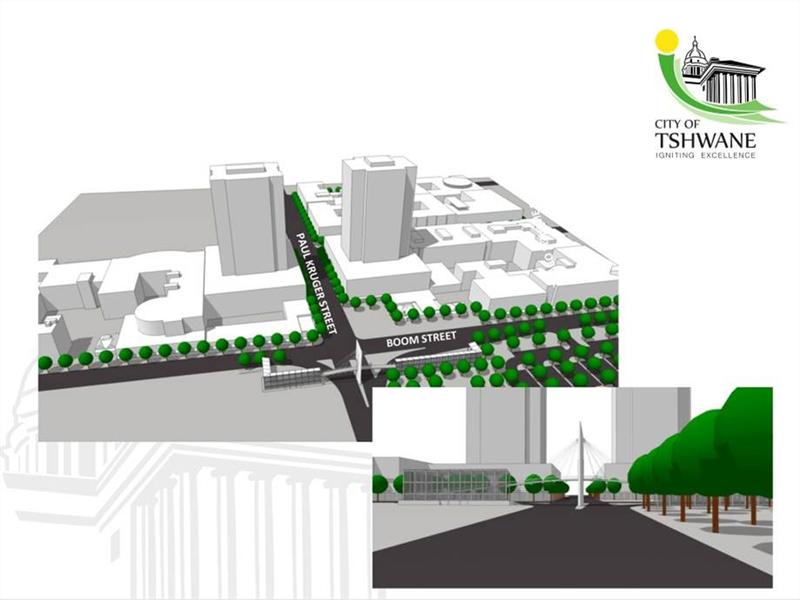
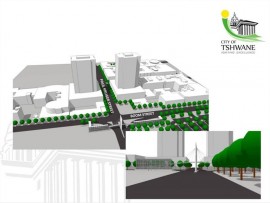
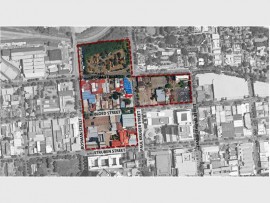
The so-called Northern Gateway into the CBD will see the transformation of Paul Kruger Street and surrounding street blocks all the way north up to Boom Street to ensure the ceremonial character of Paul Kruger Street and to create a pedestrian friendly and vibrant environment and to retain and reuse existing heritage structures.
Government Boulevard will see Paul Kruger Street turned into a broad prominent feature of the city, complete with pedestrian walkways, public spaces and new or refurbished buildings.
The Boulevard will run south all the way to the Pretoria railway station.
“We plan a wide and important linear street that has vegitational features along the sides or in the centre of the street and will be defined by adjacent structures specifically used for government purposes subject to unique design guidelines focusing on portraying authority and power through space,” said Subesh Pillay, member of Tshwane’s mayoral committee.
Speaking at the inaugural Tshwane investor summit on Thursday, Pillay said the city currently lacked a distinct architectural character that showed the symbolic nature of the capital.
“The city is not yet inclusive to all, most of the buildings are in a poor state and urban management interventions required coordination,” Pillay said.
These interventions included the management of the city’s informal economy, the enforcement of by-laws, collaborative crime prevention initiatives, traffic management to ease congestion and the coordination of various development initiatives by the city, national government, the private sector and academic institutions.
Government Boulevard will be used to host events, celebrations, marches and festivals.
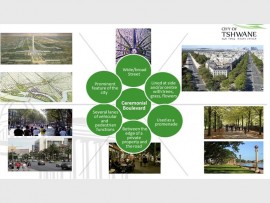
The development of a Ceremonial Boulevard was also announced, a project which will see the complete transformation of WF Nkomo, Helen Joseph and Stanza Bopape streets.
Ceremonial Boulevard will stretch from the west of Church Square all the way to the Union Buildings and will cross another planned development, the Nelson Mandela Green Corridor which runs parallel to the Apies River.
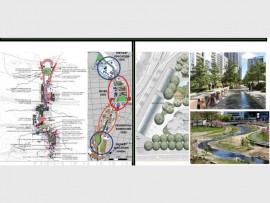
The Nelson Mandela Drive development, along with a complete remake of the banks of the Apies River, will include Caledonian Park which will be a common park area, picnic terraces and canals. It would also include Nelson Mandela Public Art, where history would be captured in murals and the paving and public furniture would be art in itself, according to Pillay.
The Salvokop Precinct would create a gateway effect at the interface between Salvokop and the Pretoria Station area. The development would integrate Salvokop with the rest of the inner city in terms of access and through-movement, mixed land use and a general feel and ambiance, said Pillay.
It would enhance the prominence of Freedom Park, create unique civic spaces and preserve all identified vistas from, to and over Salvokop.
“The inner city serves as the face and heartbeat of Tshwane and is critical to its image as the capital of South Africa,” said mayoral spokesman Blessing Manale.
For more community news, visit Rekord’s websites:
Also like our Facebook page and follow us on Twitter.