Land grab threats serious
All land owners, black and white, should be vigilant when it comes to their property and act sooner rather than later to get squatters off their land.
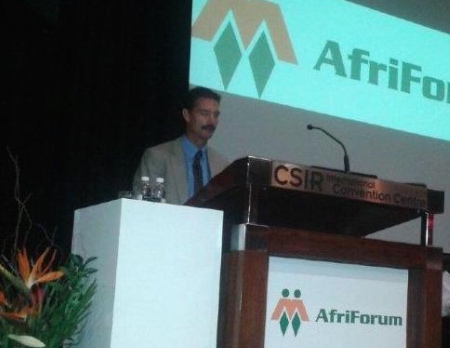
Landowners, including those with smallholdings west of Pretoria, have been warned not to treat threats about illegal land invasions lightly.
Today’s political rhetoric was tomorrow’s reality, said experts at a conference in Pretoria this week on how land grabs should be dealt with.
They said no threat of or attempt at unlawfully occupying land should be ignored or be rejected by landowners as political point scoring.
All land owners, black and white, should jealously guard land rights because without that, there were no human rights. With this reality facing South Africa, a guide on how to effectively and timeously deal with land grabbing was released at the conference by AfriForum.
The discussions were prompted by recent attempts and threats by Julius Malema’s Economic Freedom Fighters (EFF) party in Pretoria that nothing would stop them from occupying government or private land.
Speakers at the conference stressed that prevention was easier and cheaper than cure and urged landowners to constantly be aware of what was happening on their land and to take action before squatters settled on their land.
“Once they have built structures and had lived on the property for any period of time it is impossible to get them off your land without an eviction order issued by a court – a process that could be lengthy and costly,” said land rights expert attorney Willie Spies of Hurter Spies Attorneys.
Spies said there was an active ongoing process by government to water down the land rights of individuals and that a year ago South Africans had more rights than now and that in another year’s time, they would have even less land rights.
There were currently three laws that would be before parliament this year that threatened land rights in the country.
“The Preservation and Development of Agricultural Land Framework Bill that will be before parliament this year is of particular concern,” he said, as it contained a similar phrase as had been written in the Act that nationalised all mineral rights in South Africa.
He said Section 3(1) of the draft legislation stated that ‘agricultural land is a common heritage of all the people of South Africa and the Department of Agriculture is the custodian thereof for the benefit of all South Africa’. The exact phrase was used in the mineral rights Act and resulted in government taking control of all mineral rights in the country without any compensation to the previous owners.
“This draft bill shines a bright red light on the future of agricultural land rights in South Africa,” Spies warned.
The two other draft bills that raised concern was the Expropriation Bill and the Regulation of Land Holding Bill.
The latter will force land owners to disclose their race, gender and nationality and will include the appointment of a Land Commission that will have ‘draconian powers’.
The expropriation of land legislation, if passed through parliament, will affect all property including businesses and while previous expropriation legislation could only be used in cases of public need, the new law would be used for ‘public interest’.
Ben Freeth, a Zimbabwean farmer who had his land expropriated by the government, told the conference that 95% of white Zimbabwean farmers were no longer on their farms.
“Land redistribution cannot be stopped but it can be managed and changed into a positive. If handled correctly and fairly it could change from something that destroys food security to something that can develop and grow Africa and make the continent great for the next generation,” Freeth said.
He said the fight for property rights was a higher fight than just merely to own land. It was a fight for the rule of law and for what was right.
Proper academic research should be undertaken by trusted and objective academics to show the true results of land grabs and how detrimental to an economy the lack of land rights could be.
“If this is not done, South Africa will, like Zimbabwe, be turned into a country that cannot feed itself,” he said.
AfriForum head of Community Safety, Ian Cameron said land grabs would not only be pushed by some politicians, but by the people themselves who were tired of empty promises and not owning any land.
To protect one’s property against unlawful occupation, Cameron said, among others, access by strangers should be minimised and strictly controlled, never leave your property unattended for long period of times, take photos of strangers in and around one’s property and often patrol one’s land to look out for newly built structures or any signs of unlawful occupation.
“If there is a structure built on your property and it is not yet occupied, it should be demolished immediately, but materials used for the building should not be damaged. Always involve the police or other security organisations and keep photographic and other evidence of all actions taken,” Cameron said.
Read: Massive land claim in east and north of Pretoria
Residents call for land claim to be rejected
For more community news, visit Rekord’s websites:
Also like our Facebook page and follow us on Twitter.
We have exciting news! We’re offering a free alert to help you always be in the loop. Send an email with the word ‘Subscribe’ to breakingnews@rekord.co.za to receive your free breaking news update.