Little cost difference in BRT options
The cost between building a third traffic lane in both directions in Atterbury and Lynnwood roads to accommodate the BRT and keeping only two lanes – turning one into an exclusive lane for the fast bus service, was minuscule, sources claimed.
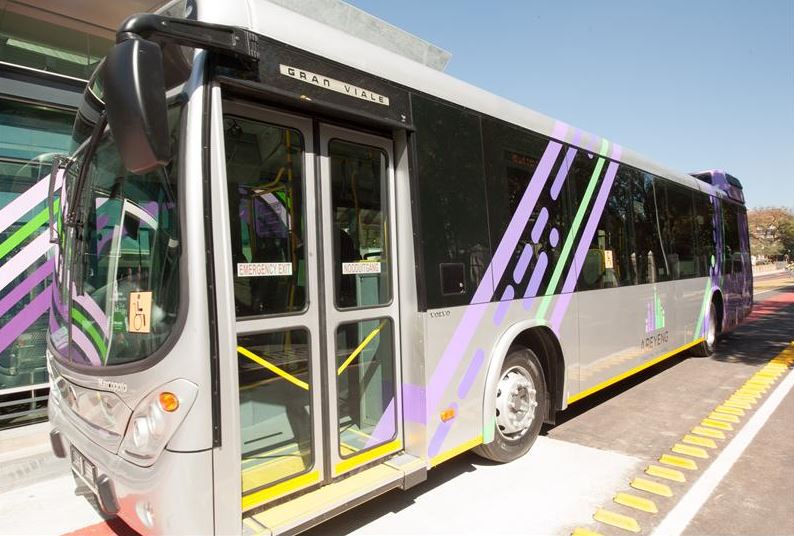
Opting for a plan that could create the biggest traffic disaster ever to hit Pretoria will save the Tshwane metro only R35 million on a half a billion rand contract.
This was merely a fraction of the overall cost of the project, Democratic Alliance councillor Siobhan Muller said this week.
“To save R5 million per kilometre is a drop in the ocean if you consider that the overall contract for Line 2B of the BRT is over half a billion rand.”
Tshwane recently confirmed that it had reversed a decision to turn seven kilometres of Atterbury and Lynnwood roads into a three-lane road in both directions to accommodate its Bus Rapid Transit (BRT) system.
Because of the cost (R80m per kilometre) the metro decided to rather keep only two lanes in both directions – one exclusively for BRT use while general traffic, including taxis, other bus services, trucks and cars will have only one lane.
Muller said the executive decision had been made without any Traffic Impact Study or without any public participation.
This has outraged residents, businesses, schools and other organisations affected by the move, which is expected to block the east of Pretoria completely from Hatfield, Loftus and the University of Pretoria because of traffic congestion.
Rekord has learnt that the cost of keeping only two lanes in both directions in the two major roads from Menlyn Shopping Centre to Loftus, but reserving one lane exclusively for the BRT, would cost only R5 million per kilometre less than the R80 million per kilometre to build a third lane in both directions.
Muller said she had received a report from an extremely reliable source that the cost of turning one lane of the two roads into a BRT lane exclusively, would cost the metro R75 million per kilometre.
Muller said her source, which she would not reveal, was an extremely reliable insider.
She said the traffic fiasco that would be created by two lanes in both directions on the busy roads would eventually force the metro to build a third lane in any case. “Imagine the cost then.”
Residents and businesses last month vowed to fight the decision of the metro in the country’s court as it had the potential to destroy business in the Lynnwood area.
Muller on Monday said she would prefer not to go to court, but had instead called for bi-lateral talks as soon as possible.
“I would like to request Bill Cameron of the department of transport to be part of the talks,” she said, adding that there were several alternative options, including that the metro applied for a grant from national treasury or wait until such time that funding was available.
“I trust a win-win solution will be arrived at and that the system which we all support in principle can be established to the benefit of all residents, commuters and businesses of the city.”
Although the decision for only two lanes in both directions for Atterbury and Lynnwood roads had not been approved by council yet, it was contained in a budget document.
When the issue was raised by the DA at last month’s council meeting, mayor Kgosientso Ramokgopa “lost his cool”, insisting that the Tshwane metro council would “defeat the wealthy few” who objected to the city’s new plan for Line 2B.
At a recent meeting attended by dozens of concerned citizens, business owners, schools, residents’ associations and the University of Pretoria, it was clear that the metro’s new plan had people in the Menlo Park and Lynnwood areas up in arms.
Lawyers residing in the area said that they would fight the metro on the decision, even if it meant going to the “highest court” in the country.
On a normal weekday during peak hour traffic, delays of more than 30 minutes were already experienced with the existing two lanes for general traffic. Should the new plan be introduced, residents of the east would be cut off from the Gautrain station and several other institutions west of the N1 highway.
The metro earlier said it was the intention to get commuters out of their private vehicles and on to public transport such as the BRT system, A Re Yeng. This sentiment was in line with the national transport act and also a trend in all big cities.
At the time of going to print, Rekord had not been able to get comment from the Tshwane metro about Muller’s claim that the difference in cost per kilometre would only be R5 million. Rekord was also not able to obtain a copy of the report that contains the information.
Do you have more information about the story? Please send us an email to editorial@rekord.co.za or phone us on 072 435 7717.
For free breaking and community news, visit Rekord’s websites:
For more news and interesting articles, like Rekord on Facebook or follow us on Twitter.
- We have exciting news! We’re offering a free alert to help you always be in the loop. Send an email with the word ‘Subscribe’ to breakingnews@rekord.co.za to receive your free daily breaking news update.