Learn the local lingo – the best Pretoria slang
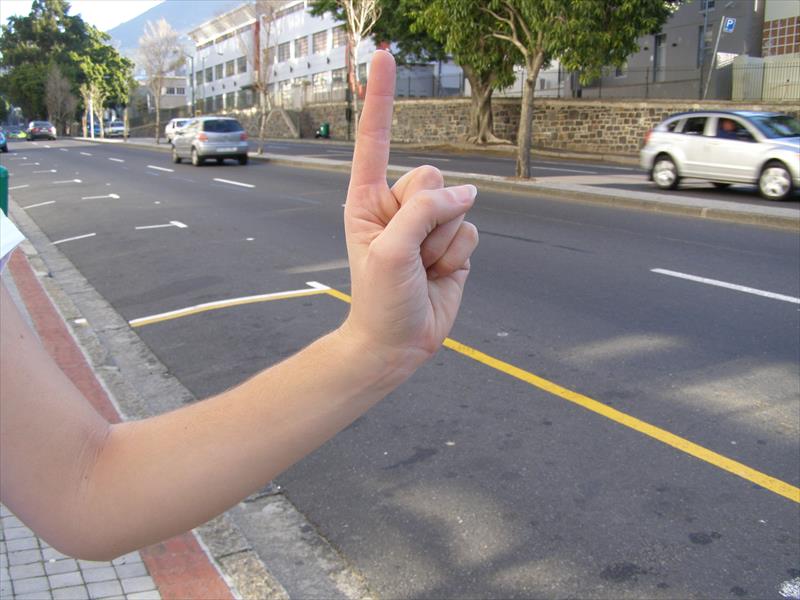
An index finger is used to hail a taxi in the township.
No one can dispute the fact that sePitori is one of the best languages spoken in the country.
But it is not easy to learn as it is a concoction of different languages.
The lingo, a mixture of Afrikaans, Sesotho, Sepedi, Setswana, English and isiZulu and different slang terms and meanings, is used by people from Pretoria townships like Mabopane, Soshanguve, Ga-Rankuwa, Atteridgeville, Temba, Winterveldt, Ekangala and Mamelodi.
ALSO READ: Girls doing better than boys in languages at school
https://twitter.com/SizzlingLifePTA/status/926004226207215616
Lady D, who writes for Ad Agency blog, helped us create a crash course which will help Rekord readers, especially those visiting or migrating to the city for the first time, to be able to socialise better:
The lingo:
Lady D said people in Pretoria had their own unique language that made it easy to identify those from Pretoria from the rest.
“We don’t really speak real Tswana, or Sotho for that matter. People here speak sePitori. Re bua ka bo daai man, daai vrou, daai ding (we speak about that man, that woman or that thing),” she said.
https://twitter.com/SizzlingLifePTA/status/926056207881834498
Items like food and money are often referred to in different names.
A student at Tshwane North College Mongi Mabasa said, for example, R5 was called a “half-jacket”, while R10 was called “jacket”.
https://twitter.com/SizzlingLifePTA/status/926004827242590208
“We also call R1 000 istina or stena and R100 drata,” he said.
While R2 is called “boys” in sePitori lingo.
ALSO READ: INFOGRAPHIC: Six body language mistakes you’re making
https://twitter.com/SizzlingLifePTA/status/926011718836342784
According to Kasi Nativist, people have come to adopt different meanings to form a language – not just sePitori language.
A few examples:
• Coconut – this refers to an African person who is dualistic in their nature, “usually black on the outside and white on the inside”.
• Amashwang-shweng – refers to a nice/beautiful hairstyle on a woman.
• 411 – giving someone the latest news and gossip.
• 6 no 9 – “same difference”.
• Bo-gata – the police.
• Chalk – R20.
ALSO READ: VIDEO: How to say hello in 50 different languages
• Jacket or tiger – R10.
• Chicken dust – chicken braai done by the roadside.
• Dintshang?- what’s up?
• Daai ding – that thing. Uses: If somebody doesn’t want to mention what he/she is asking for, they will say give me ‘daai ding’ (give me that thing).
• Danone – dating a young girl.
• Frying pan – used to refer to someone who likes to lie.
• Fong-kong – cheap, fake products you can buy from street vendors.
• Feder – (verder in Afrikaans) means how are you, or how are you doing or what else is happening in your life.
• Gashu – an idiot.
• Gatvol – fed up.
• Gereza – hustle.
• Gidliza – to act as if you don’t know anything.
• Holla gazee – a phrase meaning how are you, my friend?
• Izinyoka – thugs or thieves. Commonly used to refer to people who steal electricity cables.
• Inja – its literal meaning is a dog. It is now commonly used as an expression of respect, as in top dog.
• Jive – means a problem. As in, “Ke na le jive le medi ya gago.” (I have a problem with your girlfriend/wife).
• Johnnie Walker – someone who doesn’t have a car.
• Ku million or hundreds – it’s all good.
• Bunny chow – in Pretoria it’s known as sphatlo. In the Vaal it is referred to as skumbani. A quarter of a loaf of bread, with any filling inside. The filling can be meat, potatoes, atchaar, whatever you like.
• Kosovo – a very dangerous place
• Kasi – Hood or ghetto.
ALSO READ: Google Pixel Buds make real-time language translation a reality
Commuting in Pretoria is also not an easy thing to do; you have to know the signs and how to khomba or emisa (hail) a taxi.
Writer Letlhogonolo Ndhlovu said there were many ways of hailing a taxi but if one did not know how to, they’d end up spending hours standing in one place.
“Terms like: ‘(at the) bus stop driver’, ‘sho’t left’ or ‘after robot’, form part of the taxi lingo used,” Ndhlovu said.
There are signs that commuters use when hailing for a taxi:
Ndhlovu said one often wonders who came up with all these signs that were universally understood among the taxi drivers and the commuters.
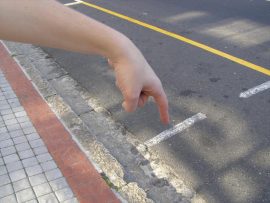
“When you want to go to town, you point your index finger up. But when you want a local taxi, you use the same finger but you point it down.”
SePitori is a long-standing fun language mostly understood only by the klevas (wise ones) from kasi (townships).


Do you have more information about the story? Please send us an email to editorial@rekord.co.za or phone us on 083 625 4114.
For free breaking and community news, visit Rekord’s websites:
For more news and interesting articles, like Rekord on Facebook, follow us on Twitter or Instagram