Gorries wants to make a real difference in SA athletics
As their coach, he knows when to be hard and when to back off, getting the best out of his athletes.
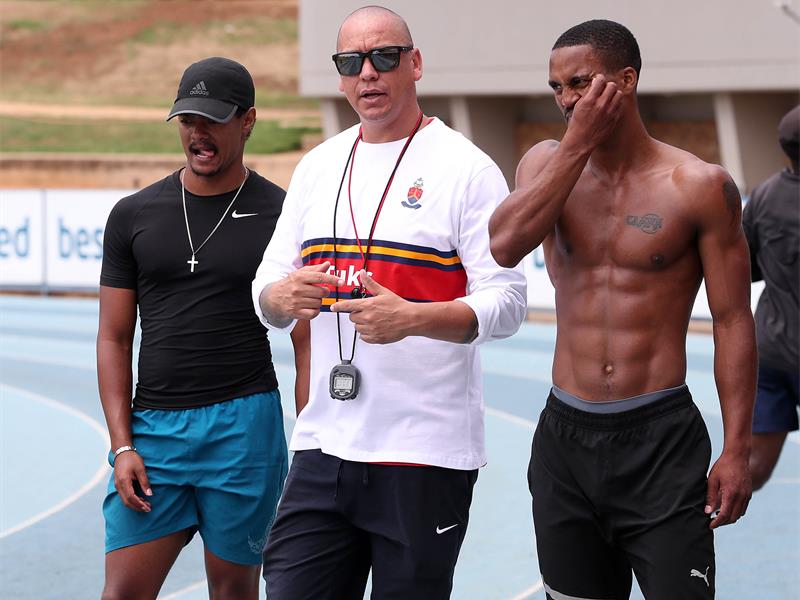
Getting the South African men’s 4x100m-relay team to medal at the Tokyo Olympic Games is not the only goal Paul Gorries set for himself.
Having been an athlete himself, South Africa’s national relay coach based at the University of Pretoria knows how easy it is to lose focus and quit without ever getting to fulfil one’s dreams.
In 2000, Gorries believed that he made it to the big time. He had just won gold in the 200m during the Junior World Championships in Chile. He got offered all sorts of contracts.
“I allowed my success to go to my head. It led to me becoming a ‘difficult’ athlete. Needless to say, my results started becoming sub-par when I began competing as a senior athlete.”
Gorries’ last real hurrah in international athletics was being part of the South African 4x400m relay team that won silver during the 2006 Commonwealth Games in Melbourne.
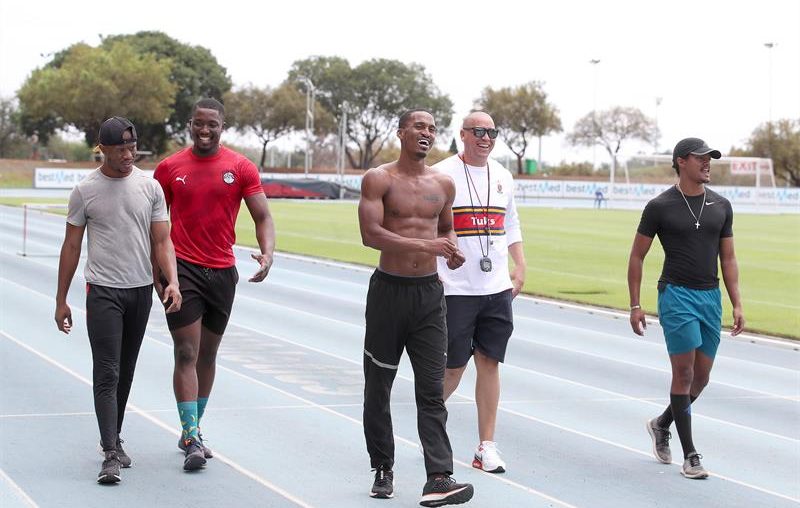
Photo credit: Reg Caldecott
His story is not unique in South African athletics. The statistics will show that too often athletes who medalled at the World Junior and World Youth Championships fade away as they found the step up from junior to senior athletics to be a too enormous challenge.
READ MORE: Local volleyball players set their sights on qualifying for the Olympics
Being the national relay coach as well as a sprint coach at Tuks it is something Gorries hopes to help change.
“South African athletics will stand to benefit if coaches start to realise that sometimes they literally need to babysit talented youngsters during their transition from junior to senior level.
“As their coach, you need to know when to be hard and when to back off. Not every coach can do so. The lessons I learned from being a competitive athlete are hopefully going to stand me to good stead,” said Gorries.
Gorries said the four athletes who raced the final during last year’s World Championships, were for now assured of their places in the men’s 4x100m relay team.
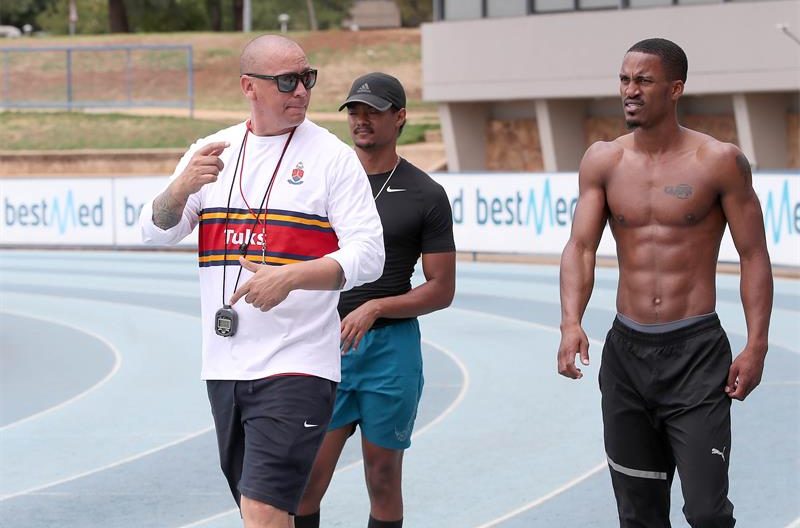
Photo credit: Reg Caldecott
“We definitely shall need backup during the Tokyo Olympic Games especially considering that Akani Simbine is aiming to do double up racing in the 100m as well as 200m. It means he could be running over five consecutive days. I want him rested for the final.”
The norm in South Africa is that athletes get to decide whether they are available to run for the national relay team. It provides Gorries with a unique challenge.
READ MORE: East teen puts SA on the map at the Junior Olympics
“In the countries where athletes are paid, the coaches are assured that the best athletes will run. I mostly have to rely on personal relationships with athletes to get them to do what I want.”
For this reason, Gorries want to liaise closely with whoever is coaching the junior relay teams.
“I don’t want to find myself in the same situation as last year, where I needed to teach senior athletes how to run a relay. It is something they got to learn as juniors,” he said.
“When an athlete is selected for the senior national relay team, the only focus should be on strategy.”
Do you have more information about the story? Please send us an email to editorial@rekord.co.za or phone us on 083 625 4114.
For free breaking and community news, visit Rekord’s websites:
For more news and interesting articles, like Rekord on Facebook, follow us on Twitter or Instagram