
Tshwane metro no longer considering current shelters for permanent homes
“The shelters are situated in places that are used for something else. The metro, however, has a plan or strategy in place that contains a long-term and sustainable way to deal with the issue of homeless people in temporary shelters.”
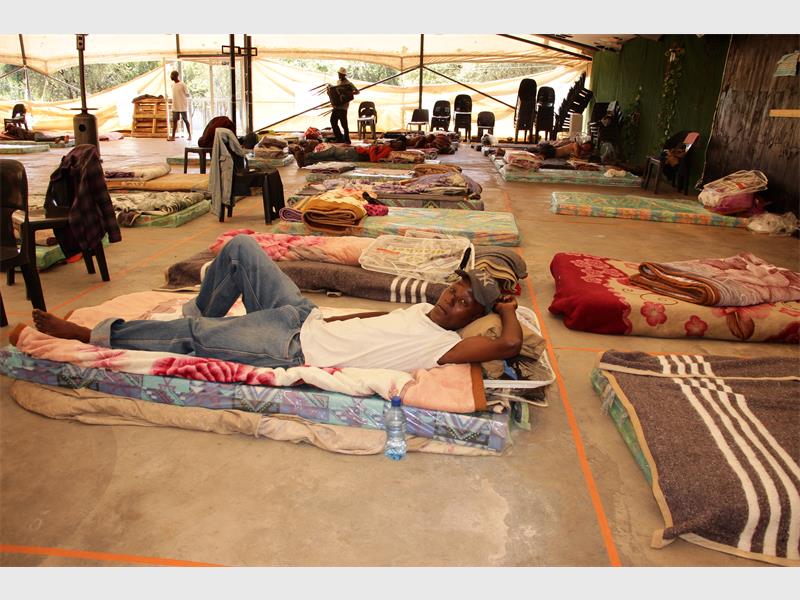
The Tshwane metro has addressed the issue of government still considering keeping various temporary shelters as more permanent homes for the homeless.
Tshwane metro spokesperson Lindela Mashigo said after consideration the government was no longer “toying” with the idea of looking at the current shelters as permanent accommodation for the homeless after lockdown.
Mashigo said there were currently 24 homeless sites across all the seven regions of the metro which were activated.
He said these sites were established in partnership with NGOs.
“The shelters are situated in places that are used for something else. The metro, however, has a plan or strategy in place that contains a long-term and sustainable way to deal with the issue of homeless people in temporary shelters.”
He said interventions would be based on assessment done to individuals.
He said some plans included reuniting the homeless with their families, linking other homeless with services and moving some of the homeless to more shelters that are currently under construction.
Mashigo said there were no homeless people at the Caledonian stadium anymore.
He said the metro was not prepared to deal with the homeless before the lockdown.
“No one could have planned and anticipated this, so it was a first, not only for the metro, but for the whole country,” he said.
“We have done exceptionally well under the circumstances, challenges notwithstanding. There was trial and error, and we learnt valuable lessons in the process.
“There are over 1 900 people who have been placed at various sites.
He said the homeless and substance abusers had been placed according to their respective situations.
“For instance, there are sites which were set aside for people who are abusing substances so they can get specific services.”
He said sites included Lyttleton Sports Park and Lucas van der Berg/Transoranje shelters among others.
This also comes as the community and social development services department had spent R9 000 000 already since lockdown commenced in March according to the Tshwane metro.
Mashigo said the money was used for providing food for the homeless, hygiene packs, mattresses and blankets.
He said it was difficult to get an exact cost estimate on the services for the homeless at this stage because there were different departments involved in the programme.
“Relevant metro departments have incurred some costs towards the interventions for the homeless in line with their mandate, which included health services, bulk water and mobile toilets. The community and social development services department is responsible for the coordination of activities at temporary sites.”
Mashigo said, however, the Tshwane metro still needed help to assist more homeless people.
He said items required were blankets, mattresses, hygiene packs, clothes, uncooked food, masks and sanitisers.
Mashigo said the metro had a central area which was used to receive donations.
ALSO READ: Tshwane homeless lives changed for the better
Notice: Coronavirus reporting at Caxton Local Media aims to combat fake news.
Dear reader,
As your local news provider, we have the duty of keeping you factually informed on Covid-19 developments. As you may have noticed, mis- and disinformation (also known as “fake news”) is circulating online. Caxton Local Media is determined to filter through the masses of information doing the rounds and to separate truth from untruth in order to keep you adequately informed. Local newsrooms follow a strict pre-publication fact-checking protocol. A national task team has been established to assist in bringing you credible news reports on Covid-19.
Readers with any comments or queries may contact National Group Editor Irma Green (irma@caxton.co.za) or Legal Adviser Helene Eloff (helene@caxton.co.za).
Do you have more information about the story? Please send us an email to editorial@rekord.co.za or phone us on 083 625 4114.
For free breaking and community news, visit Rekord’s websites:
For more news and interesting articles, like Rekord on Facebook, follow us on Twitter or Instagram



