What to do when you find a snake in your house
Snake expert Arno Naude spoke to Rekord about the sudden increase in snake and other reptile sightings in and around Pretoria.
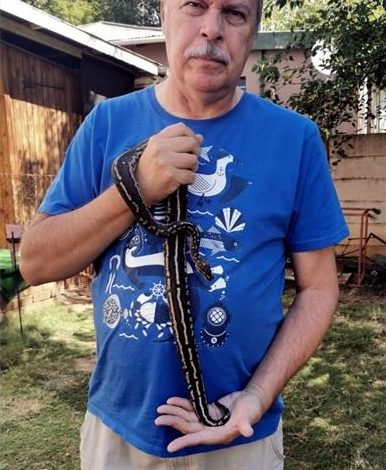
Pretoria is home to many different reptile species like snakes, monitor or rock monitor lizards and sometimes even the odd crocodile. Residents often go into a complete state of panic when one of these scaly animals are found inside a home or even a garden.
Snake expert Arno Naude spoke to Rekord about the sudden increase in snake sightings in and around the city.
“Firstly, do not get bitten by a snake now. We are in the midst of a pandemic, and our hospitals are not equipped to adequately help a snake-bite victim now.
“Even if you are admitted, your treatment might take twice as long due to the lack of hospital beds and anti-venom available,” Naude said.
Naude said that Pretoria has many different types of reptiles.
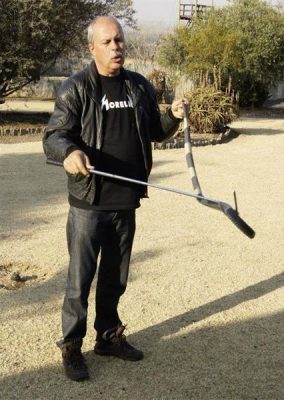
“I’ve received three calls just this morning of snake sightings in Pretoria. We’re back to that time of year, people returning home from their break, and also the rain contributes.
“Most snakes we encounter are harmless. They’re mostly brown house snakes, but we do sometimes get call-outs to people who find snouted cobras, spitting cobras, the rinkhals, and sometimes puff adders as well.”
Naude urges residents to not kill or attempt to move snakes when one is found inside their house.
“When you find a snake in your home, call me or any snake-removal organisation immediately. The snake won’t harm you if you just leave it alone.
“Try to close windows and doors if it is inside the house, or stand approximately five metres away and keep an eye on it, in case it moves towards another spot,” Naude said.
He said that snakes are often attracted to specific things like trash bins, where rats are often roaming.
“There are many things that may attract a snake to your yard, but we find that mostly it’s a space in a resident’s yard that is perhaps unkempt or congested with garden refuse, where you keep your trash.
This usually attracts rats and the snakes are probably there to catch the rats,” he said.
“The weather, like rain also plays a role. They seek shelter and might by accident go into your yard to look for a warm and dry space to stay. We need to consider the effects of urbanisation on snakes’ natural habitat. Many of the snakes we get called out to collect are in municipal areas, in people’s houses or gardens.
“You also might find the odd snake every now and then when you live next to an open veld or near a nature reserve,” he added.
Naude explained that most snake bites in Pretoria do not require anti-venom.
“In the city we have access to hospitals where doctors are trained in how to treat snake bites. Your chances of dying are very slim when it comes to snake bites because the administered anti-venom will most likely neutralise all toxic effects of the venom,” he said.
“If you’re on a farm, or far from a hospital, you still might have approximately 3-4 hours to get proper medical treatment before you show any signs of being in danger.”
Naude, however, urges residents to abstain from following any home remedy treatments when bitten by a snake.
“We’ve seen the craziest forms of home remedies that people believe in when they get bitten by a snake. Many believe that injecting diesel into the skin will kill the venom or stop it from spreading.
“Many believe consuming activated charcoal will do the trick, or even sucking out the venom. I highly discount all these methods, as your best chance of surviving, is to go to a hospital to get proper medical care.”
Naude told Rekord that other reptiles are also commonly found in the greater Pretoria.
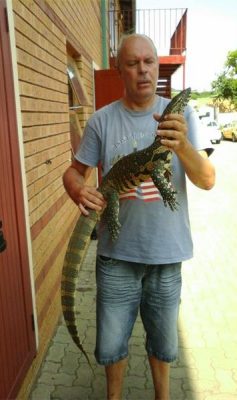
“Just over the past month, we removed a 3m long python. On Wednesday, we removed four rock monitor lizards from areas in Pretoria: one in Centurion, one in Mooikloof, one in Faerie Glen and one in Nelmapius.”
Since most snakes found in Pretoria are not venomous, he urges residents to rather call for help than to attempt to kill the animal.
“Ninety percent of our snakes are not venomous, but the venom that gets injected into your bloodstream when bitten by a snake does have some intense spreading capabilities. So, even if it does spread through your system, it’s still very much treatable by a doctor.”
Naude explained that reptiles and the preservation of these animals is not just a job, it is a calling.
If you would like to get in touch with Naude for more information or to report a reptile sighting in your area, give him a call on 083-739-9303 or send him a WhatsApp on 062-463-8370.
Do you have more information about the story?
Please send us an email to editorial@rekord.co.za or phone us on 083 625 4114.
For free breaking and community news, visit Rekord’s websites: Rekord East
For more news and interesting articles, like Rekord on Facebook, follow us on Twitter or Instagram