Possible toxic bacteria found in Hennops river
Cyanobacterial toxins may cause skin rashes, eye irritation, vomiting, fever, pains in muscles and joints and long-term ingestion that can promote liver diseases.

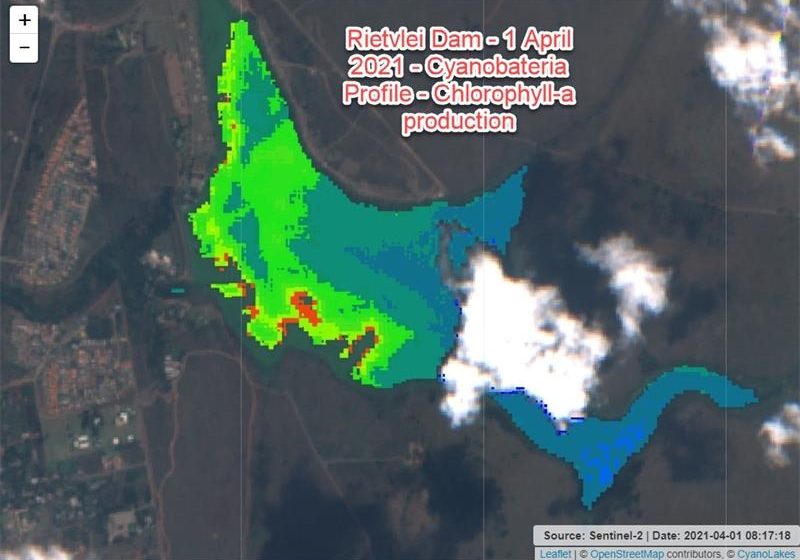
Hennops Revival alerted the Tshwane metro on Tuesday of possibly toxic bacteria in the Hennops river in the area of Sesmyl spruit and Rietvlei dam, threatening freshwater sources.
Founder of Hennops Revival, Tarryn Johnston, said she approached councillors in this respect since it seemed that the water was contaminated with Cyanobacteria which can be highly toxic.
Johnston said she drove over the river on Sunday afternoon and noticed it was green.
“From experience, I know that if the Hennops is green, Sesmyl spruit is even greener.”
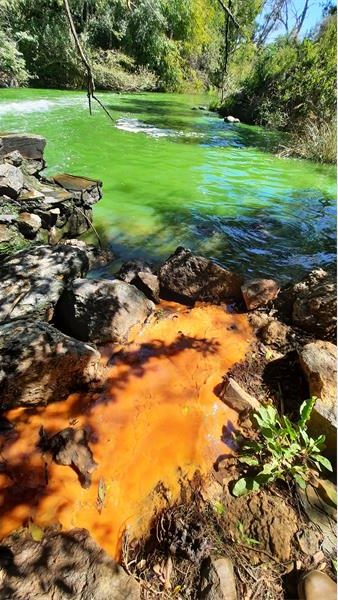
On Monday morning, she went on foot as far up the Sesmyl spruit towards Rietvlei dam, and found that the water was “the brightest, luminous green you’ve ever seen”.
Johnston said she came across a weir or waterfall, which was completely green and beneath it, she made another discovery of a slime-like orange substance.
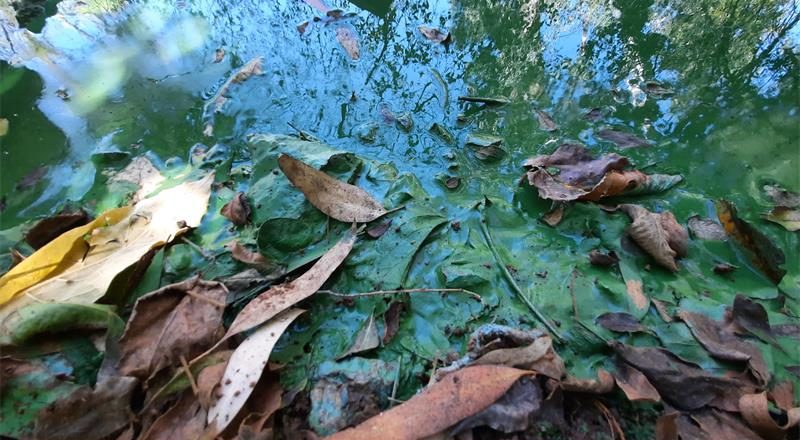
“I noticed rocks which look as if they had been painted green, and the banks were covered in a thick layer of what seems to be a bright green flocculent. Further up, a trickling stream of clean water and a strong flow of green.”
In respect of the orange substance, Johnston said she has been advised that it could be another algae species of the red variety, or it could be due to acid-dumping, or even groundwater contamination.
“It could be a number of things, but we will have it tested by a microbiologist during the week,” she said.
Tshwane environment and agriculture management MMC Dana Wannenburg said that his department took note and was investigating the matter.
Johnston said Sesmyl spruit did not have much of a litter problem, but its water contained other toxic elements of pollution.
“More concerning is the Cyanobacteria and that it comes from Rietvlei, or through Rietvlei, which constitutes 16% of Pretoria’s drinking water. It is extremely troublesome and needs to be addressed urgently.”
Johnston referred to a comment from water expert Dr Anthony Turton, co-author of two chapters of the World Water Assessment Programme 2012, who followed Johnston’s post about the Hennops river’s state on social media.
“Turton stated that an easy but classic way to identify the presence of blue-green algae is typically described as if it resembles spilt paint and added the most logical culprit is sewage discharge upstream.”
Johnston said she also received feedback that Eutrophication and Cyanobacteria were directly related to high nitrates in the water from the Elandsfontein Wastewater Treatment Works (WWTW) and farming upstream.
She said Cyanobacteria were simple single-celled or filamentous organisms that occurred in soil, coastal mud flats, rocks, concrete, pools and lakes.
“The pigments include chlorophyll, phycocyanin, phycoerythrin and scytonemin and will often appear blue-green, though the pigments may combine to yield other colours. Toxicity fluctuates constantly. It is possible for Cyanobacteria to be toxic one day and not the next.”
She said Cyanobacterial toxins may cause skin rashes, eye irritation, vomiting, fever, pains in muscles and joints and long-term ingestion that can promote liver diseases.”
Tshwane MMC for utility services and operations Phillip Nel said that although Hennops river was on the western side of the city and the city was further away from Rietvlei dam, some of that water did land up in the city’s water system.
“However, the chances of toxins landing up in the city’s drinking water when it is present in rivers, are rather slim.”
He said the city got 80% of its water from Rand Water and 20% was provided through boreholes, springs and fountains.
Nel said his department would address the matter and send its scientists to test samples as soon as all relevant information had been obtained.
Do you have more information about the story?
Please send us an email to editorial@rekord.co.za or phone us on 083 625 4114.
For free breaking and community news, visit Rekord’s websites: Rekord East
For more news and interesting articles, like Rekord on Facebook, follow us on Twitter or Instagram