Negotiations underway for provincial traffic authority enlistment as essential service
“Declaring GTP as an essential service will have cost implications since there are more than 800 GTP officers employed by the Gauteng Department of Community Safety."
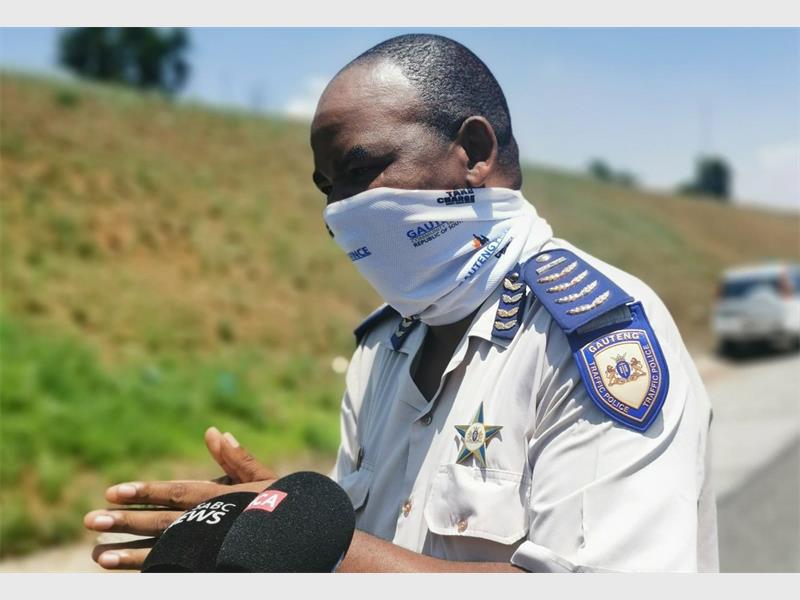
Negotiations to have all provincial traffic authorities enlisted as an essential service were reportedly underway at a national level, the Gauteng Traffic Police (GTP) said.
“It must also be noted that while GTP ensure safety on the roads while fighting all elements of criminality in the province, they are not police officers or metro police officers, therefore GTP has not been declared an essential service.
However, there are negotiations being facilitated by the Road Traffic Management Corporation (RTMC) at national level to declare all provincial traffic authorities as an essential service,” spokesperson Sello Maremane said.
DA’s Michael Shackleton called on community safety MEC Faith Mazibuko to speed up the process earlier this month.
Shackleton explained the delay was reportedly due to an ongoing labour dispute, adding that its enlistment as an essential service would be beneficial for motorists as “Gauteng motorists’ lives are in danger because the GTP does not operate 24-hours a day”.
Maremane, however, explained that the work of the GTP was informed by hazardous locations and crime hotspots from time to time.
The GTP was also said to operate from 06:00 to 22:00.
“The GTP is appointed in terms of section 3 of the national road traffic act to execute traffic law enforcement at a provincial level,” he said.
Maremane also noted that declaring the GTP as an essential service would have financial implications.
“Declaring GTP as an essential service will have cost implications since there are more than 800 GTP officers employed by the Gauteng Department of Community Safety,” he said.
In addition to this, Maremane said they had adopted a law enforcement plan where all law enforcement authorities in the province were coordinated, monitored and evaluated to ensure policing in the province functioned optimally.
“This therefore means that when the GTP is not on duty, the metro police, national traffic police and local traffic police are available to augment and render the service,” he said.
Shackleton, though acknowledging the ongoing negotiations, reiterated that the enlistment of the GTP as an essential service would provide added safety to motorists and road users alike as they would be able to provide 24-hour safety services.
“This will benefit both the department and the officers by reducing the excessive expenditure on overtime, improve working conditions and increase benefits for the traffic police,” he said.
“The safety of motorists on Gauteng roads during the night should be a priority for all the parties involved in the labour dispute discussion.”
Shackleton further said that while unions representing the workers were still tabling their grievances, it was high time that they reached an agreement with the RTMC and the provincial traffic management for the benefit of their representatives and the Gauteng road users.
“We will continue to apply pressure on the MEC until the GTP has been declared as an essential service. The safety of Gauteng’s residents is too important and therefore, we will continue with our pressure,” he said.
Do you have more information about the story?
Please send us an email to editorial@rekord.co.za or phone us on 083 625 4114.
For free breaking and community news, visit Rekord’s websites: Rekord East
For more news and interesting articles, like Rekord on Facebook, follow us on Twitter or Instagram