Is your child suffering with depression?
“Through the media, one can gather that there have been a significant increase in teen suicides, and that is very worrying.”

One in eight young people between the ages of five and 19 are at risk of developing a mental disorder, of which mood and anxiety disorders are the most prevalent, according to experts.
Emphasis on the mental health of young people recently increased as a result of the disruption caused by Covid-19 and lockdowns, which exacerbated challenges that existed before the pandemic.
Carina Bam of the Pretoria North Crisis centre said kids who already had to deal with stress of school, exams and peer pressure, now had even more worries to deal with in light of the Covid-19 pandemic.
“I know a lot of kids that are worried that they might get Covid-19 at school and infect their families,” said Bam.
“Through the media, one can gather that there has been a significant increase in teen suicides, and that is very worrying.”
Bam said talking about depression and mood disorders are often difficult for both children and adults.
“The main reason is that they don’t often know where to turn to,” she said.
“That is why we are working with the community on a project to help people ‘get to know their community.”
Bam said this project aims to help, especially the youth, know where to get help.
“Whether they want food or emotional help, we have people in our community that can assist,” she said.
“The first step, for anyone seeking help, is to ask.”
Bam advised young people suffering with depression to speak up about it.
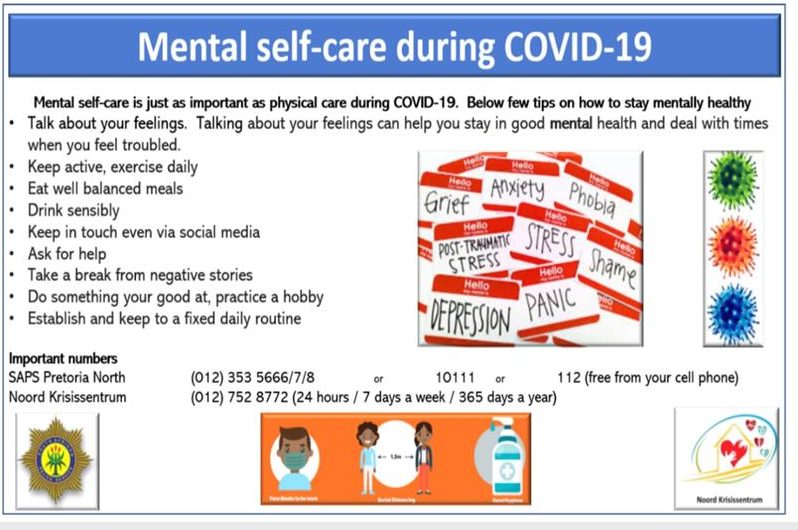
“You are not alone. There are people who understand what you are going through. Speak to the youth workers at school, church and even at your nearest clinic. Ask for help at your nearest police station. Members of the Crisis Centre will always be available to speak to you.”
Another education and mental health expert said it was not only important to talk about mental health issues, but also to recognise symptoms.
“The prevalence of mood difficulties among young people is increasingly becoming a concern internationally,” said Dr Jacques Mostert, brand academic manager at ADvTECH, a private education provider in SA.
Dr Mostert holds a PhD in Psychology of Education and is globally renowned in his field, having conducted experiential research in education in Denmark, the UK, South Africa and The Netherlands.
Mostert noted that an estimated 24% of teens between the ages of 11 to 19 suffer from depression caused by the home environment, 25% are subject to cyber-bullying and loneliness, 92% of LGBT youth report depression during the ages of 11 to 19, and 80% of teens between the ages of 11 to 19 report a sense of isolation that causes them to feel depressed.
“It is very important to understand the signs of depression, so that action can be taken timeously should concerns about the mental well-being of a child arise,” said Mostert.
“Teachers and parents can recognise the onset of depression when a sudden change in behaviour becomes apparent and continues for at least three weeks or longer. These include an atypical lack of energy, becoming increasingly irritable and agitated without a rational explanation, and a sense of being down in the dumps for no reason.”
Some adolescents may withdraw from friends and family over a sustained period of time, he noted, adding that this is especially concerning if this is atypical of the normal interactions of the teen.
“Another red flag is the inability to concentrate in class where ADHD or other non-neurotypical difficulties are not present, as well as regularly failing to complete classroom and homework assignments in time or often being late to class because of feeling overwhelmed.
“This, coupled with unusually defiant behaviour towards teachers and other school staff, especially if this is non-typical behaviour, may indicate that the teen is experiencing difficulties with mood and affect.”
In the same way, as with anxiety difficulties and disorder, the student often asks to go home because of feeling ill with no discernible symptoms. The teen often has days off from class time due to doctor’s appointments, hospitalisation, or inability to attend classes.
Changes in sleep patterns, a significant weight loss or gain in a short period of time and disinterest in hobbies or areas where the teen previously showed interest also raise concerns about the mental wellbeing of the teenager.
Finally, a loss of future-mindedness, or talk about death or suicide, engaging in risky or self-destructive behaviour (drinking alcohol, taking drugs, or cutting, for example) are clear signs of the teen suffering from mood difficulties or a possible mood disorder.
“Not all of the above need to be present, but if there is a discernible and drastic change in a young person’s behaviour which continues for a period of several weeks or longer, intervention is necessary,” Mostert said.
Do you have more information about the story?
Please send us an email to editorial@rekord.co.za or phone us on 083 625 4114.
For free breaking and community news, visit Rekord’s websites: Rekord East
For more news and interesting articles, like Rekord on Facebook, follow us on Twitter or Instagram