Spiralling Covid-19 cases – the heavy, emotional toll on health workers
Healthcare workers are in the frontline of the deadly pandemic that has seen numbers rising alarmingly in the country, with Gauteng in the lead. Rekord spoke to some of the health workers dealing directly with the patients afflicted by the pandemic to tell their stories.
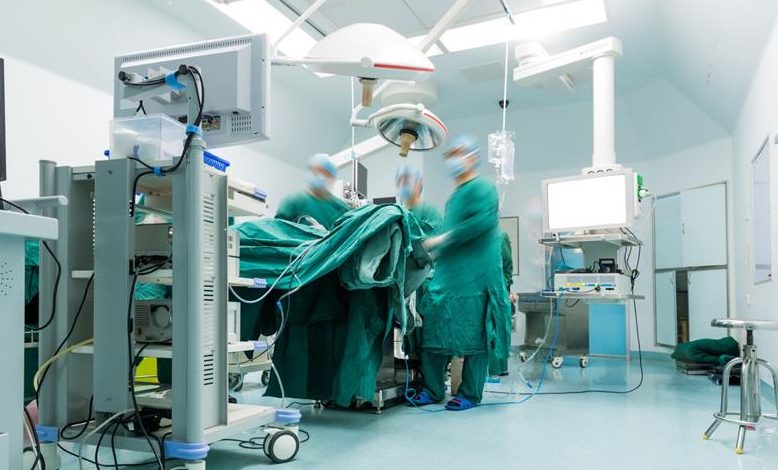
With the majority of the population yet to be vaccinated and hospitals bursting at the seams battling against rising Covid-19 infections, the toll on health workers has become “unbearable”.
It has been over a year since the coronavirus outbreak hit South African borders and for healthcare workers, the worst-case scenario of a new variant in Gauteng meant infections were higher than the two previous waves.
Rekord spoke to some of the health workers dealing directly with the patients afflicted by the pandemic.
To protect their identities, pseudonyms are used.
Mandy van Tonder* is a professional doctor at Steve Biko Academic hospital and confirmed that hospital admissions have been higher than ever before.
“Certainly, as the population’s coronavirus numbers have increased, so have the numbers of infected staff. This is a double-barrel hit on the existing staff as they fight to cope with increased patient numbers and reduced staff at the same time,” she said.
The staff members testing positive saw one of the high care units at the hospital closed for decontamination last week.
“We have not just worked extra shifts and longer hours, but the intensity of those hours has increased too, both emotionally and physically and being in PPE for those long periods.
“I am very worried that the doctors are burning out. Thankfully, management is doing their best to recruit extra locum doctors and nurses who can ease the burden. But these processes take time,” Van Tonder said.
The combination of a new variant, Delta, which was more transmissible and coronavirus fatigue in communities could have led to a lack of adherence to health regulations, and contributed to rapid rise in infections, she said.
“This variant has a change on its spike protein which is the part that the virus uses to enter human cells. This allows the Delta variant of the virus to enter much easier so the virus is spreading like crazy. These two factors together (the Delta variant and Covid-fatigue) are making the number of patients we see disproportionately high compared to the previous waves.
“No amount of planning can make pandemic waves go smoothly, but I am really proud of the resilience and hard work of the staff. They have come through for the public despite their fears.”
She believed to curb a high number of deaths the hospitals would need more nurses and doctors to ensure the sick would be attended to and not have people dying due to not having enough staff to provide much-needed medical care.
“Currently, our biggest challenge is staffing. We need more human resources, including doctors, nurses, allied staff and also staff at virology to increase the turn-around time for Covid polymerase chain-reaction (PCR) results.”
During the first wave the hospital faced challenges of not having enough personal protective equipment (PPE) for the staff, however, during this wave this seems not to be the case.
“I would be amiss if I did not mention that some of the challenges of the first wave such as PPE supplies, numbers of ventilators and high-flow machines have largely been addressed. The hospital added more oxygen tanks to our field hospital and that has literally been a life-saver this time around.”
READ MORE: Covid eis bekende fiksheid- en kondisioneringskenner van Centurion
Since the outbreak started, it has led to many deaths, and for Van Tonder, the unpredictable rapid complications of the virus leading to death – even claiming young lives – has been one of the hardest things to see during the pandemic.
She said a case of a young man in his early 30s, who suffered shortness of breath for a few hours and died, leaving behind a young widow with children, stood out for her.
Van Tonder said the difficulty in breathing remained a severe symptom for those diagnosed with the virus leading to patients having to be admitted to the intensive care unit (ICU).
“Patients in ICU are generally those who have experienced the ‘inflammatory/cytokine storm’ as we call it. This usually happens around day five to seven of having Covid, where either one gets better, or your body goes into overdrive and starts to produce cytokines which instead of fighting the infection, also damage your own body.
“Many of these patients end up with a tube down their airways and ventilators to help them breathe. Patients on mechanical ventilation with Covid have always had a poor prognosis, with the death rate ranging between 50-80%. That has not changed.”
For Melony Fourie,* a professional doctor who also works at the hospital, losing a colleague to the virus was one of her saddest moments.
“There are so many sad cases. The hardest was when we lost one of our own who was ventilated in ICU.
“It’s hard to see how exhausted our nurses and doctors are, and yet inspiring to see how they still keep giving their all for our patients.
“Anyone who was young or anyone with young children… people who are alone and afraid… they’re all devastating cases.”
Although the doctors felt the brunt of the infections, she said they continued to do their best.
“We are bursting at the seams with cases. Beds are filling up fast and we have to find ways of increasing capacity on a daily basis,” Fourie said.
“The Steve Biko academic hospital/Tshwane district hospital team are all working extremely hard to accommodate the rising number of patients.
“I think we are all tired. The first two waves were tough and there has not been a time since the start of the pandemic that we as healthcare workers didn’t have to attend to Covid positive patients on top of our usual work.
“All our non-Covid patients still need attending to. The numbers have escalated very quickly this wave. And of course, we had all hoped that the third wave would have been offset by the original vaccination rollout plan. We know that the Delta variant is prevalent in this wave, and it is more transmissible, contributing to the surge in numbers we are seeing.”
Fourie said: “It’s a war. We are soldiers – so we fight. We are all putting in longer hours, more shifts. We are trying to help our district hospitals as quickly and efficiently as we can. We are a strong team but the physical and psychological impact of the wave is evident in most of us.
“Our patients are severely ill with many requiring high levels of oxygen and ventilator support. At this stage, it is difficult to say if they are sicker than previous waves. Also, we are seeing younger people and people presenting severe diseases.”
She also agreed that the hospital was in need of more human resources.
“Human resources – we are all feeling the brunt of the workload. We haven’t (before Monday) had the benefit of tighter restrictions to curb trauma and some of the other non-Covid work, and in fact, the frontline departments have been much stretched. There is some degree of burn-out among most healthcare workers by now. The job is physically and emotionally demanding.
“It is tough to wear PPE for hours. The ever-present fear that you take the virus home to your loved ones is pervasive through all the waves. The fact that there is still denialism in parts of the community is morally injurious – you can imagine having spent hours in an ICU where people are fighting for their lives and then seeing people walk in the streets not wearing their mask properly.
“It is difficult to manage Covid-19 because our patients’ loved ones cannot visit them. We as healthcare workers have to comfort our anxious patients who need reassurance and human contact, and then on the other hand, their anxious families who cannot visit.”
The responsibility to curb the transmission of the virus remains important, health workers have pleaded for the public to adhere to the rules and protect themselves and others.
* Notice: Coronavirus reporting at Caxton Local Media aims to combat fake news
Dear reader,
As your local news provider, we have the duty of keeping you factually informed on Covid-19 developments.
As you may have noticed, mis- and disinformation (also known as “fake news”) is circulating online.
Caxton Local Media is determined to filter through the masses of information doing the rounds and to separate truth from untruth in order to keep you adequately informed.
Local newsrooms follow a strict pre-publication fact-checking protocol. A national task team has been established to assist in bringing you credible news reports on Covid-19.
Readers with any comments or queries may contact National Group Editor Irma Green (irma@caxton.co.za) or Legal Adviser Helene Eloff (helene@caxton.co.za).
Do you have more information about the story?
Please send us an email to editorial@rekord.co.za or phone us on 083 625 4114.
For free breaking and community news, visit Rekord’s websites: Rekord East
For more news and interesting articles, like Rekord on Facebook, follow us on Twitter or Instagram