‘Some’ Tshwane electricity and water tariffs ‘crooked’ – Public Protector
One resident was slapped with a R1.6-million bill only for it to fall to around R360 000 once the correct meter readings were taken into account.
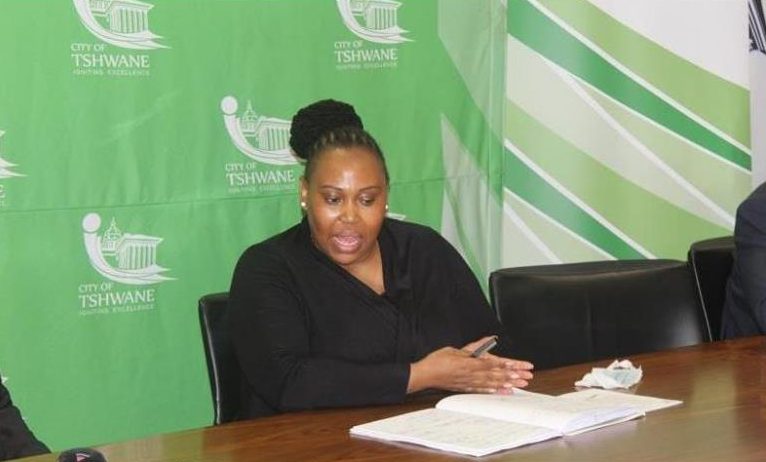
Tshwane’s acting city manager has been tasked with fixing problems in the city’s water and electricity billing system by incorporating a budget for meter readings after “some” irregularities were found.
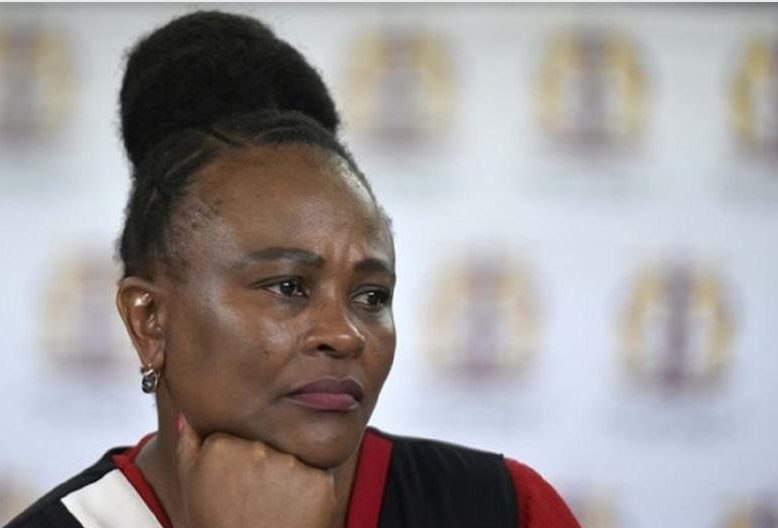
Public Protector advocate Busisiwe Mkhwebane last week Friday said acting city manager Mmaseabata Mutlaneng had 60 days to implement remedial action on the metro’s billing system.
This was after the release of a report on billing problems in Tshwane on the same day.
Mutlaneng must also submit a progress report on the installation of a prepaid metering system aiming to replace the 70 000 conventional meters.
She must also submit a report on the development of the USSD platform aimed at giving account holders free access to submit meter readings using mobile phones.
A task team must also review the credit control and debt collection policy, and the standard electricity supply bylaws that allow for the use of estimation of water and electricity consumption.
This came after a string of complaints that the metro billed consumers irregularly for water and electricity because those bills were based on estimated consumption instead of regular meter readings.
Between 2018 and 2021, the Public Protector’s office received around 70 such complaints.
Recently ActionSA, along with residents, protested outside Tshwane House in the Pretoria CBD over the accuracy of Tshwane’s billing system as residents and businesses were hit with bills as high as R930 780.
The investigation into the billing problems began at the end of February 2020.
“We found that it was partly true that the metro billed consumers irregularly for water and electricity based on estimated consumption due to its failure to take meter readings regularly,” said Mkhwebane.
According to her, investigations revealed that the metro employed its own meter readers and engaged private service providers to read meters when there was a budget.
She said due to budgetary constraints, the metro had not approved private meter readings.
“Standard electricity bylaws of 2013 permit the metro to bill consumers based on estimated consumption. The national rationalised specification requires that meters be read at least once every three months. But evidence gathered and also confirmed by the metro indicated that, in some cases, it estimated meter readings beyond a period of three months.
ALSO READ: Memorial service for Klofie teacher who lost six-month Covid-19 battle
“This conduct constitutes improper conduct in state affairs as envisaged in the constitution and maladministration as envisaged in the public protector act.”
She said in one extreme case, a customer named E. Van Wyk, was slapped with a bill of more than R1.6-million due to the erroneous updating of new meters.
“Once the metro uploaded the correct meters and readings, the bill dropped to nearly R360 000 resulting in a credit of over R1.2-million.”
“In the case of T. Khanyezi, the metro estimated his water consumption for June 29, 2018, to April 2, 2019, to be more than R143 000.”
Mkhwebane said the old meter was faulty and replaced with a new one in July 2019.
“The previous bill was reversed and Khanyezi’s bill dropped to just over R4 000.”
She said the metro plans to establish an Ombudsman office to review the unit dealing with formally lodged disputes when a client is not satisfied with the query response received from customer care.
Mkhwebane said her office would monitor this closely.
Do you have more information about the story?
Please send us an email to editorial@rekord.co.za or phone us on 083 625 4114.
For free breaking and community news, visit Rekord’s websites: Rekord East
For more news and interesting articles, like Rekord on Facebook, follow us on Twitter or Instagram