What you need to know about typhoid fever
Typhoid fever, caused by Bacterium Salmonella typhi, is spread through contaminated food, water, and/or close contact.

A recent confirmation of typhoid fever cases in Tshwane has sparked much curiosity about the infection.
While seven cases have been confirmed since the end of 2021, authorities have ruled out a cluster outbreak.
“Reported cases are spread out and there is no cluster outbreak currently,” said Tshwane MMC for Health Rina Marx said.
Typhoid fever, caused by Bacterium Salmonella typhi, is spread through contaminated food, water and/or close contact.
Without medical attention, it could be potentially life-threatening.
In December 2021, two cases were confirmed and five more between January and February 2022.
According to Marx, the most recent case was confirmed on Thursday, February 17.
“The reported case are all laboratory-confirmed,” she said.
The National Institute for Communicable Diseases (NICD) confirmed cases in Gauteng, the Western Cape and North West.
“Contamination of municipal water is extremely unlikely to be the source of infection in any of these clusters, due to the
demographics of the cases, places of residence and source(s) of drinking water,” NICD said.
Despite the disease only being confirmable through laboratory testing, some of the symptoms include:
– High fever – usually prolonged
– Fatigue
– Headache
– Nausea
– Abdominal pain
– Constipation or diarrhoea
“The diagnosis is usually made by isolating the bacteria from a blood sample (blood culture). There is no reliable rapid test,” an alert by the National Institute for Communicable Diseases (NICD) said.
The institute further said that people still had to complete their treatment, even though their symptoms had resolved as they could still harbour bacteria that continued to be shed in their faeces.
“About 10% of persons who have had an episode of enteric fever intermittently shed bacteria in their faeces for several weeks after infection while up to 4% of those infected become chronic carriers who shed bacteria in their faeces for more than a year,” the NICD said.
Those who carried the infection could spread it to others when their faeces contaminated food or water.
“Carriers are very important as reservoirs of infection in endemic countries and cause ongoing transmission in their communities.”
Typhoid fever could be treated with antibiotics, but the fatality rate for patients who developed complications was up to 30%.
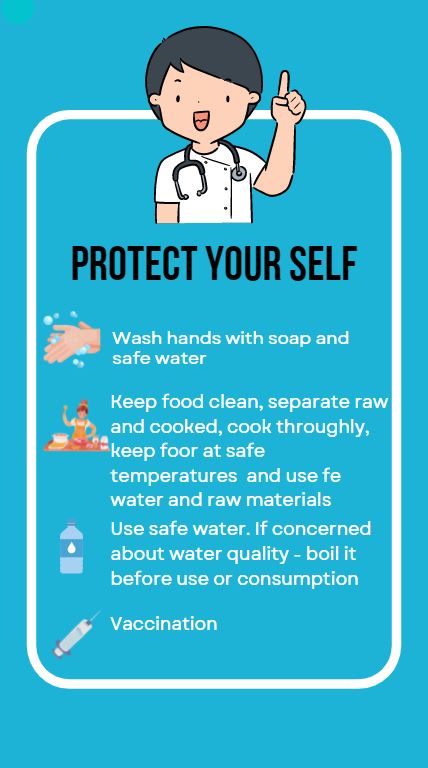
The measures to prevent and control typhoid fever include:
– Hand hygiene. Wash hands with soap and safe water before eating or preparing food and after using the toilet or changing a baby’s nappy.
– Food safety practice. Follow the World Health Organisation’s five keys to safer food: keep clean; separate raw and cooked; cook thoroughly; keep food at safe temperatures and use safe water and raw materials.
– Using safe water. If people are concerned about the quality of water they use for drinking and cooking, then it is recommended to treat the water first by boiling it (place water in a clean container and bring to a boil for 1 minute) or treating it with household bleach (add 1 teaspoon of household bleach (containing 5% chlorine) to 20-25 litres of water, mix well and leave it to stand for at least 30 minutes before use).
ALSO READ: Tshwane confirms typhoid fever cases
Do you have more information about the story?
Please send us an email to editorial@rekord.co.za or phone us on 083 625 4114.
For free breaking and community news, visit Rekord’s websites: Rekord East
For more news and interesting articles, like Rekord on Facebook, follow us on Twitter or Instagram