Online tool helps vets monitor oxygen levels in immobilised rhinos
Field veterinarians treating wild rhinos now have a reliable backup method when standard human pulse oximeters are inaccurate during complex procedures.
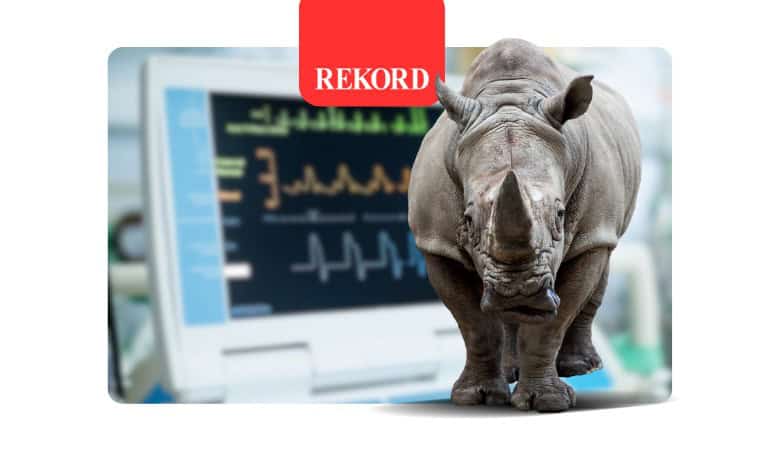
Researchers from the University of Pretoria and SANParks have adapted an established oxygen equation into an online calculator that accurately estimates blood saturation in wild rhinos.
The tool uses portable blood gas analyser measurements to estimate oxygen saturation more reliably than conventional pulse oximeters during field procedures.
Immobilisation is necessary for veterinary treatment, relocation, tracking, and anti-poaching interventions. However, the drugs used can suppress breathing and cardiovascular function, causing blood oxygen levels to drop.
Faculty of Veterinary Science researchers Dr Thembeka Mtetwa and Prof Edward ‘Ned’ Snelling collaborated with SANParks to address monitoring challenges in the field, where specialised laboratory equipment is limited.
The study, published in BMC Veterinary Research, showed that an established equation describing oxygen binding to haemoglobin can be adapted for white rhinos.

Online calculator delivers rapid field results
Snelling said the calculations were incorporated into an online tool that produces rapid results by factoring in body size, blood pH, and oxygen tension.
Mtetwa explained that the method relies on measurements already collected by portable blood gas analysers. She noted that standard pulse oximeters were designed for humans and become less reliable when rhinos experience critically low oxygen levels.
Veterinary Wildlife Research Centre affiliate Prof Leith Meyer noted that while pulse oximeter probes on a rhino’s third eyelid work well between 70% and 100% saturation, accuracy drops below 70%.
Kruger National Park trial validates accuracy
Snelling said the study involved immobilising 16 wild white rhinos in Kruger National Park, where arterial blood samples were analysed using portable blood gas analysers and validated against laboratory-grade co-oximeter reference measurements.
The team found that the calculator produced more reliable estimates than widely used pulse oximeters when paired with blood gas analysers.
Retired SANParks official Dr Peter Buss said the tool gives field veterinarians a valuable additional resource.
The calculator is not intended to replace pulse oximeters, which provide continuous, non-invasive readings, but acts as a reliable backup when greater accuracy is required. Mtetwa added that the two methods complement each other during prolonged or complex procedures.
Researchers noted that further work is needed to refine immobilisation drug combinations and emphasised the importance of accounting for species-specific differences when applying human medical technology to wildlife.
Do you have more information about the story?
Please send us an email to bennittb@rekord.co.za or phone us on 083 625 4114.
For free breaking and community news, visit Rekord’s websites: Rekord East
For more news and interesting articles, like Rekord on Facebook, follow us on Twitter or Instagram or TikTok or WhatsApp Channel