No typhoid fever-linked bacteria found in water – Rand Water
"The City is working with all its relevant stakeholders to monitor the situation and calls for calm as there is no need to panic," says Tshwane metro MMC for Health Rina Marx.

Tshwane drinking water supplied by Rand Water has tested negative for any traces of typhoid fever-linked bacteria, the water utility said.
“Escherichia coli has not been detected in the drinking water supplied by Rand Water,” spokesperson Justice Mohale said.
(Escherichia coli is a bacteria used as an indicator for the presence of faecal pollution and disease-causing organisms such as Salmonella Typhi.)
“Drinking water supplied by Rand Water complies with drinking water standards and is safe for human consumption.”
ALSO READ: Don’t panic, says Tshwane metro as typhoid cases jump to 9
He further reassured consumers that their drinking water treatment processes were effective in inactivating harmful bacteria, adding that they maintained “intensive” water quality monitoring programmes.
The ruckus over typhoid fever began when the National Institute for Communicable Diseases (NICD) confirmed a cluster outbreak of the potentially life-threatening infection last week.
Since then, the national Department of Water and Sanitation urged municipalities to conduct the necessary drinking water analyses in their respective areas.
This was prompted by the department being inundated with inquiries related to drinking water quality.
“The water is tested regularly,” said Tshwane metro MMC for Health Rina Marx.
“The compliance achieved is 100% and the quality of the water sits at excellent in the latest report.”
Marx said they were still, however, closely monitoring the situation.
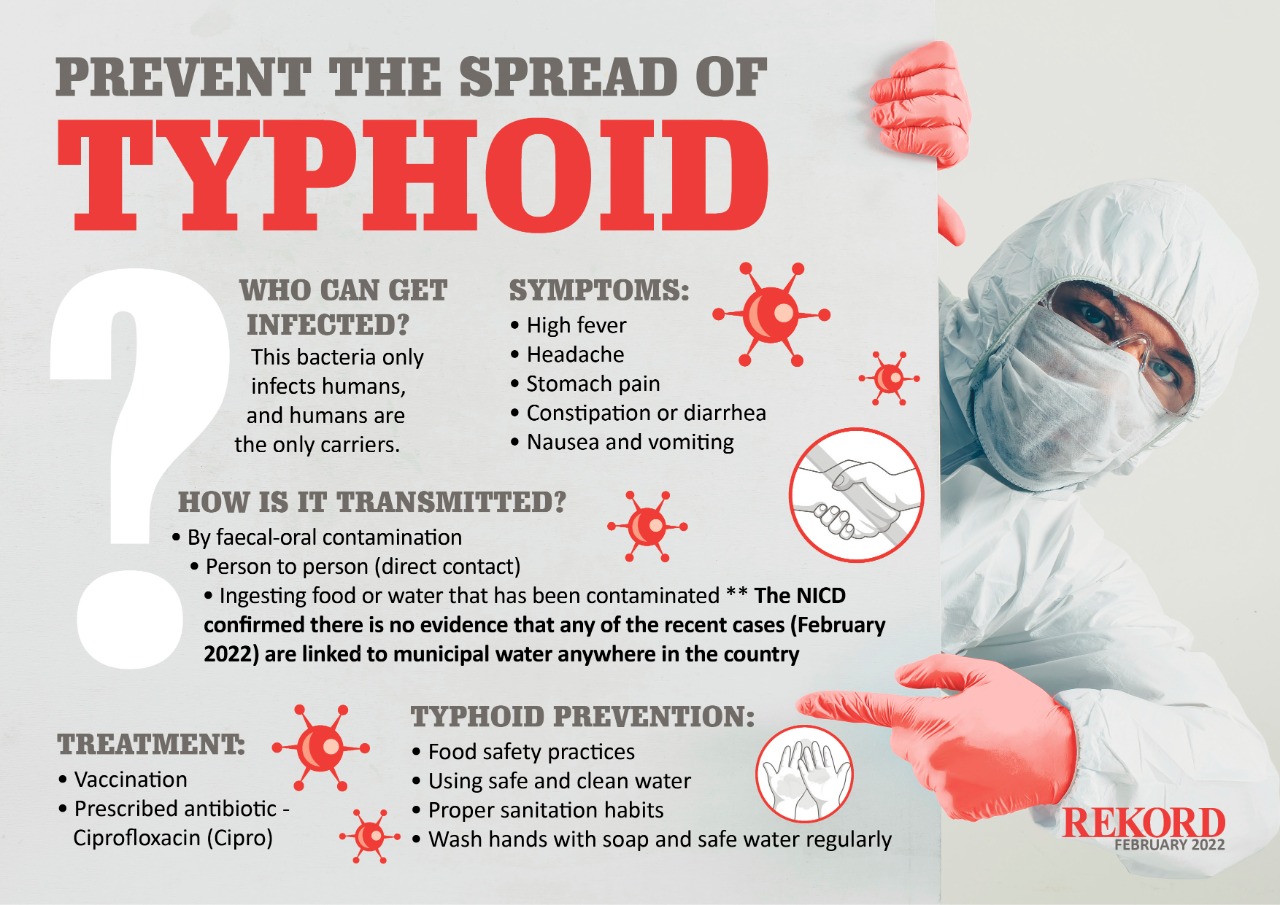
“Enteric fever, also known as typhoid fever, is a systemic illness caused by infection with Salmonella Typhi. It spreads by ingesting contaminated food or water and direct contact from person to person,” she said.
Thus far, the number of confirmed cases stands at nine, of which two were reported in December 2021 and the rest between January to date.
“There are no confirmed hotspots in the city. Cases are scattered all over the city. There is no need for residents to panic.
“In the last three months, starting from December 2021 to February 2022, only seven sporadic laboratory-confirmed cases were reported through the National Medical Notification system – two cases in December 2021, four cases in January 2022, and one case in February 2022,” Marx said.
Symptoms of infection may include an on-and-off fever in the first week, but becomes sustained; headache; abdominal pain or cramps; nausea; vomiting, constipation, or diarrhoea.
“Typhoid is a notifiable disease and should be reported to the Department of Health by the diagnosing health facility,” she said.
Marx further said residents who suspected that their water was contaminated were advised to boil their water before consumption.
“Additionally, we urge residents to practice comprehensive hand hygiene,” she said.
Those with symptoms were advised to present to their nearest health facility for investigation, diagnosis, and treatment.
“Typhoid fever is treated with antibiotics that should be available in all health facilities,” she said, adding that there was “no need to panic”.
Do you have more information about the story?
Please send us an email to editorial@rekord.co.za or phone us on 083 625 4114.
For free breaking and community news, visit Rekord’s websites: Rekord East
For more news and interesting articles, like Rekord on Facebook, follow us on Twitter or Instagram