Tuks students fight climate change with succulents in paper cups
“Moreover, each hectare of porkbush could capture 4.2 tonnes of carbon yearly."
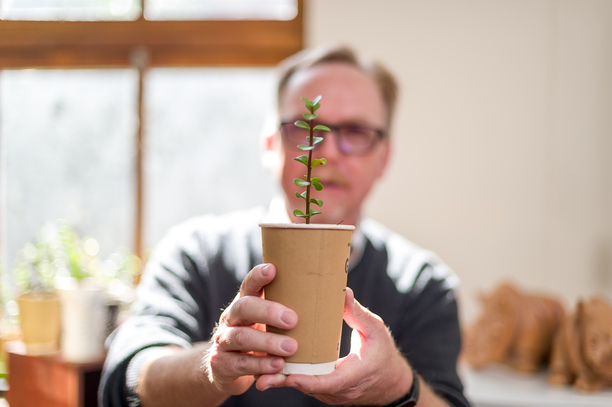
University of Pretoria (UP) students and their professor have launched a project to contribute to carbon dioxide reduction in the atmosphere by growing succulents in non-recyclable coffee cups.
Porkbush (Afrikaans: spekboom) is a small bright green-leaved tree with reddish stems and is an indigenous plant.
A few staff members have been collecting coffee cups and assisted the project’s leader, UP professor Adrian Shrader, and his third-year conservation ecology students in planting 90 spekbooms recently.
Shrader is the deputy head of teaching and learning at the Zoology and Entomology Department and is an associate professor of mammalian behaviour ecology.
The project aims to contribute to carbon dioxide reduction in the atmosphere and raise awareness about climate change.
“Increasing carbon dioxide levels in the atmosphere is resulting in climate change,” Shrader said.
He said the spekboom had enormous carbon-storing capabilities.
“Growing it is one way to try to reduce carbon dioxide.”
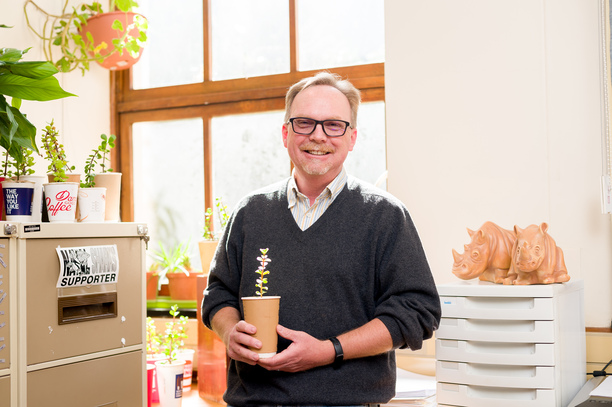
He said by growing the , spekboom the university was hoping to raise awareness of both climate change and the opportunities to help reduce carbon and highlight the issue of single-use containers.
He said a thicket of spekboom was 10 times more effective per hectare at carbon fighting.
“Moreover, each hectare of spekboom could capture 4.2 tonnes of carbon yearly. The more there is, the larger amount of carbon stored.”
He said consumers had to stop using coffee cups that seemed recyclable because they were made out of paper material.
“They actually contain a thin layer of polyethene, which allows the cups to hold liquid.
“But that makes them non-recyclable.”
Shrader said the idea for the project came as he had seen many coffee cups being used and thrown away on campus.
“So I thought that using these cups would be a good way to generate awareness.”
He said since then students had been the ones that had been bringing in cups and spekboom clippings.
“There are also a couple of staff members who are collecting cups and growing clippings.”
He said once the spekboom were planted, they were given away to staff and students.
“I hope that they will take care of them and eventually plant them in pots or their gardens,” Shrader said.
“Every little bit helps. Also, I hope that this will encourage people to move away from single-use coffee cups and instead buy reusable cups.”
ALSO READ: UP students on mission to empower, uplift African women
Do you have more information about the story?
Please send us an email to editorial@rekord.co.za or phone us on 083 625 4114.
For free breaking and community news, visit Rekord’s websites: Rekord East
For more news and interesting articles, like Rekord on Facebook, follow us on Twitter or Instagram