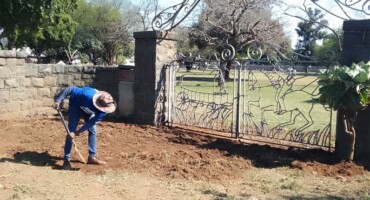
Tshwane metro talks ‘Day Zero’
MMC discusses plans to avoid what has become known as 'Day Zero' - the day that water taps will simply run dry.
The Tshwane metro is hoping that a collaborative scheme with the Danish city of Aarhus will help prevent what has euphemistically become known as “Day Zero” – the day that water taps will simply run dry.
“As the country’s migration hub, Tshwane is highly water insecure,” said utilities MMC Daryl Johnston.
“This is concerning as we see other metros teetering towards Day Zero, leaving residents and businesses in the lurch.”
He hoped this water preservation scheme, in partnership with Denmark and the C40 Cities Climate Leadership Group, would help the metro avoid this.
Last Tuesday, the metro participated in the C40 Cities Africa Water Security Forum 2022.
The forum was aimed at ensuring that cities had a better understanding of their water security needs and priorities.
Johnston said the collaboration with the leaders of Aarhus would succeed in its plan to create a water sufficient and self-reliant city support.
The project first would clamp down on water loss, optimising water sources and wastewater facilities.
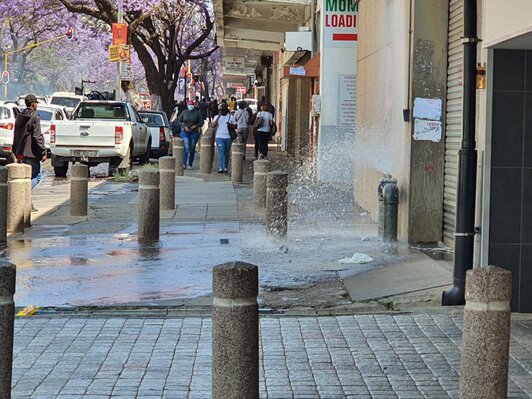
Water loss is mainly attributable to asbestos cement pipes bursting because they were old and degrading.
This is the quantity of water that has been lost since 2am Sunday morning 13/03/2022 due to poor workminship from City of Tshwane employees. It is now 07H15 in the morning and no employee is on sight (5hours after reporting pipe burst.) pic.twitter.com/rL5Usmiq3Z
— Observant Zicky (@MaleleZicky) March 13, 2022
He said the metro sought to identify and prioritise the replacement of its ailing network in 240 areas to reduce water losses.
He said the metro was caught in a conundrum because it had a limited budget to replace the aging pipes, yet lost a staggering R1-billion per year’s worth of water due to burst pipes.
@CityTshwane @tshwane_mayor water pipe burst at Jubilee Park Sunnyside pic.twitter.com/1Gu4J7HAFG
— Simamkele (@SYXANI) May 8, 2022
“Our aim is to stretch that budget by identifying the most critical pipes to replace first.
“We also need to take matters into our own hands and accelerate the optimisation of our own sources.”
In a bid to accelerate city-owned water sources, the metro sought to incorporate groundwater, rainwater and greywater into its strategy.
The metro produced around 17% of its own water through a mix of water treatment plants, boreholes and springs. It would, therefore, be able to achieve water resilience with a bit more effort.
“We are looking into spending an additional R50-million to expand our Rietvlei waterworks to increase our capacity for the long-term benefit of local communities.”
Johnston said this additional capacity would enable the metro to provide water to new settlements, and facilitate economic expansion.
“This additional capacity does not exempt us from continuing to work on improving our reticulation system to prevent water losses. We must find new sources of water supply and innovative solutions to reduce water losses.
“At this juncture, we are already straining against our water allocation from Rand Water. Until the second phase of the Lesotho Highlands water project is initiated, the growth of Gauteng municipalities is throttled,” he said.
He said such a choke on water was a “worrying” prospect for growth and development.
Tshwane metro replaces more than 50-years-old decaying asbestos water pipes
East of Pretoria suburbs such as Maroelana, Hazelwood, Waterkloof, Ashlea Gardens and Alphen Park are set to benefit from the project starting this week. https://t.co/fAYBVAiHtD#RekordNews | #Tshwane pic.twitter.com/kCrX66C6rn
— Pretoria Rekord (@RekordNewspaper) May 17, 2022
Do you have more information about the story?
Please send us an email to editorial@rekord.co.za or phone us on 083 625 4114.
For free breaking and community news, visit Rekord’s websites: Rekord East
For more news and interesting articles, like Rekord on Facebook, follow us on Twitter or Instagram