Tshwane morgues: new equipment will ease backlog
“It is more challenging to take the fingerprints of a deceased person than a live person, and special equipment is necessary to obtain clear and useable fingerprints,” says Tshwane health morgue head.
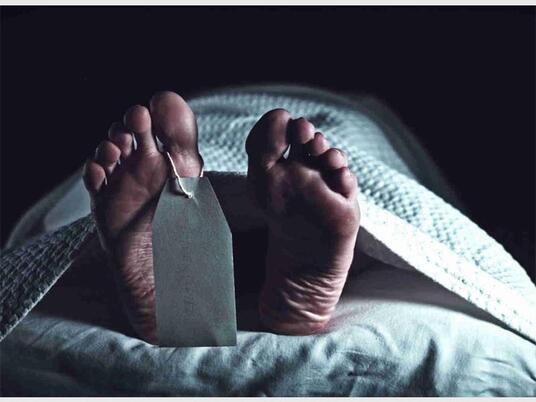
Tshwane government morgues at times deal with a piling-up of unidentified and unclaimed bodies far past the 30-day set period. This means bodies are piling up and causing a backlog.
This is happening due to government morgues not having better identifying equipment, Gauteng health forensics pathology services Tshwane deputy director, Jaco Louw said.
“Non-availability of specific types of fingerprint-taking equipment and tools in South Africa, considering that the fingerprint pads and ink required are different from what is used for the general fingerprinting of live persons,” he said.
“It is more challenging to take the fingerprints of a deceased person than a live person, and special equipment is necessary to obtain clear and unusable fingerprints.”
Louw said it was more difficult to identify burnt, damaged, decomposed, water-exposed or dehydrated fingers. However, with the department recently purchasing improved fingerprint equipment, he said this would assist in identifying bodies quicker.
“The equipment allows special techniques to be applied in taking fingerprints of poor quality due to burns or decomposition, a task usually performed by police forensic investigators,” he said.
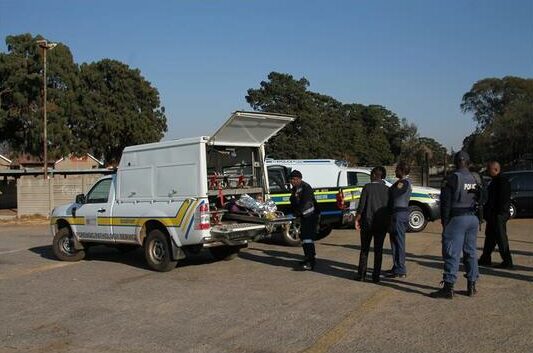
In May last year, Gauteng province experienced the largest DNA backlogs of 115% in police forensic science laboratories.
Louw said the police DNA-related backlogs affected the health pathology service also, “because DNA tissue taken from unidentified bodies is sent to the SAPS laboratory for processing and comparison with the DNA samples obtained [by the SAPS] from relatives.
“The delays in determining a deceased person’s identity cause frustration among relatives, as the deceased relative cannot be released without being identified using scientific methods, such as DNA or odontology.”
He said delays in obtaining fingerprint results and feedback from police investigating officers were among the main factors contributing to unidentified and unclaimed bodies not being buried within the prescribed 30 days.
In the year 2020, the health department reported 1 173 unclaimed bodies in Gauteng forensic pathology service mortuaries. Pretoria services accounted for 117 of these.
“Before an unknown deceased is buried, all due processes must be complied with, and all efforts to establish the deceased’s identity should be exhausted. Communication with the SAPS investigating officer, the Bureau for Missing Persons, and the Gauteng communications office [to notify the media about identified unclaimed bodies] is done,” Louw said.
The number of unidentified and unclaimed bodies in Tshwane morgues fluctuates daily, Louw said.
“The prescribed standard is not to keep bodies in storage for longer than 30 days to minimise potential health risks. However, the investigation processes often take much longer, necessitating that some unidentified and unclaimed bodies are kept for extended periods.”
He said the burying of unidentified bodies was the responsibility of the Tshwane municipality in the region.
Forensic Pathology Service has three facilities in Tshwane, in the Pretoria CBD, Ga-Rankuwa and Bronkhorstspruit.
Recently the Pretoria International Committee of the Red Cross (ICRC) donated fingerprinting equipment to the Bronkhorstspruit Forensic Pathology Service to help reduce the number of unidentified deceased and provide closure to the families of missing persons.
“The equipment is intended to assist in the capturing of better quality fingerprints from the unknown deceased to enhance the possibility of obtaining an identification when these are searched through the various databases used by the authorities,” said ICRC Forensic Specialist Lucinda Evert.
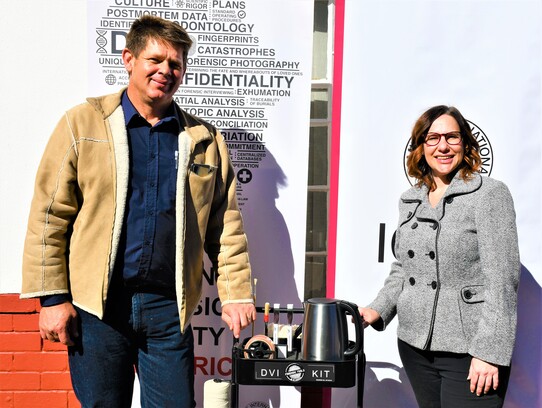
“The equipment is specialised for the taking of fingerprints from deceased persons, which is very different from that of the living, and this type of equipment is lacking in many mortuary facilities.”
Louw explained the process of identifying the deceased as follows:
– Upon admission of a deceased [at health forensics], fingerprints will be taken after a post-mortem. If a deceased remain unidentified or unclaimed after admission, the fingerprints are sent to the SAPS and the Department of Home Affairs for possible identification.
– If the fingerprints are identified, the SAPS investigating officer in the case is provided with the information to trace the relatives of the deceased.
– If the fingerprints remain unidentified, DNA tissue will be taken and handed to the SAPS Forensic Science Laboratory. If relatives come forward later, the relatives’ DNA can be compared with the DNA on record.
– If the deceased could not be identified via fingerprints or other means, or if the SAPS could not locate any relatives, the deceased would be buried as an unidentified or unclaimed person.
ALSO READ: Protestors set two buildings on fire in Hercules
Do you have more information about the story?
Please send us an email to editorial@rekord.co.za or phone us on 083 625 4114.
For free breaking and community news, visit Rekord’s websites: Rekord East
For more news and interesting articles, like Rekord on Facebook, follow us on Twitter or Instagram