Local businesses get short end of stick during load-shedding
Local businesses have seen a drop in productivity due to load-shedding.
The recent implementation of Stage 6 load-shedding has left South Africans in the dark for a few hours, however local businesses struggle to cope with the consequences.
A bakery in Pretoria North has already lost 40 cakes in the oven, a fridge, two computer screens and one printer.
Owner Nataleen Vorster said: “We are unable to assist customers at any time of their choosing as production has slowed down.”
She said the bakery was also baking fewer cakes reducing her turnover
And as if that weren’t enough, her expenses have risen since she also needed to replace appliances damaged as a result of load shedding.
“The continuous outages are causing wear and tear to appliances, which insurance does not cover.”
The business was established 13 years ago and Vorster has looked into alternative power supply during load-shedding but this has proved quite costly.
“We had a small generator for emergencies which broke due to continuous usage as it could not keep up with the demand.
“We have put down a deposit on a generator which we are waiting for, but also had to borrow money to do so to get a big enough one as it cost us R120 000 excluding delivery and installation fees.”
She added that fuel is also continuously rising.
“With the smaller generator that broke, it cost us an average of R100 per hour, the larger one’s costs we have not calculated yet.”
She added that a solar and inverter system would cost R250 000, in excess of which they cannot afford.
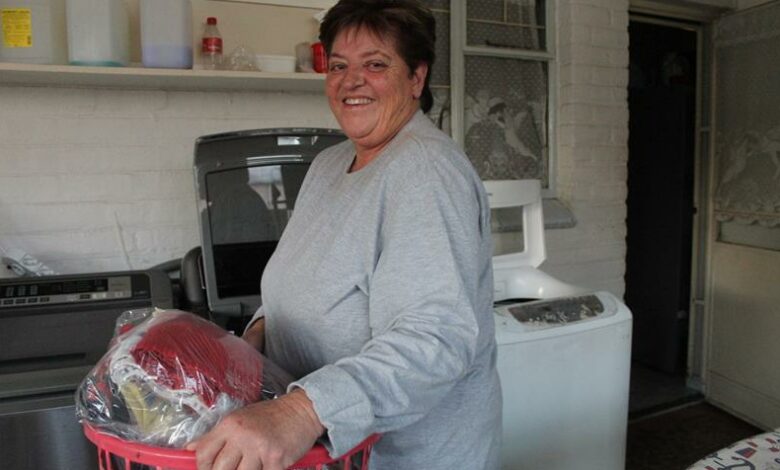
A laundromat in Pretoria had to look at alternative ways to continue giving a service, which involves employees getting up at 04:00 to start doing their customers’ laundry.
Owner Catharina Viljoen, who is solely reliant on electricity to make a living, said that she can no longer offer her customers same day service which she prided herself on in the past.
“This is my only source of income and I have three more people who I have to look after, and if we slow down on production, no money will come into the business.”
Viljoen added that she had to replace two machines and even though she claimed from insurance, the pay-out was not enough to cover the cost of replacement for even one machine.
“Our production is not as fast as it used to be but we are trying our best to ensure that we get everything done, so we have to work odd hours.”
While businesses are left to count their losses, residents are left feeling vulnerable in the dark as they can only see as far as a flashlight can shine.
The Sinoville CPF has offered the following safety tips to put residents’ minds at ease:
– Know your loadshedding schedule.
– Keep the batteries of your phone, laptop, portable lights and other electronic devices charged with enough power to last for the load-shedding interval.
– Keep a printout of emergency numbers safe and accessible.
– Keep your gate battery functioning at optimal levels – a flat gate battery may leave you vulnerable outside your home. Some gate motors open automatically when load-shedding occurs. Please check your gate and those of your neighbours during load-shedding.
– Have powerful torches/headlamps available at easily accessible places for you and your family.
– Install solar lighting in strategic locations around your house to ensure that there is adequate visibility and lighting during load-shedding.
– Test your alarm system and have a backup battery ready.
– When travelling during load-shedding please double-check every road/intersection that should be treated as four-way stops.
ALSO READ: Residents warned to beware fake firefighters
Do you have more information about the story?
Please send us an email to editorial@rekord.co.za or phone us on 083 625 4114.
For free breaking and community news, visit Rekord’s websites: Rekord East
For more news and interesting articles, like Rekord on Facebook, follow us on Twitter or Instagram