WATCH: UP students solar water purifier scores high in world competition
The current laboratory prototype can provide 120l of clean water in four hours in off-grid situations and cater to least eight households.
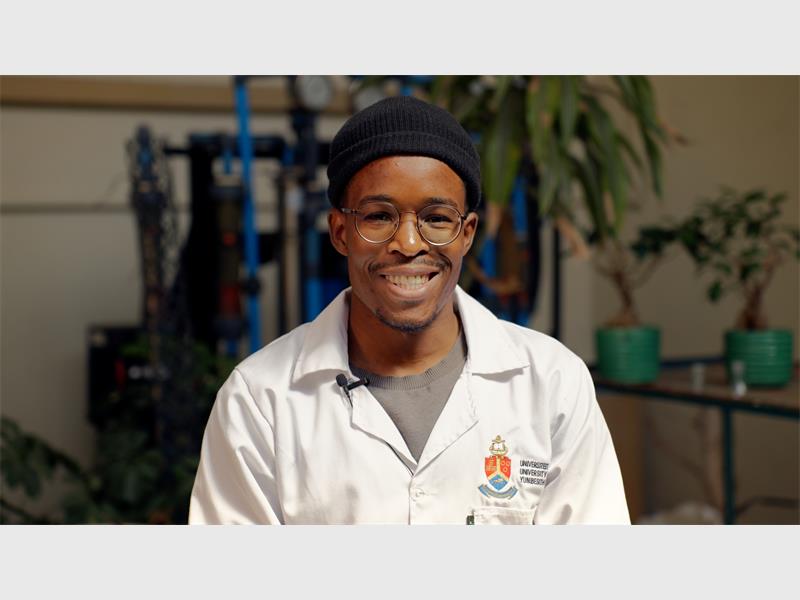
A group of UP students from the Plasma Research Unit has scored a second-place finish at the international conference on sustainable development competition for technological solutions to climate change.
The competition is aimed at finding multidisciplinary solutions to climate-related problems and was held in New York City on September 19.
The UP team, dubbed “Tujenge”, designed a small-scale, solar-powered water purification system using plasma technology to assist the Tshikuwi community in Limpopo to purify potable water as soaring electricity prices made boiling too costly.
The rural village in Limpopo has six boreholes but four have been declared not fit for human consumption.
ALSO READ: The Cost Benefits of Solar Power in South Africa
UP was invited to the competition, along with Arizona State University (United States), Göttingen University (Germany), Pontifical Catholic University of Rio de Janeiro (Brazil), and Tsinghua University (China).
Tujenge, meaning “let’s build” in Swahili, is comprised of chemical engineering PhD students Samuel Babalola and Hilda Kyomuhimbo, master’s student Victor Tshigo and master’s environmental management student Amogelang Booysen.
The group started developing ideas for the purifier at the beginning of the year.
“Boiling water is not an energy-efficient method, and also does not remove all contaminants such as manganese as can be done through plasma technology,” Babalola said.
Babalola said the team’s current laboratory prototype could provide 120 litres of clean water every four hours in off-grid situations.
“This is enough to serve at least eight households.”
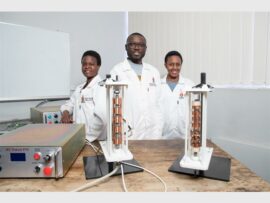
Head of the UP plasma research unit and senior researcher chemical engineering department, Dr Samuel Iwarere, said the students used a lab-scale plasma reactor purification unit that was capable of purifying water to drinking standards.
Iwarere hopes that the research done in the unit will ultimately help people in many sub-Saharan African countries that struggle to access clean, drinkable water.
ALSO READ: TUT Solar Team the new Ilanga Cup Solar Challenge 2022 champions
“Many lives are lost through water-related diseases. Our vision is to see a healthy and productive Africa and to address some of the UN sustainable development goals, and the African Union’s Agenda 2063.”
The students worked with the residents of Tshikuwi to obtain the water samples for testing and made a video for submission to the competition.
Manager of sustainable development solutions network (SDSN) of South Africa and team partner Dr Yolande Steenkamp said the team was touched by the hospitality of the villagers during its field research and video shoot.
She recalled that village elder Marikhela Muthuphei Albert said, “Please, you have to adopt this village as your child”.
She said plasma technology for water purification was one of many projects UP chemical engineers were working on to develop easily operated small-scale water purification systems that didn’t use chemicals.
She said the students are also working on plasma technology to purify water that contains antibiotics and antifungal medicines, deactivate antibiotic-resistant bacteria and use ozone in the purification process.
“To this end, and thanks to three years of further funding from the Water Research Commission of SA (WRC), Dr Iwarere and his team at the unit are focused on combining plasma technology and renewable energy to provide clean drinking water to rural, off-the-grid communities.”
Project manager Victor Tshigo said this research was important for the country.
“Many villages in South Africa and the rest of Africa do not have access to clean running water and electricity. Therefore, the addition of a solar energy unit to the design is important,” he said.
Watch:
SDSN-SIEMENS Gamesa #UniversitiesforSDG13 Competition: University of Pretoria awarded 2nd place – YouTube
ALSO READ: Metro to consult solar-powered home owners or businesses on selling surplus power
Do you have more information about the story?
Please send us an email to editorial@rekord.co.za or phone us on 083 625 4114.
For free breaking and community news, visit Rekord’s websites: Rekord East
For more news and interesting articles, like Rekord on Facebook, follow us on Twitter or Instagram