When load-shedding is a matter of life and death
"I will die in three days if I don't get 11 hours of dialysis every night," says Queenswood resident of load-shedding nightmare.
Load-shedding might be an annoyance to some and greatly impact the business and finances of others; yet to some Pretoria residents, it is a threat to their very lives.
Queenswood resident Robert Gibson would die in three days if he doesn’t receive 11 hours of dialysis every night.
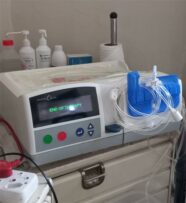
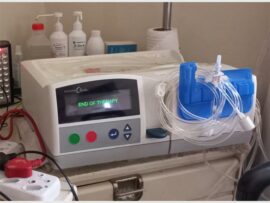
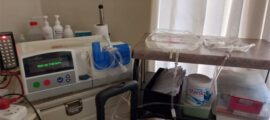
“Every night I have to be hooked up to thousands of rands’ worth of medical equipment, but load-shedding interrupts my dialysis.
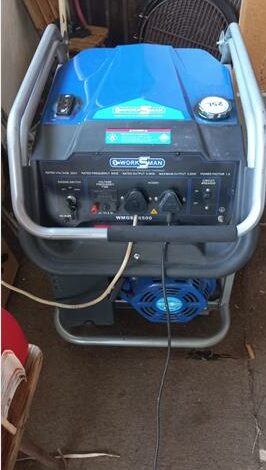
“With stage 6 load-shedding, a full tank of petrol in the generator only lasts one day with two eight-hour sessions. My nephrologist tells us that I could die within three days without effective dialysis to remove toxins,” said Gibson.
Gibson was diagnosed with renal failure in 2013 but, thankfully, modern medical equipment means that he can undergo dialysis from home to remove toxins from his body and save his life.
Gibson and his wife Heleen have found ways to manage the medical treatment through load-shedding over the years.
Recently, it has however become much more difficult around escalating levels of load-shedding and the increasingly longer outages resulting from power infrastructure being damaged by load-shedding.
Heleen recounts how at 01:30 on Monday last week, she had to frantically find another generator to keep her husband’s dialysis machine running when their own failed.
“We had to go and borrow one in the middle of the night. He lost an hour that night.”
Heleen said that managing the treatment through load-shedding had become a way of life over the past nine years. “You work around it. But this way of life has changed. It has become stressful,” she said.
When Gibson started the at-home treatment in 2016, working around power outages was fairly easy as they could fit dialysis sessions between load-shedding bouts. But the situation is getting worse.
“Load-shedding and old infrastructure could lead to my early death. If we have power outages and our generator blows like it did last night, I’m dead within a maximum of five days.
“If I miss hours overnight, I start feeling sick. It takes days to recover and remove the accumulated toxins.
“The stress and anxiety are terrible.
“We are cloistered on this property and we can’t go anywhere. I am stuck on this property because of kidney failure. Now with load-shedding, we just have extra costs on top of it.”
Heleen is a retired Mountain View school principal and relies on her pension to support the family. While medical costs are mostly covered by medical aid, the Gibsons have to stretch their income to cover other costs that arise, such as generator repairs and fuel, which is putting increasing pressure on their stretched finances. Heleen has had to do extra work to make ends meet and cover their expenses.
The Gibsons said that they have always enjoyed living in their neighbourhood since they moved there in the late 80s.
“It is so hard to look family and friends in the eye and let them know what situation we are in. I don’t let them see. I don’t think even my family knows how much we have gone through, we don’t want sympathy.
“I walk around with a sword over my head,” said Gibson. “My muscle strength is so bad. I have a small grandson, I can’t play with him as a grandpa.”
Gibson said that city representatives told them that they weren’t the only ones being affected by extended load-shedding. “It might be true, but it is not a comforting answer. The problem is that people with these issues have to suffer even more.”
The power outages in this area are substantial. One resident who lives nearby and knows the Gibsons have been tracking power outages since 2020.
Franco Ferreira’s data, which he shared with Rekord, show that the area has had 41 483 minutes of power outages outside load-shedding since mid-2020.
According to Ferreira, the outages are often unnecessary as the wait is sometimes due to slow responses by the metro.
“About a month ago, we had heavy rain with some hail and the power tripped. We asked the group if the power was on and we realised that it was just us that had no power. We reported the power failure and got no response or assistance for a day,” explained Ferreira.
He said that he spoke to local councillors but eventually took it upon himself to contact the relevant service to reconnect their power.
After over 48 hours with no power, two minutes was all it took to turn the power back on when technicians arrived.
“Those two minutes cost us about R700 in petrol for the generator,” said Ferreira.

ALSO READ:
How to manage your laundry during loadshedding
Do you have more information about the story?
Please send us an email to editorial@rekord.co.za or phone us on 083 625 4114.
For free breaking and community news, visit Rekord’s websites: Rekord East
For more news and interesting articles, like Rekord on Facebook, follow us on Twitter or Instagram