Laudium police visit schools to talk about drugs, bullying
The SAPS are not conducting these programmes because there is a spike in drug- and alcohol abuse, Chokoe
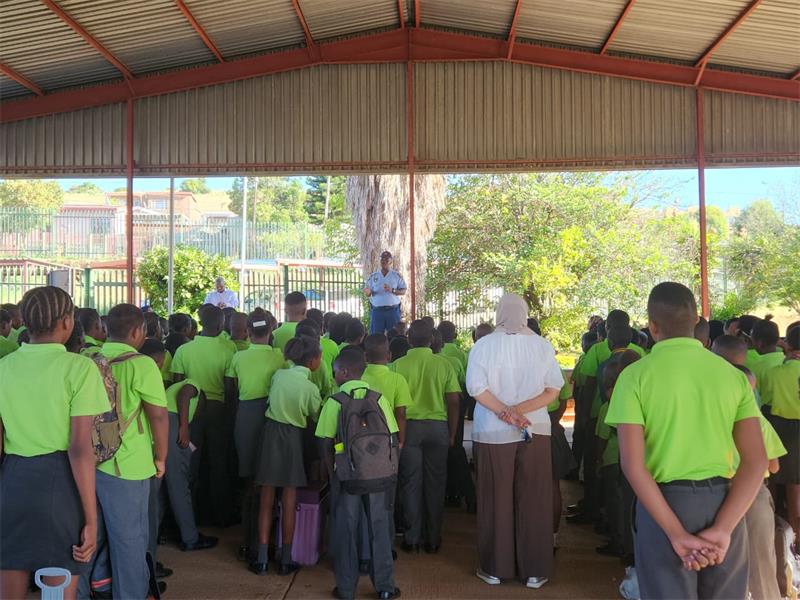
Laudium police recently visited schools on an anti-substance abuse campaign.
Police spokesperson Sergeant Simon Chokoe said these programmes were conducted not because there was a rise in drug abuse, gangsterism, or other substance abuse but as a preventative measure.
“We are not conducting school visits because there is a spike in all of these things. It’s not even sparked by the rise of gangsters in our community,” said Chokoe.
He said the programme was part of the police trying to prevent things from happening, adding that it was also part of the police’s school safety programme.
Police visited Laudium Heights primary school to talk to the learners about the dangers of bullying their fellow learners, and substance and drug abuse.
According to Chokoe, the message reached more than 1 086 learners in grades 1 to 7.
“Police will continue schools visits, visibility patrol as well as stop and search operations in and around school premises to ensure that learners are and feel safe.”
According to the humanitarian organisation, UNICEF, report, bullying intends to cause pain either through harm, hurtful words or behaviour.
“Boys are more likely to experience physical bullying, while girls are more likely to experience psychological/emotional bullying.
Bullying is a pattern of behaviour, rather than an isolated incident. Children who bully usually come from a perceived higher social status or positions of power, such as children who are bigger, stronger, or perceived to be popular,” the report reads.
The most vulnerable children face a higher risk of bullying, also according to the organisation.
These are often children from marginalised communities, poor families, with incongruent gender identities, are disabled, migrants or refugees.
Bullying can be in person and online referred to as cyberbullying often on social media, SMS/text, instant message or email.
And because parents don’t often monitor their children on social media, it can be difficult to know that their child is affected.
Police asked parents to stay abreast of their children’s online activity to prevent bullying or address it as soon as it happens.
Do you have more information about the story?
Please send us an email to editorial@rekord.co.za or phone us on 083 625 4114.
For free breaking and community news, visit Rekord’s websites: Rekord East
For more news and interesting articles, like Rekord on Facebook, follow us on Twitter or Instagram