Pioneering research to detect brain tumours early at UP
Researchers at the University of Pretoria are developing non-invasive techniques that use the eye as a ‘window to the brain’ to detect brain tumours earlier, aiming to improve patient outcomes and expand access to diagnosis in underserved communities.
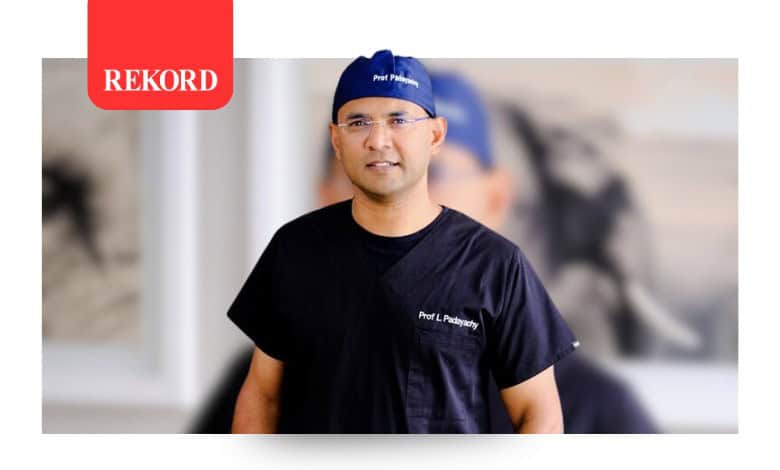
The University of Pretoria (UP) is pioneering research that could transform the way brain tumours are diagnosed by using the eye as a ‘window to the brain’ to detect the condition earlier and more accurately.
The research is being led by the university’s Brain Tumour and Translational Neuroscience Centre (BTC@UP), the first centre of its kind in South Africa.
Researchers are developing non-invasive diagnostic techniques that could provide faster, more affordable diagnoses, particularly in rural and underserved communities where access to specialised healthcare is limited.
The centre has established a state-of-the-art Neuro-Ophthalmology Laboratory, where researchers are assessing technologies such as ultrasound, infrared pupillometry and optical coherence tomography to identify pressure and other changes within the brain by examining the eye.
Professor Llewellyn Padayachy, director of BTC@UP and head of the Department of Neurosurgery, said early diagnosis remains the strongest predictor of positive outcomes for patients with brain tumours.
“Convenient point-of-care diagnosis, literally at the bedside or in rural clinics, will address the issue of late diagnosis and bring high-end care to underserved communities,” said Padayachy.
He explained that brain tumours remain one of the most difficult conditions to diagnose and treat because patients often present late. Access to advanced imaging, molecular testing and specialist neurosurgeons also remains limited, particularly in low- and middle-income countries.
According to the research, Africa has about one neurosurgeon for every four million people, compared with WHO’s recommended ratio of one neurosurgeon for every 200 000 people.
To tackle these challenges, the centre’s work is divided into three research areas.
“The first focuses on improving early detection and building a comprehensive database of brain tumour patients,” said Padayachy.
Padayachy said the second investigates safer surgical techniques and rehabilitation, while the third explores molecular, imaging and mathematical biomarkers to improve diagnosis and treatment.
He added that the centre’s transdisciplinary approach brings together neurosurgeons, ophthalmologists, engineers, mathematical modellers and computational analysts to develop practical, scalable diagnostic tools.
Padayachy stated that the goal is not only to improve outcomes for patients in South Africa but also to develop solutions that can be implemented globally.
“Our transdisciplinary research approach addresses a major global health challenge by enhancing the early detection and treatment of brain tumours to reduce mortality and improve patients’ quality of life, especially in developing countries,” he said.
He added that the research aims to overcome barriers such as shortages of trained specialists, limited diagnostic capacity and fragmented healthcare systems, while contributing new knowledge that could shape future brain tumour care worldwide.
The research forms part of UP’s RE.SEARCH magazine, Issue 10 publication and supports the United Nations Sustainable Development Goal 3, which promotes good health and well-being.
Do you have more information about the story?
Please send us an email to bennittb@rekord.co.za or phone us on 083 625 4114.
For free breaking and community news, visit Rekord’s websites: Rekord East
For more news and interesting articles, like Rekord on Facebook, follow us on Twitter or Instagram or TikTok or WhatsApp Channel