Water supply issues hit Lotus Gardens clinic
Various healthcare facilities in Tshwane, including Lotus Gardens Clinic, have borne the brunt of water shortages affecting several areas.
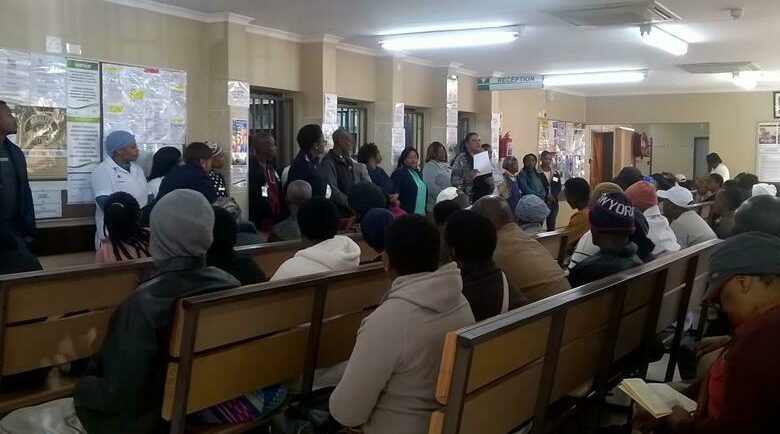
Various healthcare facilities in Tshwane, including Lotus Gardens clinic, have borne the brunt of water shortages affecting several areas.
This was amid ongoing tensions between the Tshwane metro and Rand Water.
Last week Monday, health MMC Rina Marx announced that the metro had to close Olievenhoutbosch clinic due to water shortages.
Marx said that clinic cleanliness could not be compromised.
She commended the metro’s interventions for water to be restored to all affected areas. She further said her department will keep communities informed should the situation worsen and force the closure of any facility.
The Olivenhoutbosch clinic was re-opened by Tuesday, July 4, but the Lotus Gardens clinic has also been experiencing water shortages.
The water shortages are said to be hurting hygienic practices.
According to metro spokesperson Sipho Stuurman, some of the challenges affecting the clinic include:
– Hygiene practices such as hand washing are not possible after performing clinical procedures as per infection and control policy.
– Ablution facilities cannot be flushed.
– The administration of single-dose medication is not possible as patients cannot be offered water to ingest the prescribed treatment.
“The water shortages at the clinic started late on July 3. This was due to Rand Water supply challenges. The clinic was forced to use a water supply from the water tank located on the premises. Once this ran out, measures were put in place to have the water tanker refilled,” Stuurman said.
“The situation normalised on July 5 when the water supply was fully restored. The recent shortage was due to Rand Water supply challenges affecting the city. The shortages are not a regular occurrence.”
Stuurman said that though the water shortages have posed “challenges” for metro clinics, they are only temporary.
“The clinic has a water tank on the premises to cater for emergencies. This water tank is connected to the water reticulation system of the clinic. Water shortages at the clinics are not a regular occurrence.”
The metro recently accused Rand Water of not being forthcoming with information to battle the water crisis that has drained its finances and decreased numerous reservoir levels.
In a letter to Tshwane city manager Johann Mettler in June, the water utility said it would limit water provision to Tshwane by 20% due to its debt.
Tshwane mayor Cilliers Brink said the metro was looking to engage its legal department and water experts to address the metro’s vulnerability to Rand Water.
The metro gets about 70% of its water supply from Rand Water.
Brink claimed that Rand Water was not pumping water to Tshwane because it was unable to stabilise its systems.
The suburbs most affected are Klapperkop North and South, Lotus Gardens, Heuweloord, Mnandi South, Bakenkop East and West and Bakenkop Tower, Mooikloof, Sunderland Ridge, Salvokop and Rooihuiskraal.
Stuurman said that protracted water shortages could force the closure of any of the metro’s clinics.
“The metro is mitigating this as best as possible,” he said.
Third edition of the Aero SA aviation trade show successfully launched
Do you have more information about the story?
Please send us an email to editorial@rekord.co.za or phone us on 083 625 4114.
For free breaking and community news, visit Rekord’s websites: Rekord East
For more news and interesting articles, like Rekord on Facebook, follow us on Twitter or Instagram