Motorists have their say on Aarto demerit point system
“We are forced to skip red traffic lights, especially at night because these traffic lights are now hotspots for car hijackings.”
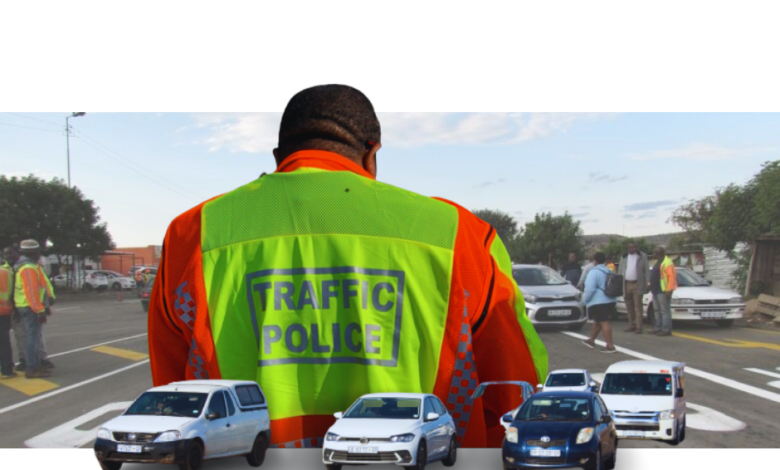
Motorists in Mamelodi and Nellmapius have expressed mixed feelings about the Aarto demerit points system soon to be implemented.
The Constitutional Court ruled the system valid on July 12 and ordered it to be implemented countrywide.
Many motorists have complained about losing their driver’s licences when their demerit points exceed the stipulated maximum.
Vusi Nkomo of Mamelodi West said as a motorist he is disappointed.
He said some of the fines are ridiculous.
“It is unfair to be penalised heavily for failure to stop behind the line at a stop street.
“The Constitutional Court needs to revise and revisit some of these penalties,” said Nkomo.
Jack Mkhwanazi of Nellmapius said that it is no longer safe to drive at night.
“We are forced to skip red traffic lights, especially at night because these traffic lights are now hotspots for car hijackings.”
Taxi driver Themba Mahlangu said the Constitutional Court and Aarto should instead take a look at traffic officers taking bribes from motorists almost every day.
He did however agree with the 6 demerit points for reckless or negligent driving/driving under the influence of drugs or alcohol.
Mahlangu said the safety of other motorists, passengers and pedestrians comes first and that a fines for this should be increased.
Outa has said it is disappointed but will abide by the ruling.
“Outa believes that measures to improve road safety and reduce fatalities are urgently needed. However, we don’t believe that the Aarto Acts will achieve this, it’s just not practically possible. South Africa needs effective processes enabled by fair adjudication that comply with the Constitution,” said to Advocate Stefanie Fick, Outa executive director.
Outa believed that the Aarto legislation results in troublesome and complex issues for most motorists and motor vehicle owners, and is concerned that it will not achieve its principal purpose of enhancing road safety.
The organisation said that improving road safety is crucial and that any legislation or initiative to enhance safety must be supported.
“Outa however does not believe that Aarto will be the silver bullet guaranteeing the implementation of the national road safety strategy and the achievement of the targets of the UN decade of action for road safety.
“The Aarto Amendment Act with higher penalties, tedious and expensive procedures to be followed by the public and the total lack of prescription on visible policing will have little or no effect on improving road safety in South Africa,” said Fick.
The AA said: “We remain concerned that Aarto will not deliver on its intended outcomes of improving road safety and reducing road carnage on our roads. We stand by our previous views that the Aarto legislation is geared towards revenue collection and not on promoting safer roads.
“Introducing legislation will not solve the country’s road safety crisis.
“This merely creates an impression of action while nothing will change on the ground, where it is needed. As part of our contention, we point to the fact that there is no evidence that the Aarto pilot project saved a single life.”
According to Aarto, every traffic violation carries prescribed demerit points to be applied to the licence and accumulated over time. A driver whose demerits exceed the stipulated maximum will have their licence suspended, and three consecutive suspensions will result in licence cancellation and driving without a valid licence is a criminal offence.
The Aarto website lists 2 659 demerit offences.
Here are some examples:
The demerit points will be added to the driver or vehicle licence and remain there for three months. A point is removed every three months if a driver doesn’t commit a further offence.
“While we naturally respect the Constitutional Court’s decision, we remain concerned that Aarto will not deliver on its intended outcomes of improving road safety and reducing road carnage on our roads. We stand by our previous views that the Aarto legislation is geared towards revenue collection and not on promoting safer roads,” the AA said.
In its submissions on the Aarto, the AA pointed out that the legislation is cumbersome and impractical.
It noted that after the 2008 launch of the Aarto pilot project in the Johannesburg and Tshwane metros, the shortcomings of the law became clear in practice and that attempts to rectify them only created further issues.
“Introducing legislation will not solve the country’s road safety crisis. This merely creates an impression of action while nothing will change on the ground, where it is needed.
“There is no evidence that the Aarto pilot project saved a single life,” the AA concluded.
Services collapse wage row shows no end
Do you have more information about the story?
Please send us an email to editorial@rekord.co.za or phone us on 083 625 4114.
For free breaking and community news, visit Rekord’s websites: Rekord East
For more news and interesting articles, like Rekord on Facebook, follow us on Twitter or Instagram