No cause for concern on new Covid variant, NICD says
Since August Eris has been detected in over 50 countries.
The Covid-19 pandemic’s latest variant Eris, a highly transmissible but not more severe than the Omicron variant, has been confirmed in Gauteng.
The NICD however says there’s no need to panic.
On August 17 two sequenced cases of the “EG.5 lineage” were collected from individuals in Gauteng in June and July respectively.
Principal medical scientist at the National Institute for Communicable Diseases (NICD), Dr Nicole Wolter said they suspect more will be discovered nationwide.
“As the number of people being tested for SARS-CoV-2 is very low at the moment, and therefore there are few samples available for sequencing, there are likely more cases of EG.5 spread across South Africa,” Dr Wolter stated.
According to the NICD, EG.5 is part of the Omicron lineage that has evolved from the XBB.1.9.2 lineage by developing additional mutations, similar to other new lineages.
It was first detected in February 2023 and is circulating in many parts of the world.
On August 9, the World Health Organisation (WHO) classified the lineage as a “variant of interest” (VOI) as it has been increasing in prevalence in some parts of the world.
“In these countries where it is circulating, it has not been associated with any increase in disease severity and is therefore considered by the WHO to be of low public health risk. The public health risk level of EG.5 is considered to be the same as other currently circulating VOIs, including XBB.1.16 and XBB.1.5,” Dr Wolter asserted.
“SARS-CoV-2, as for all viruses, is continuously evolving. As a result, new lineages and sub-lineages of the virus are continuously being detected and named. To date, there have been over 3 500 lineages of Omicron that have been detected.”
The NICD also states that Eris is not the official name given to the variant but rather a nickname given by social media. EG.5 is the official name of the lineage.
EG.5 is said to not cause any different symptoms or more severe illness than other circulating SARS-CoV-2 lineages.
The NICD said that it is conducting respiratory disease surveillance at sentinel sites throughout the country to monitor various respiratory pathogens including influenza, RSV and SARS-CoV-2.
“SARS-CoV-2 positive specimens are routinely sequenced by the NICD and other NGS-SA labs throughout the country to monitor circulating lineages and the evolution of the virus. Genomic reports are updated every two weeks and are shared on the NICD website: SARS-CoV-2 Genomic Surveillance update,” Dr Wolter said.
The NICD said that there’s no need for concern regarding EG.5, as there is no evidence of severe cases in other nations.
“There is no reason to be concerned. As mentioned, new SARS-CoV-2 lineages are emerging continuously.
“The WHO may classify these lineages as variants under monitoring (VUM), variants of interest (VOI) or variants of concern (VOC) based on their growth advantage, immune escape and severity.
“This list is updated regularly to reflect the currently circulating lineages. As of August 17, there are no circulating lineages that are classified as VOCs, three lineages that are classified as VOIs (XBB.1.5, XBB.1.16 and EG.5) and six classified as VUMs,” Dr Wolter added.
The NICD expects more increases and decreases of Covid-19 cases in the country will become more prevalent over time but does not believe the EG.5 variant will see severe cases. The NICD urged residents to continue practising preventative Covid-19 measures.
“Individuals that are at high risk of severe disease should ensure they stay up to date with the recommended SARS-CoV-2 vaccine and booster doses. Regular washing of hands, and staying away from people that may be at high risk of severe disease remains recommended when sick with any respiratory illness,” Dr Wolter concluded.
The metro’s health department also recently addressed the variant, stating that while there isn’t a need to panic, caution still must be exercised.
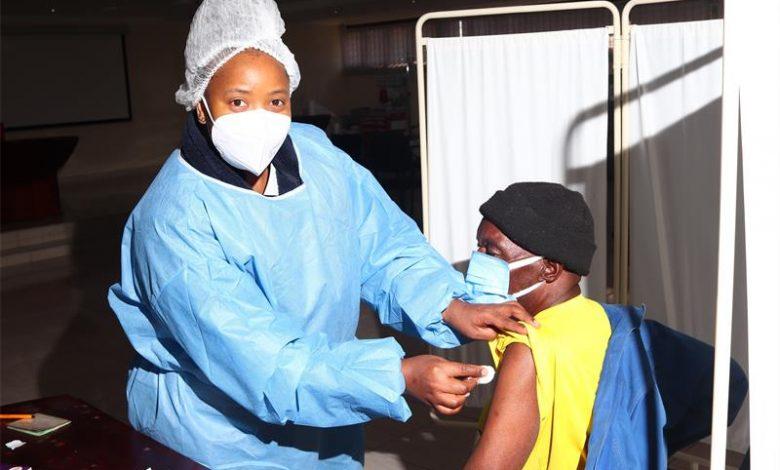
“The City of Tshwane health department urges residents to take the necessary precautions given the new strain’s transmissibility. Covid-19 vaccinations and boosters are available at all 24 of our primary healthcare clinics,” said Health MMC, Rina Marx.
“Vaccinations remain important, especially for people with underlying health conditions, the elderly and those who are immune-compromised. Non-pharmaceutical interventions remain equally important. These include regular handwashing, sanitising and wearing a face mask if you have flu-like symptoms,” Marx continued.
According to the WHO, since early August, the new strain has been detected in more than 50 countries.
Symptoms include a fever, cough, sore throat, fatigue, runny nose and change in taste and smell.
“The Tshwane health department aligns itself with the National Department of Health in stating that there is no need for panic at this stage. Taking the necessary precautions can greatly mitigate the rapid spread of the new strain,” Marx concluded.
ALSO READ: Bloedskenkings in die Moot
Do you have more information about the story?
Please send us an email to editorial@rekord.co.za or phone us on 083 625 4114.
For free breaking and community news, visit Rekord’s websites: Rekord East
For more news and interesting articles, like Rekord on Facebook, follow us on Twitter or Instagram