
Tshwane delay to submit financials to AG cause for concern – expert
A political analyst has suggested that it was time for provincial governments to operate the finances of local governments as it had become public that Tshwane was possibly struggling with the financial management of the Capital City.
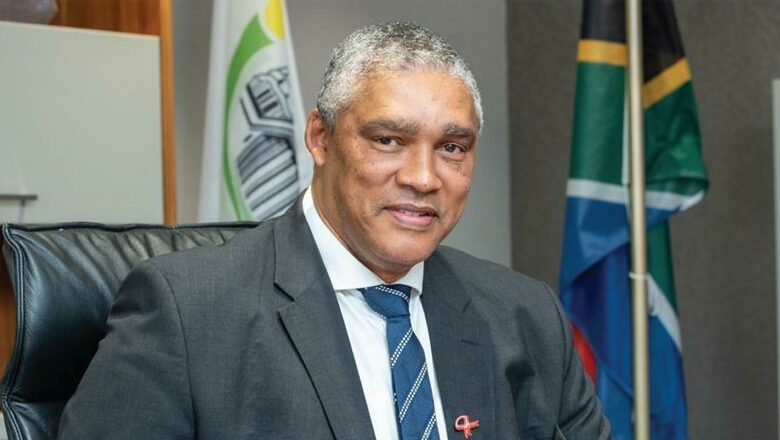
Tshwane metro’s failure to submit its 2022/2023 financial statement to the AG should raise concern, an expert has warned.
The political expert maintains that the delay is an admission by Tshwane that it is struggling with financial management.
Tshwane last month put off submitting its account records for financial and service delivery performance to the Auditor-General (AG).
The 2022/2023 financial statement was meant for the AG on August 31, to finalise all outstanding financial problems. However, Tshwane spokesperson Selby Bokaba said the metro had postponed the submission at the recommendation of its audit and performance committee (APC).
“The APC has recommended to the city to postpone the submission date of its annual financial statements and performance to the AG to afford the metro sufficient time to finalise other outstanding matters and ensure credible and sound financial statements.”
Bokaba said the metro would submit the financials within three months.
“The city manager, Johann Mettler, has considered the recommendation of the APC favourably as the deadline extension will afford the city sufficient time to adequately address some of the findings made by the AG in the 2021/22 financial year.”
Mettler said Tshwane was cautious in submitting the prior messy accounting report.
“The city management, together with the executive, took a cautious approach this time around to ensure that we quality-assure the financials to avoid a recurrence of last year’s AG findings. There are a few areas where we discovered that there were some glaring gaps that needed to be plugged,” Mettler said.
“We are doing things differently this year. We don’t want a repeat of the mistakes made last year.
“We’re meticulous and paying attention to every detail. We are confident that not only will we meet the new deadline, but we will ensure that we present credible and sound financial statements to the AG,” Mettler said.
In the past, the AG indicated that the metro had awarded contracts to service providers that were staff and family members, lost electricity worth more than R2-billion and R1-billion to administrative and technical errors such as negligence, theft, tampering with meters, illegal connections and faulty meters. Water worth R866-million was lost in the distribution network and R216-million to meter inaccuracies, consumption estimations, non-metering of water and unauthorised consumption.
APC chairperson Cameron Ellis at the time accepted the AG report and admitted that controls in the metro were weak.
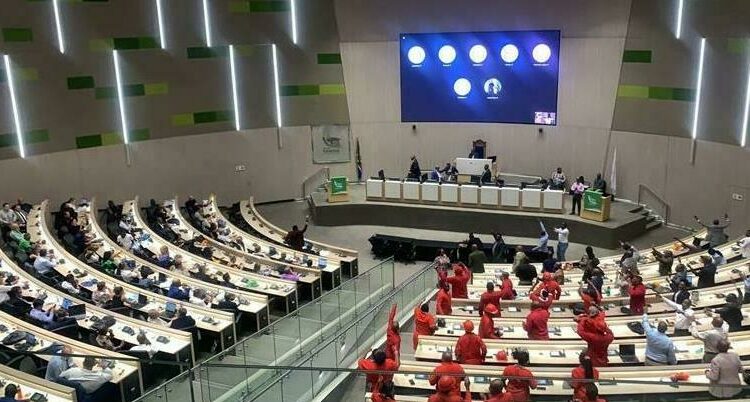
Unisa professor and political scientist Dirk Kotzé said the postponement was worrying.
“From a public finance management view, this should be concerning as it is not the first time Tshwane has done this.”
He said Tshwane had asked the provincial government for three extensions to pass the adjustment budget for the 2022/23 financial year.
This was while Tshwane was licking its wounds in the wake of a 28-page AG report found a series of overpayments of councillors, officials benefitting from supply chain processes and a string of irregularities.
Kotzé said, “it is now public that Tshwane seems to be struggling with financial management”.
He said though the mess was not out of the blue stemming from as far back as ANC rule in Tshwane, it was becoming a systemic problem for the current leadership.
He said local government had weak points such as non-payment and grant deficits with Eskom and Rand Water, which were growing into bigger systemic problems to manage.
Kotzè said Tshwane metro was however no different to other municipalities with financial challenges.
He suggested that it was time for provincial governments to operate the finances of local governments.
Kotzè added that a motion of no confidence in the mayor or the provincial government placing the metro under administration was unlikely.
“Given the multiparty charter for next year’s election, it is less likely that motions of no confidence would materialise.
“It is only the intervention of the provincial government that is a possibility, however, the current Cogta MEC is not as politically driven as former MEC Lebogang Maile to take control of Tshwane.”
Kotze said the provincial government placing Tshwane under administration in 2020 was a complete disaster.
“Administration is not a good option and administrative authorities [are] never honest to provide a solution.”
36 hour water shutdown at Wallmansthal from Tuesday
Do you have more information about the story?
Please send us an email to editorial@rekord.co.za or phone us on 083 625 4114.
For free breaking and community news, visit Rekord’s websites: Rekord East
For more news and interesting articles, like Rekord on Facebook, follow us on Twitter or Instagram


