Public to weigh in on Wonderboom Airport name as parties clash over priorities
The supporters say names of public places must be inclusive for all South Africans. Those against it say the Council should rather focus on maintaining infrastructure and development.

The Tshwane Council has approved a proposal by the Department of Economic Development and Spatial Planning to begin a public participation process on the possible renaming of Wonderboom Airport.
The decision is setting the stage for a politically sensitive consultation that has already drawn sharp disagreement across party lines.
The decision, taken on May 28, does not immediately change the airport’s name but initiates formal public engagement processes that will allow residents, stakeholders, and institutions to submit views before any final recommendation is made to Council.
Officials argue that the process is intended to ensure compliance with naming procedures and democratic participation requirements.
According to supporters within the governing coalition, the proposal is linked to broader objectives of transformation, economic repositioning, and the rebranding of key municipal assets.
They argue that the airport’s identity should better reflect a post-apartheid civic landscape and align with efforts to reposition Pretoria as an international investment and tourism destination.
However, the proposal has triggered strong criticism from opposition parties and heritage advocates who say the move risks reopening unresolved debates about history, identity, and economic priorities at a time when the metro is under pressure to improve basic service delivery.
Within the debate, ANC councillor Joel Masilela defended the initiation of the renaming process, arguing that public infrastructure should reflect inclusive historical narratives and the lived experiences of black South Africans.
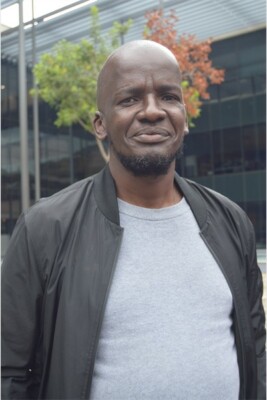
He maintained that ‘place names are not neutral and carry symbolic weight that should evolve alongside democratic change’.
Masilela further argued that the airport should be positioned in a way that strengthens its international profile and contributes more effectively to economic growth and tourism development in the capital city.
Opposition voices, particularly from the DA, have rejected the proposal, arguing that the municipality should prioritise infrastructure maintenance, aviation development, and financial sustainability rather than engaging in what they describe as symbolic or politically driven renaming processes.
DA councillor Dana Wannenburg argued that Wonderboom Airport is one of Pretoria’s few underutilised economic assets with potential to support job creation, aviation training, tourism activity, and private investment.
He contended that the Council’s attention should focus on operational efficiency and commercial expansion rather than administrative changes that could divert resources and political focus.
The party has also raised concerns about the financial burden of municipal airport operations, arguing that many local governments lack the technical and financial capacity to run aviation infrastructure at a competitive level.
As an alternative, the DA has proposed exploring a long-term public-private partnership model that would allow private sector participation in upgrading, managing, and expanding airport facilities while the city retains ownership of the asset.
Under this approach, proponents say, the airport could be modernised, attract increased air traffic, and reduce fiscal pressure on ratepayers while improving service delivery and long-term viability. The DA maintains that such a model would better align with broader economic recovery priorities in the capital region.
The renaming debate has also exposed deeper ideological divisions within the Council regarding how urban identity should be shaped in post-apartheid South Africa.
Supporters of renaming argued that public spaces and infrastructure must reflect transformation goals and correct historical imbalances in representation. They see the naming policy as part of a broader nation-building project that ensures inclusivity in public symbolism.
Some councillors have also highlighted the importance of public participation in ensuring legitimacy, noting that communities directly affected by the airport’s operations and branding should have meaningful input before any final decision is taken. The consultation process is expected to include written submissions, stakeholder meetings, and public hearings.
Officials from the Department of Economic Development and Spatial Planning have indicated that no predetermined outcome has been set and that all submissions will be considered before a final recommendation is tabled. They emphasise that the process is intended to be transparent and inclusive, allowing for a range of views from residents, civil society organisations, and the aviation sector.
Do you have more information about the story?
Please send us an email to bennittb@rekord.co.za or phone us on 083 625 4114.
For free breaking and community news, visit Rekord’s websites: Rekord East
For more news and interesting articles, like Rekord on Facebook, follow us on Twitter or Instagram or TikTok or WhatsApp Channel