Council approves budget amid opposition outcry
The metro’s approved R58.5-billion budget has ignited heated political clashes, with the coalition government defending it as a major financial turnaround while opposition parties slammed it as unrealistic and debt-driven.
Opposition parties have labelled the metro’s approved 2026/27 budget a ‘paper exercise’ detached from the financial and service delivery realities facing residents.
This is despite the metro insisting that the budget marks a major step forward in stabilising the city’s finances.
The Tshwane Council on Thursday approved the metro’s R58.5-billion budget for the 2026/27 financial year, with the ActionSA/ANC/EFF-led coalition securing majority support through 110 votes, while opposition parties voted against the budget.
The approved budget consists of a R55.7-billion operating budget and a R2.8-billion capital budget, with the city projecting an operating surplus of R1.4-billion.
According to Deputy Mayor Eugene Modise, who is also the MMC for Finance, the budget represents the second consecutive fully funded budget adopted under the current multiparty coalition government. It has been assessed by the National Treasury as compliant with the Municipal Finance Management Act (MFMA).
“This milestone reaffirms the multiparty coalition government’s commitment to responsible financial management, strengthened governance, improved fiscal discipline and long-term financial sustainability while continuing to restore Tshwane’s finances, modernise infrastructure and deepen service delivery across the capital city,” said Modise.
He said the budget was shaped by concerns and priorities raised by residents during public participation processes conducted across Pretoria over the past year.
The metro said the budget prioritises water and electricity infrastructure upgrades, roads and stormwater systems, waste management, public safety, internal municipal capacity-building, human settlements and economic revitalisation.
“The fully funded status of the budget confirms that the city’s anticipated revenue is sufficient to fund both operational and capital commitments over the medium term while protecting the city’s financial position and supporting sustainable service delivery,” Modise said.
He added that the budget continues the city’s strategy of redirecting expenditure towards infrastructure renewal and strengthening internal municipal capacity.
Tshwane Mayor Dr Nasiphi Moya said infrastructure investment remains one of the central pillars of the budget.
“A major focus of the budget is infrastructure investment, with more than R2.1-billion allocated towards infrastructure development and renewal,” said Moya.
She said water and sanitation received the largest capital allocation in the budget, with R715.8-million allocated in 2026/27 and more than R3.1-billion over the medium term.
“The funding will support wastewater treatment upgrades, reservoir extensions, pipe replacement projects and water conservation measures,” she said.
Moya also highlighted the city’s ongoing debt repayment agreement with Eskom, which was signed in December 2024.
She claimed the current administration has already saved the city nearly R700-million in Eskom interest charges within a few months.
“Since we took office, we have never received letters from Eskom threatening to shut down supply because we honour our agreement,” Moya added.
However, opposition parties strongly criticised the budget, arguing that it relies on unrealistic revenue assumptions and ignores the worsening state of municipal infrastructure and finances.
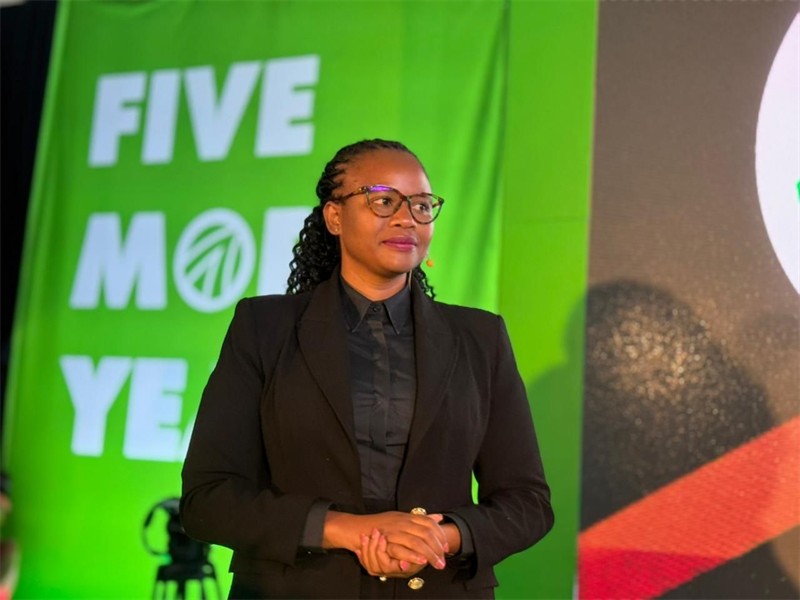
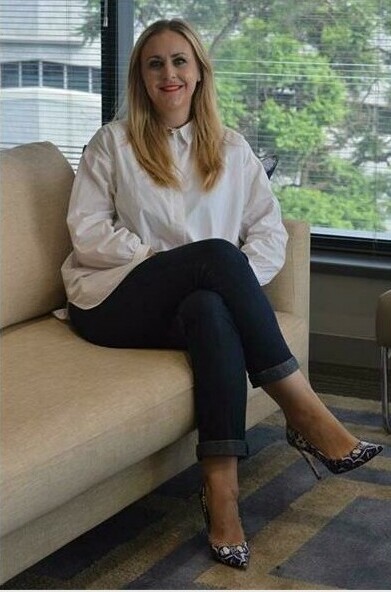
DA Tshwane spokesperson on Finance, Jacqui Uys, described the budget as ‘good on paper’ but disconnected from reality.
“This is why the mayor absconded during the budget speech because she knew it was not credible,” Uys said.
“The budget is a paper exercise, with a lot of short-term loans and arrears, while the salary backpay is something the metro cannot afford and will close the fiscal year with a cash deficit of more than R6-billion, no matter what the administration says.”
Uys argued that residents continue paying the price for deteriorating infrastructure, rising electricity theft and water losses.
“Tshwane deserves a mayor who will not boast of a funded budget. Tshwane deserves a real mayor who will deal with residents’ concerns,” she said.
She added that the metro should prioritise crime-fighting measures such as CCTV systems, drones and armed response interventions.
Freedom Front Plus (FF+) councillor Mark Surgeon also rejected the budget, stating it failed to reflect the metro’s true financial condition.
“We do not support the budget because the document is out of touch with reality. The administration continues to rely on overly optimistic revenue collection projections while failing to implement meaningful reforms to stabilise the metro’s finances,” said Surgeon.
He warned that unresolved procurement and supply chain management problems remain a major concern.
“Years of corruption scandals, questionable contracts and a lack of accountability have severely eroded public trust in the metro. Residents deserve the assurance that public money is spent responsibly and transparently,” he said.
Surgeon further argued that the budget appeared politically motivated rather than focused on sustainable governance and service delivery.
“The metro should adopt a practical, solutions-driven, back-to-basics approach. This includes boosting revenue collection, preventive infrastructure maintenance, restoring accountability, improving financial controls and prioritising service delivery over politically driven projects,” he said.
The debate also turned highly political during council proceedings, with Modise launching an attack on former DA-led administrations and opposition councillors.
“The people of Tshwane need to know that the mess left in Tshwane was left by countless failed DA mayors, such as Cilliers Brink. It was the DA administration that awarded the Rooiwal tender to Edwin Sodi and destroyed all the plans to provide safe and clean water to Hammanskraal communities,” Modise said.
He further accused previous DA administrations of refusing salary adjustments for municipal workers, claiming that this ultimately cost the city more.
“If the DA mayors had honoured the employees, we could have saved the city millions,” Modise said.
He also criticised Uys directly during the Council meeting.
“All she’s good with is being on TikTok, but when it comes to numbers, shame, she is very bad, extremely poor. I think Uys needs to attend financial accounting classes where she can be better informed,” Modise said.
Japhta Modiba from the ActionSA defended the budget, insisting it had been properly assessed by the National Treasury.
“Our budget is credible and passed by qualified professionals,” Modiba said.
He accused the DA of attempting to use social media campaigns to discredit the coalition government.
“City finances cannot be fixed by social media but by action. The DA needs to account for the mess they have left in Tshwane, and the DA needs to be accountable for the lack of water in Hammanskraal. They wish us to fail, but this budget reflects the priorities of a responsible, forward-thinking government. This administration believes in service delivery and service for the people.
Meanwhile, the MMC for Economic Development and Spatial Planning, Sarah Mabotsa, said the metro’s financial recovery demonstrates how coalition governance is beginning to stabilise the city after years of financial decline.
Mabotsa said when the current coalition took office, Tshwane owed R1.5-billion to Rand Water and R6.7-billion to Eskom.
“Today, just 20 months later, South Africa’s capital city is back in the black and has tabled its second successive fully funded budget,” Mabotsa said.
She added that the city’s financial improvements have also been recognised by international ratings agencies such as Moody’s and GCR Ratings.
Mabotsa pointed to the relocation of the Tshwane Economic Development Agency from expensive leased offices into refurbished city-owned offices in Centurion as an example of cost-cutting measures.
“This move has more than halved the costs of office rental, meaning we are saving Tshwane residents millions of rands every year,” she said.
She added that some of the savings are being redirected towards infrastructure investment and efforts to reduce water and electricity losses across the metro.
ALSO READ: Upgrades at high school can finally get underway with new contractor
Do you have more information about the story?
Please send us an email to bennittb@rekord.co.za or phone us on 083 625 4114.
For free breaking and community news, visit Rekord’s websites: Rekord East
For more news and interesting articles, like Rekord on Facebook, follow us on Twitter or Instagram or TikTok or WhatsApp Channel