Spotting the red flags for teen mental health
Supporting teens to find healthy coping mechanisms can help reduce the risk of parasuicide or more serious suicide attempts.
In today’s challenging post-pandemic world, teenagers are confronting significant mental health issues, including depression and suicidal thoughts. Therefore, parents must know how to spot the red flags.
This was according to Claudette Marais, a clinical psychologist based at the Life Brackenview mental health facility.
“Parents should be aware of mental health warning signs to assist with supporting teen mental health needs,” said Marais.
Addressing concerns and helping teens find healthy coping strategies are crucial in preventing more severe suicidal tendencies, according to Marais.
“Parents can play a vital role by recognising warning signs and engaging in open conversations to destigmatise mental health problems.”
Marais stressed the importance of connecting teens with suitable professionals to discuss their stress, emotions, and mental health struggles.
“All suicide threats and attempts should be taken seriously.”
Life Healthcare has witnessed a rise in adolescents seeking counselling through employee wellness programmes, with depression cases increasing.
Pre-pandemic, adolescents constituted less than 6% of high-risk mental health cases, but this number surged to 11% during the pandemic and remains high at 7.3%. Suicidal risk continues to be the top concern for this age group.
Child behavioural issues account for 1 in 4 problems, followed by stress and phase-of-life difficulties.

The Covid-19 pandemic and its aftermath have exacerbated teenage mental health problems.
Left unaddressed, these problems can lead to suicidal thoughts, suicide attempts, and loss of life.
The pandemic’s impact resembles a post-traumatic stress reaction combined with the stresses of the “new normal”. Approaching year-end school exams adds to teenagers’ stress levels.
Families should proactively manage their mental health through outdoor activities, hobbies, social support, and spending time with loved ones.
Several factors contribute to poor teen mental health, including communication difficulties with peers, mental health stigma leading to bullying, and feelings of shame.
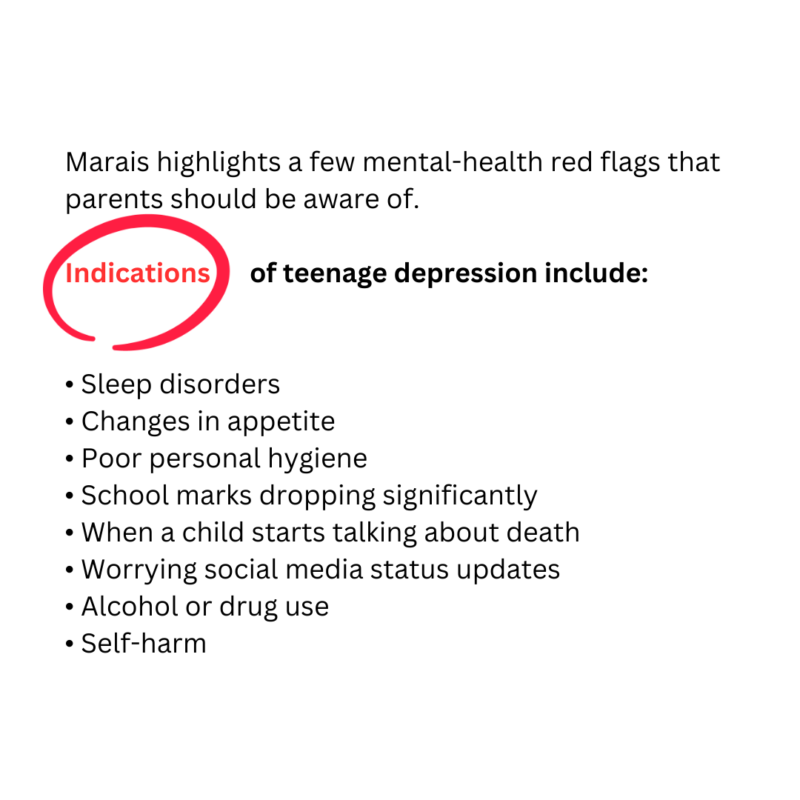
Red flags for teenage depression include sleep disturbances, changes in appetite, poor personal hygiene, declining school performance, discussions of death, social media updates, substance use, and self-harming.
Parents should stay engaged with their children by talking, connecting, and actively listening. Finding shared activities is essential. For teens who prefer social media, mental health apps like Calm, Finch, and Instagram’s @ItsLennnie can be helpful.
“The primary objective is to normalise mental health. Educate yourself and be aware of your own and your loved ones’ mental health needs. Embrace the new normal and the emotions it brings,” concluded Marais.
Do you have more information about the story?
Please send us an email to editorial@rekord.co.za or phone us on 083 625 4114.
For free breaking and community news, visit Rekord’s websites: Rekord East
For more news and interesting articles, like Rekord on Facebook, follow us on Twitter or Instagram