Hope for improved homes for Cemetery and Plastic view forming – Tshwane
Tshwane is busy with bulk infrastructure work and says as soon as it has completed its share of work, 853 structures will be built to accommodate the families of the about 17-year-old Plastic View and 10-year-old Cemetery View settlements in Pretoria east.
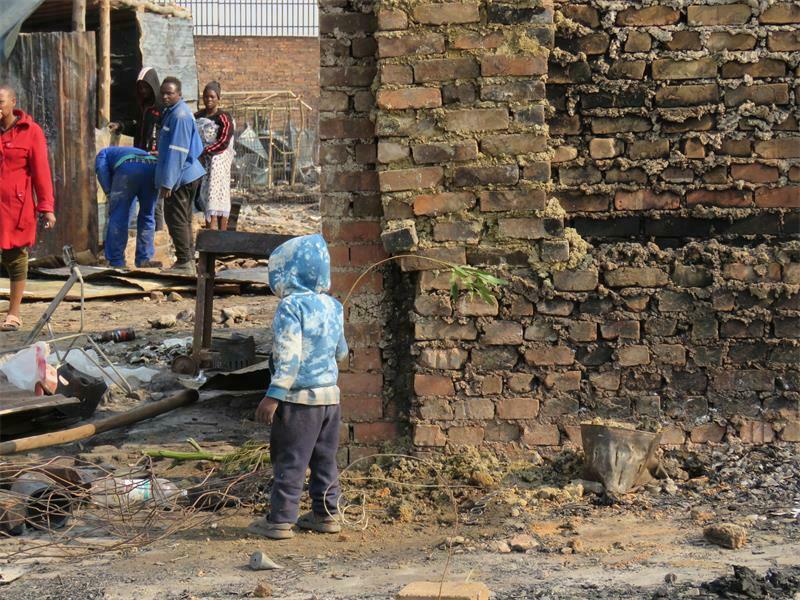
The only spot to which the Tshwane can relocate inhabitants of two local informal settlements prone to seasonal fires is Pretoriuspark, the metro has said.
The metro said it was busy with plans to accommodate a chunk of the informal settlement inhabitants to the mixed-use building it is planning to construct close to the intersection of Garsfontein Road and De Villebois Maréuil Drive, east of Pretoria.
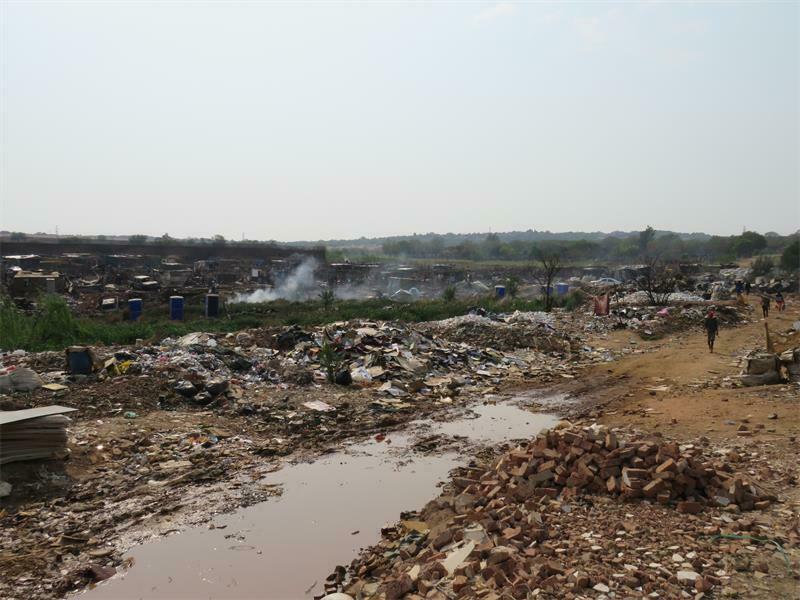
Fires have broken out multiple times at the about 17-year-old Plastic View and 10-year-old Cemetery View informal settlements resulting in the inhabitants rebuilding on the fire-prone land.

Last month, Cemetery View was victim to a devastating fire which burned down homes at the vast settlement and claimed three lives, while thousands were left destitute.
The victims have since rebuilt their homes with the help of nearby Good Samaritans who offered the necessities, rejecting Tshwane’s latest plan to temporarily move them to among other, Mamelodi, while other similar plans for relocation have failed to manifest due to lengthy legalities.
South African National Civic Organisation (Sanco) Mamelodi interim chairperson Joseph Kgatle criticised Tshwane for attempting to relocate the Woodlands inhabitants to Mamelodi.
“The distance between Cemetery View and Mamelodi is just a little over 11km. Our view is that there are community halls in Pretoria east. Why doesn’t Tshwane accommodate these victims there?
“The people of Mamelodi should refuse to allow their recreational facilities to be used for this purpose. The people of Cemetery View will be dumped and left destitute. This movie, we have seen many times before in Mamelodi,” Kgatle said.
“The Tshwane metro has a lot of empty land and community facilities available in Garsfontein and Woodlands. The decision to relocate them to Mamelodi is nothing but an entrenchment of apartheid spatial planning once again.

The destitute people of Cemetery View should demand better accommodation from the metro.”
It said current development in the township to be known as Pretoriuspark ext. 40 pertains to the design of the water and sanitation distribution networks.
Metro spokesperson Selby Bokaba said the metro five-year old plan to provide improved living conditions for the hundreds of families squatting in hazardous conditions in Cemetery View and Plastic View, east of Pretoria was in its early stage of development.
“Tshwane has appointed a developer to deal with bulk services and a designer has also been appointed for internal reticulation of services.
Once the metro is done with bulk infrastructure, Gauteng [government] will move in and build the structures,” said Bokaba.
He said the project would accommodate both inhabitants of Cemetery View and Plastic View informal settlements.
“About 853 structures will be built to accommodate families.”
Tshwane plans to develop social housing in Pretoriuspark to provide South African inhabitants of the east informal settlements improved living conditions.
Indications are, however, that most residents will remain in the settlement because they are undocumented immigrants and thus do not qualify for government housing aid in terms of the Housing Act, Act 107 of 1997.
On September 23, a man, a woman and a girl believed to be younger than seven years old died tragically when the Cemetery View settlement was engulfed in fire that consumed the plastic and iron-built homes.
Tshwane emergency services (EMS) spokesperson Peter Motolla said the fire was extinguished in less than four hours but its cause remained unknown.
He said the three bodies were found after the fire had been extinguished, and the deceased were not related.
“We suspect heating appliance like paraffin stoves, gas stoves, candles or generator fault cannot be excluded.”
In 2008, the Pretoria high court ordered Tshwane to relocate or regulate the two informal settlements.
In March 2006, Tshwane, SAPS and local CPF started a process to relocate the inhabitants of the two informal settlements. Shacks in Plastic View burnt down, destroying most possessions, which resulted in the inhabitants hiring Lawyers for Human Rights to initiate a legal suit for damages.
Three years later, the Pretoria high court began making a series of orders.
In March 2015, the Plastic View inhabitants interdicted Tshwane from selling the land they had occupied.
Since, the settlement has since been entangled in lengthy suits, which impelled Tshwane to identify alternative habitable land and provide basic services ahead of relocating the inhabitants.
Three men arrested in Sinoville for possession of a stolen vehicle
Do you have more information about the story?
Please send us an email to editorial@rekord.co.za or phone us on 083 625 4114.
For free breaking and community news, visit Rekord’s websites: Rekord East
For more news and interesting articles, like Rekord on Facebook, follow us on Twitter or Instagram