Bad idea for Tshwane to forfeit Treasury funding – Brink
While the metro might soon not be able to pay its service providers due to the clawback of grant funding, the mayor suspects that National Treasury is defunding municipalities to pay for the Eskom bailout and salary increases.
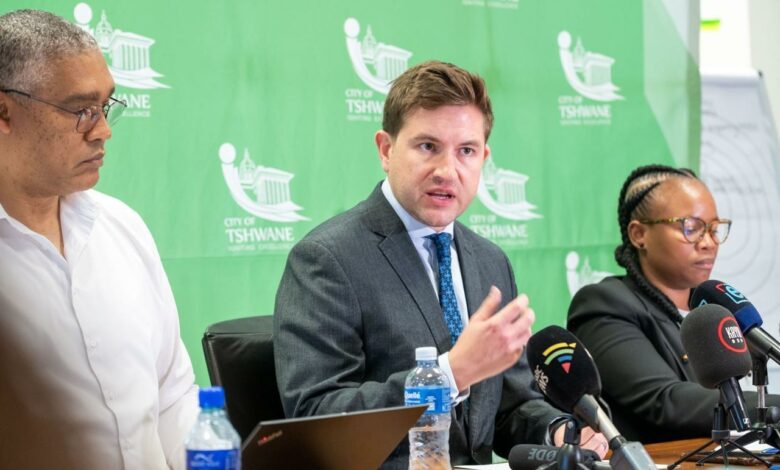
Tshwane mayor Cilliers Brink says it’s a “bad idea” to defund municipalities as the metro he steers faces an inability to pay service providers.
Tshwane stands to lose more than R629-million in grant funding should the National Treasury deem its reason for failure to use current grants unsatisfactory and therefore forfeit the last tranches of grants set aside to pay service providers, amongst other plans.
The grants that could be forfeited are:
– R14.4-million of the preparation allocation of R62-million
– R391.4-million of the urban settlement of R978.5-million
– R85-million of the public transport allocation of R830.3-million
– R102.8-million of the settlements upgrading allocation of R619.8 million, and
– R36-million of the neighbourhood development allocation of R155.4-million
Tshwane’s loss of funding will mean its wastewater treatment plants and electricity substations, social housing and bus rapid transit project upgrades will take a blow.
“While allocations to municipalities have always been subject to annual reviews, the intended claw-backs have never been so big. Ekurhuleni stands to forfeit about R600 million, and Johannesburg a whopping R1 billion.”
Brink said he agreed that municipalities had to improve their capital spending, which Tshwane worked hard to implement, without incurring excessive irregular, fruitless and wasteful expenditure.
“It is no use paying invoices without installing a rigorous system of controls to ensure value for money.”
According to Brink, the reason behind the defunding of municipalities was to pay Eskom bailouts and salary increases.
“The big story behind a leaked National Treasury letter to Tshwane and other municipalities is not that local government is not spending grants and subsidies fast enough. The big story is that the national government has overspent on Eskom bailouts and salary increases.
“The result is an enormous budget deficit, which the national government plans to plug by defunding local government,” Brink said.
He said the decision to withhold payments to municipalities ahead of the budget speech was a bad idea.
“The finance minister’s budget speech and the enormous budget deficit he has to address this week. To plug the deficit, the national government looks to defund municipalities. The midyear budget already reduced local government’s funding by R3.6 billion, and the risk is that the minister is coming for even more.”
Brink said defunding Tshwane was not limited to slashing grants and subsidies but risked funding of free basic services to the poor.
“This will have devastating consequences.”
He said Tshwane would join the call by the Cape Town metro against the defunding of local government, including the reduction of the equitable share paid to municipalities.
Brink said Treasury could strip Tshwane bare.
Recently, the metro heeded a deadline given by National Treasury to give reasons why the grants should be paid into its coffers and not be forfeited when it failed to use grants already paid.
Tshwane told National Treasury it had to take account of several factors that led to the underspending, which placed road, reservoir, substation upgrades and neighbourhood development at budgetary risk.
Tshwane spokesperson Selby Bokana said the metro outlined to Treasury its recovery plan to accelerate grant expenditure and what had contributed to unsatisfactory performance as of December 31, 2023.
According to Tshwane, the reasons for the underspending were:
– A migration from an old financial management system to the new system, which impacted processing and accounting for expenditure.
– The reduction of the urban settlements upgrading development grant (USDG) and informal settlements upgrading partnership grant (ISUPG) during the second quarter as directed by National Treasury, which necessitated early review and repackaging of several programmes to accommodate the cuts.
– Prolonged unprotected labour strikes, which impacted heavily on the implementation and monitoring of projects.
– Delays in the initial stages of procurement – approval of specifications and tender advertising approvals.
– Delays in the appointment of the contractors to provide electrical cables and spares, as well as lead times in the supply and delivery of materials for electricity projects.
Bokaba said these factors have been overcome and the plan was to spend the grants within the set timeframes.
“The city has shown tremendous progress in most projects by issuing appointment letters and concluding contracts with the appointed service providers. The city has also reprioritised grant-funded projects as part of the 2023/24 budget adjustment process,” he said.
“Crucially, the city has already depleted the transferred tranches when current expenditure and commitments for February are considered. From the beginning of March, the city will face serious funding shortfalls when it comes to paying contracted service providers.
“Therefore, to mitigate this challenge, the final tranches must be transferred by the end of March, as per the approved payment schedule.”
Do you have more information about the story?
Please send us an email to bennittb@rekord.co.za or phone us on 083 625 4114.
For free breaking and community news, visit Rekord’s websites: Rekord East
For more news and interesting articles, like Rekord on Facebook, follow us on Twitter or Instagram