Evicted land invaders lose bid to return to De Wagendrift
The land invaders approached the court to force the city to allow them access to the property, return their building material or, alternatively, provide them with emergency accommodation and pay each R1 500 in damages.
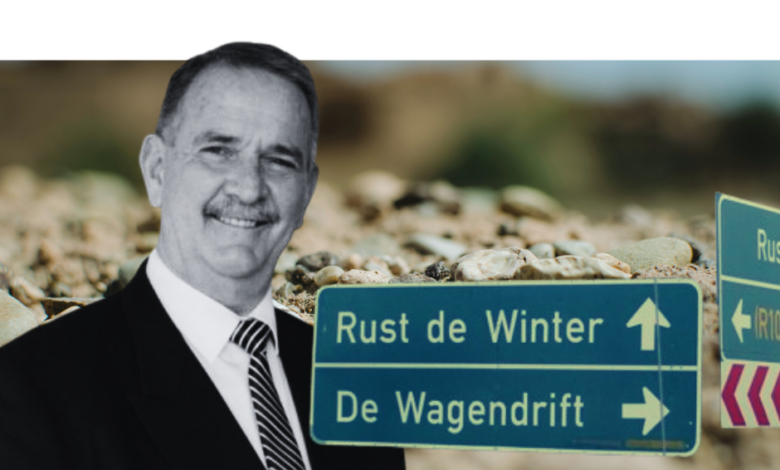
The Pretoria high court has ruled against 143 De Wagendrift land invaders’ bid to stop Tshwane from evicting them.
The land invaders had settled on the city-owned land near Cullinan and resisted the eviction effected in September last year.
They approached the court to force the city to allow them access to the land, return their building material or alternatively provide them with emergency accommodation and pay each of them R1 500 in damages.
MMC for community safety Grandi Theunissen said the group had illegally invaded city-owned land earlier last year.
“In August 2023, the city affixed cease and desist notices to all the half-built structures to inform the illegal invaders to immediately stop all building activities on the site.
“On September 22, 2023, the city proceeded to remove the unlawful structures.”
Theunissen said the invaders then approached the court, asking for an order to declare the eviction unlawful and unconstitutional.
“Based on the available evidence provided by the illegal invaders and the metro, the court found no reason to grant the relief that the invaders sought.”
He said the city wants to warn potential land invaders that it will not tolerate lawlessness.
“I want to point out that while this case involved municipal land, private land owners have a responsibility to ensure that their property is protected against land invasion and instigate the necessary eviction procedures in a timely manner, should their property be invaded.”
Residents are encouraged to report land invasions to the Tshwane metro police on 012 358 7095/7096 or tmpdcomplaints@tshwane.gov.za.
STATEMENT: City of Tshwane welcomes court ruling on eviction from municipal land. @CityTshwane pic.twitter.com/AVLD5VlarB
— Mayor Cilliers Brink (@tshwane_mayor) March 1, 2024
Recently Rekord reported a land invasion issue in Kameeldrift where MMC of human settlements Ofentse Madzebatela said land grabs deter formalisation and future development of an area.
Madzebatela said land invasions resulted in urban management and developmental problems.
“The illegal occupiers will require services at the expense of the metro and law-abiding citizens.”
He added that in most cases, they acquire services illegally.
Madzebatela said the invasion of land mostly occurs after the approval of a budget, making it difficult for the city to provide services.
“It is difficult to provide rudimentary services or even formalise all informal settlements due to limited funds, the capacity of our infrastructure and the scarcity of land.”
Madzebatela said the prevention of land invasion is the only mechanism available to the metro to plan, control and regulate development.
“It must be noted that it is only the metro that has the constitutional obligation to develop and provide services to residents.
He said that the township establishment application was at an advanced stage.
Tshwane mayor Cilliers Brink previously said land invasion was a big concern.
He added that invaders demand services that metro can’t provide.
“In worst cases, some communities have invaded active floodplains or dry riverbeds which flooded during heavy rainfall, creating significant personal risk,” he said.
ALSO READ: Community mourns slain hero
Do you have more information about the story?
Please send us an email to bennittb@rekord.co.za or phone us on 083 625 4114.
For free breaking and community news, visit Rekord’s websites: Rekord East
For more news and interesting articles, like Rekord on Facebook, follow us on Twitter or Instagram