UP unveils largest CT scanner in South Africa
This state-of-the-art scanner increases throughput and improves diagnostic accuracy, to the benefit of the patient, client and clinical team.
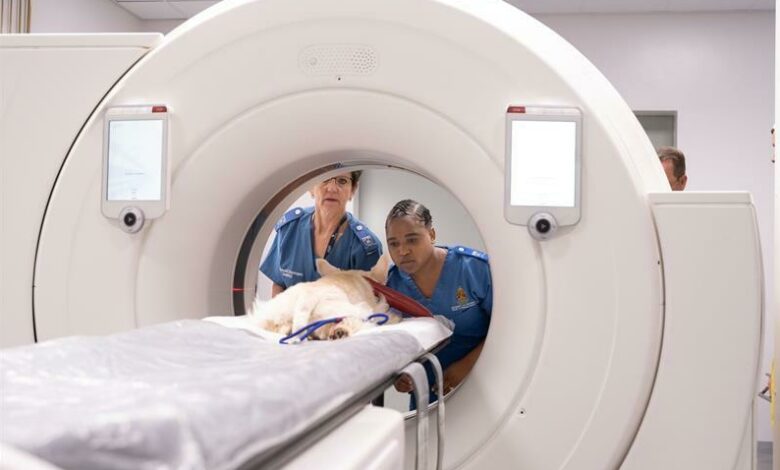
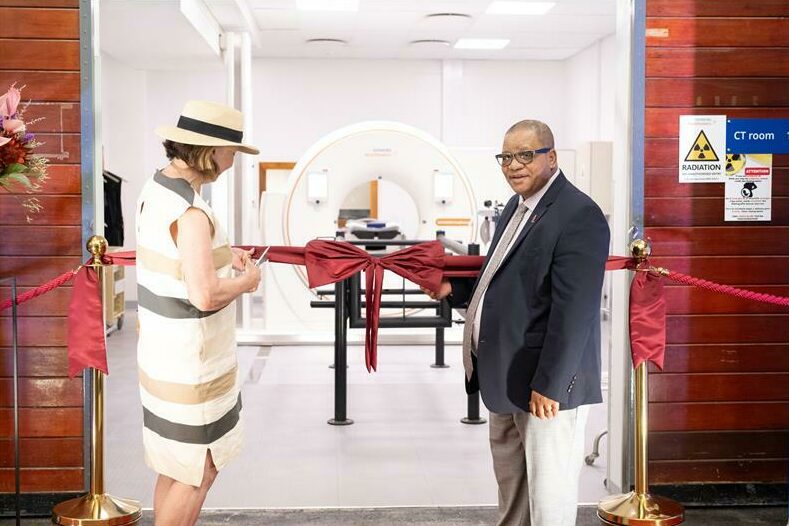
The veterinary school in South Africa and the second oldest on the continent recently unveiled the largest CT scanner ever used in veterinary practice in South Africa.
This ground-breaking move by the University of Pretoria (UP) Onderstepoort Veterinary Academic Hospital (Ovah) was made possible by a generous R13-million Roy McAlpine charitable foundation donation.
Given the UP Faculty of Veterinary Science is the sole veterinary school in the country and the second oldest on the continent, the state-of-the-art scanner will undoubtedly advance the training of veterinary specialists, clinical research capabilities and innovation at the university.
Part of the donation was used to make some changes to the existing CT room to accommodate the new and bigger Siemens Somatom Confidence 64 slice CT scanner with a sliding gantry (a gantry that runs on a set of rails).
To perform a CT scan, to visualise an entire area of the body (head and neck), the patient usually is placed on a table that moves through the gantry, which works well on smaller animals such as dogs.
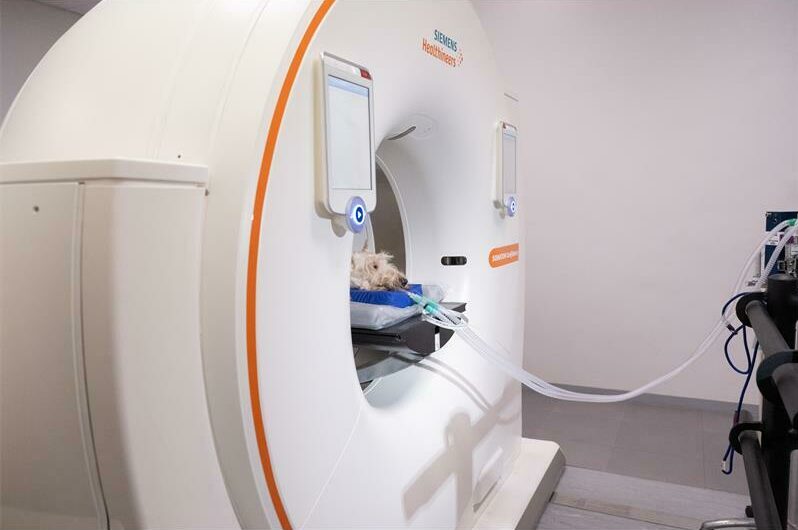
To allow CT scans of the limbs as well as the head and neck of large animals like horses or buffalos, a CT scanner with a sliding gantry is required, allowing the gantry to move along the body of the animal, either in standing position or on a static table.
“As a referral and research centre, the faculty and the Ovah have to be at the forefront of diagnostics,” said Professor Themba Mosia, UP interim vice-chancellor and principal.
“A certain subset of cases are dependent on CT (computed tomography) for time and cost-effective diagnosis of suspected conditions. These include but are not limited to, small animals with suspected nasal pathology, equine cases with suspected dental and sinus pathology, and small animals with intra-thoracic and -abdominal vascular anomalies.”
Mosia said the centre is grateful and commends the foundation for helping “us purchase a machine that allows us to obtain high-quality, diagnostic images at a reduced scan time”.
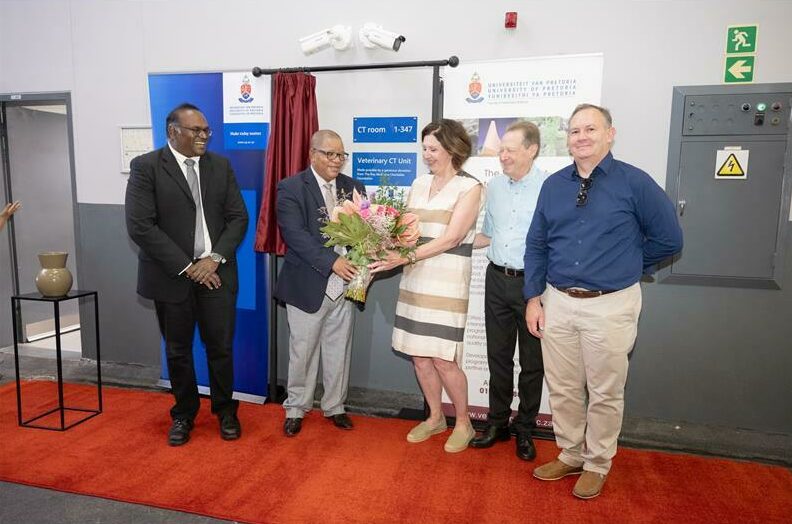
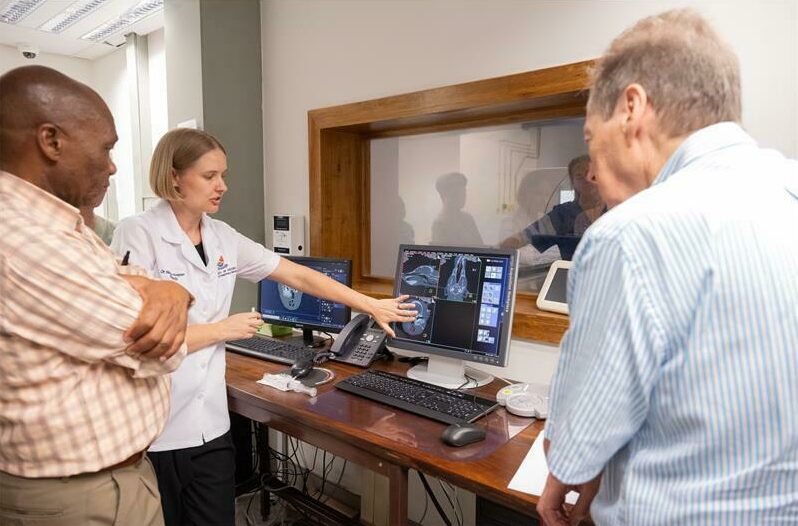
“It increases throughput and improves diagnostic accuracy to the benefit of the patient, client and clinical team.”
Scotland-born foundation founder Roy McAlpine said the donation is an example of how public-private partnerships can play an important role in enhancing educational and other key institutions.
“The importance of protecting our environment and wildlife for future generations cannot be underestimated,” McAlpine said.
He said he was fortunate to live in this country throughout his adult life.
“It has given me a wonderful life for which I am very grateful. In founding this foundation, my aim was, and remains, to give something back.”
Faculty dean Prof Vinny Naidoo said imaging has been core to what modern training facilities do. So, the generous donation was an opportunity to advance to the next level of diagnostic imaging, especially since Ovah is the only veterinary facility in Africa with such advanced equipment for both patient care and specialist training.
The faculty has been training veterinarians since 1920, with the class of 2024 being the 100th to graduate with a BVSc degree.
“To support the training of veterinarians and the subsequent need for veterinary specialist services like surgery, internal medicine, anaesthesiology and radiology – as animal care needs in the country advanced – the university developed a tertiary care hospital that can compete favourably with any medical hospital in the country,” Naidoo said.
ALSO READ: Residents of Plastic View receive lifesaving gadgets to fight fires
Do you have more information about the story?
Please send us an email to bennittb@rekord.co.za or phone us on 083 625 4114.
For free breaking and community news, visit Rekord’s websites: Rekord East
For more news and interesting articles, like Rekord on Facebook, follow us on Twitter or Instagram