Tshwane 5% salary rise for councillors awaiting MEC concurrence
A group of 13 Tshwane city councillors voted against an increase of 5% in the salaries of councillors, believing this would place a huge extra burden on the already cash-strapped metro.

Tshwane councillors have given themselves a 5% salary and cellphone allowance increase, however this will only be effected after concurrence by the MEC for Cooperative Governance.
Metro spokesperson Lindela Mashigo explained that the backdating of the payments to July 2024 is done according to the ministerial determination of upper limits of salaries, allowances and benefits of different members of municipal councils, published in Government Gazette no 51419 of October 21, 2024.
This publication notes that the determination should be with effect from July 1, 2024.
He explained that these payments of back pay as well as January salaries will be made after concurrence by the MEC for Cooperative Governance is granted.
Mashigo did not want to mention the amounts budgeted for in this case for salaries, cellphones, car allowances, UIF, medical schemes and pension of the council as a whole and said the 2024/25 budget was compiled considering the city’s revenue sources and the realistic state of collection (cashflow) to ensure that all proposed expenditures are linked to a funding source.
“This can only be determined once concurrence by the MEC is granted.”
The salary increase was provided for in the current financial year but in October 2024, the Gauteng MEC for Cooperative Governance referred it back to the council for review.
Thirteen councillors voted against the increase and 166 in favour during a special meeting on January 14.
This would be the first salary increase for councillors since 2018/2019. In this period, metro staff have received an increase every year except for 2023/2024 and 2021/2022.
Republican Conference of Tshwane councillor Lex Middelberg told Rekord in October 2024 he did not approve the 5% increase for the 2023/4 financial year and a further 5% increase in the 2024/5 financial year for councillors – both backdated.
“The MEC evidently agreed with me that this was excessive and referred the issue back to the council to rescind the 5% increase for the 2023/4 financial year. In the end, the council approved a 5% increase for themselves, effectively halving the 10% increase approved in October last year,” he said.
He said in real terms, on a proper application of the resolution taken in October, councillors would have received about R36 000 in backpay in 2023/4 and R24 000 in 2024/5 from 1 July last year.
This would have been in addition to the R4 000 increase a month to their salary package from January.
Middelberg said he opposed the increase because the metro’s debtor’s book debt was at its highest ever at R11-billion.
“That figure grew by R4-billion year on year, indicating that the taxpayer base is struggling financially to meet their rates and tariffs [bills]. This is no time for increases to councillor [salaries],” said Middelberg.
The other politicians who voted against the increase were members of the Freedom Front (FF) Plus.
“The party is not opposed to an increase for council members, but with the current financial crisis the metro is in, it is not affordable,” FF Plus spokesperson Peter Meijer said.
He said his party was concerned about the amount the metro had agreed to pay towards its Eskom debt.
Tshwane’s finances are still under pressure with Eskom listing the institution as its fourth biggest debtor. By November, when the agreement was made by the order of the court, the metro owed Eskom R6.7-billion.
“If the metro does not comply with the conditions of this court order, Eskom can seize the metro’s bank account as happened with the Emfuleni local municipality. This resulted in Emfuleni not being able to pay salaries or creditors,” said Meijer.
He said his party could not morally or ethically associate itself with any unnecessary expenditure that could land the metro in such a position.
“It also sends the wrong message to residents as there is already a deficit for spending on service delivery,” said Meijer.
The South African Municipal Workers Union (Samwu) called upon the council to display the same enthusiasm by paying workers the outstanding increases of 3.5% and 5.4% and most importantly, refocusing the budget for service delivery.
Samwu spokesperson Donald Monakhisi added: “The energy the council used to approve this increase should be applied to the toiling municipal workers as well as those… facing the financial squeeze due to ever-increasing transport costs, water, lights, and other unavoidable expenses.”
In December 2024, Monakhisi said his union would intensify its efforts to hold the metro accountable for the salary increases owed to workers – 3.5% and 5.4% for 2021 and 2023 respectively.
“As we await the outcome of the Labour Court on this matter, we will pursue the city to the last avenue available to us.”
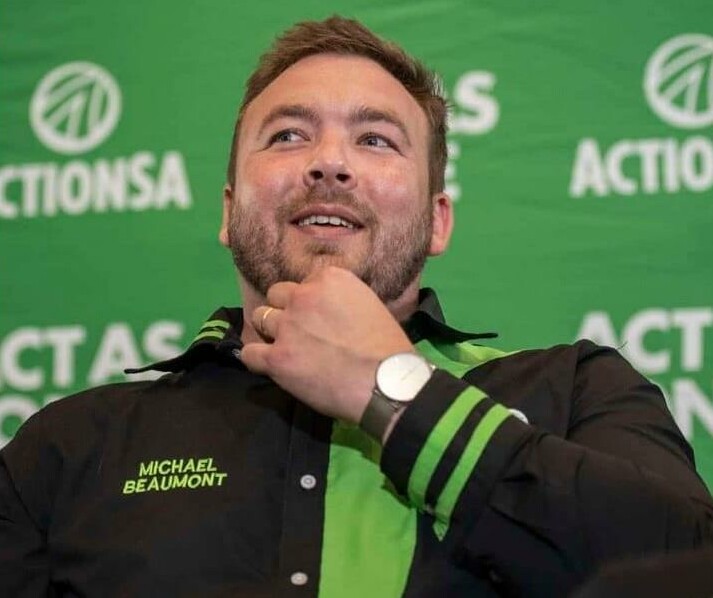
Michael Beaumont, national chairperson of ActionSA, said the increase for councillors was the first in four years and below inflation.
“It has been budgeted for and unanimously supported by the previous administration last year and is being implemented now. Continuing to squeeze councillors financially would be detrimental to the pursuit of effective relationships between better serviced communities and committed councillors.”
Former mayor Cilliers Brink said the DA approved the increase for councillors, because withholding it was never a permanent arrangement.
“In the previous financial year, the municipality saved more than R600-million by budgeting 0% for salary increases. It was a difficult decision that naturally triggered a violent strike, but it was an important part of the city’s financial rescue effort. This allowed a payment agreement to be reached with Eskom, but is of course only one of a series of decisions. As a matter of principle, we also did not pay council members any increases,” he said.
Do you have more information about the story?
Please send us an email to bennittb@rekord.co.za or phone us on 083 625 4114.
For free breaking and community news, visit Rekord’s websites: Rekord East
For more news and interesting articles, like Rekord on Facebook, follow us on Twitter or Instagram or TikTok.