Airport renaming debate pits heritage against transformation
While heritage advocates oppose the loss of the historic name, the metro argues the process recognises the area's original Ndebele landowners, and business leaders warn that economic recovery and investment should take priority over symbolic changes.

A proposal to rename Wonderboom National Airport in Pretoria has ignited a debate between business leaders, heritage organisations, and the metro, with critics arguing that the focus should remain on restoring the airport’s commercial viability rather than changing its name.
The issue gained momentum after the Council approved a public participation process on May 28 to gather the public’s input on a proposal to rename the airport in recognition of the original Ndebele landowners.
The proposal, first submitted in 2018 and resubmitted in 2024, is being considered under the city’s Geographical Names Policy adopted in 2023.
The move has drawn opposition from the Pretoria Sakekamer, which said the airport’s economic challenges should take precedence over a renaming process.
Chairperson Fergus Ferguson said Wonderboom Airport remains one of Pretoria’s most underutilised economic assets despite its strategic location and aviation infrastructure.
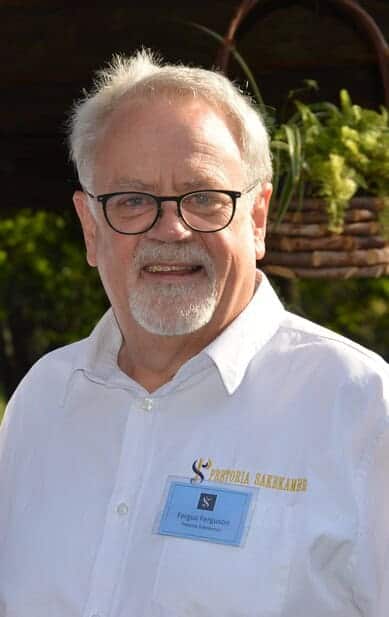
“It has the airspace, the location and, with the right investment, the potential to serve as a cargo hub, a general aviation centre and a regional gateway connecting Pretoria to the rest of the country,” Ferguson said.
He argued that the metro’s attention should be directed toward unlocking that potential rather than pursuing a name change.
“Instead of urgently debating how to unlock this potential, the metro has focused its attention on a renaming proposal that will consume public resources, generate political noise and provide no tangible benefit to Pretoria’s businesses and residents.”
According to Ferguson, the airport’s history of financial losses and operational challenges demonstrates why municipal efforts should focus on recovery.
He referred to a 2016 feasibility study conducted by the University of Pretoria on behalf of the metro, which found that the airport generated annual deficits of between R35-million and R68-million when fuel revenue was excluded.
The study also valued the airport’s infrastructure and facilities at nearly R850-million while highlighting concerns about the sustainability of continued municipal subsidies.
Ferguson said the airport’s operational status suffered a significant setback in 2019 when the South African Civil Aviation Authority downgraded Wonderboom from a Category 5 airport to a Category 2 airfield.
“The licence downgrade had immediate practical consequences. A Category 5 airport can accommodate significantly more complex aviation operations and scheduled commercial flights. A Category 2 airfield cannot,” he said.
“With a single decision, caused not by market forces but by internal mismanagement, Wonderboom Airport lost the operational status that made it commercially viable for aviation operations.”
While acknowledging improvements achieved through a turnaround strategy, Ferguson said the airport continues to operate at a loss and still has outstanding recovery objectives.
He maintained that investors and aviation operators focus on operational capacity rather than branding.
“When businesses evaluate whether to establish logistics operations near Wonderboom Airport, or whether to use it for cargo or charter services, they do not ask what the airport is called. They ask whether the airport has regained its Category 5 licence, whether the infrastructure meets operational requirements and whether there is stable management in place.”
The chamber is advocating for a public-private partnership to revitalise the facility.
Ferguson said the 2016 feasibility study recommended a long-term lease agreement with a private operator that could bring the expertise, capital investment, and commercial incentives needed to make the airport profitable.
“This is the transaction that the Pretoria Sakekamer is urging the city to pursue. A properly structured public-private partnership can restore the airport to Category 5 status, attract private investment, reintroduce scheduled passenger services and develop Wonderboom into a dedicated cargo hub.”
He added that such a strategy could also stimulate economic growth in northern Pretoria and create sustainable employment opportunities.
The proposal has also drawn criticism from the Federation of Afrikaans Cultural Associations (FAK), which argued that the airport’s name forms part of Pretoria’s cultural and historical heritage.

FAK national head of Community, History and Ad Hoc-projects, Barry Müller, said the organisation was concerned by what it views as a continuing trend of historical place names being replaced.
“Few things weigh as heavily on a community as when a town, street or even an airport loses its name. Not because the name itself is sacred, but because a name carries stories,” said Müller.
“It is not merely an administrative decision. It is a line drawn through the history, memory and identity of a community.”
He noted that Wonderboom has been associated with Pretoria’s history for almost nine decades and derives its name from the famous fig tree in the Wonderboom Nature Reserve.
“The name refers to a unique natural and historical heritage that has long been associated with the area. Changing such a name is not a neutral administrative action. It is an intervention in the historical character of a place.”
He said the FAK believes preserving historical place names does not amount to rejecting transformation.
“The preservation of historical place names is not a rejection of transformation. It is an acknowledgement that a country’s history consists of many stories,” he said.
He also questioned the financial implications of a renaming process.
“Funds spent on new signage and administrative amendments could be better utilised for improving service delivery, infrastructure and the preservation of existing heritage sites.”
The metro, however, has defended the decision to initiate a consultation process, emphasising that no final determination has been made.
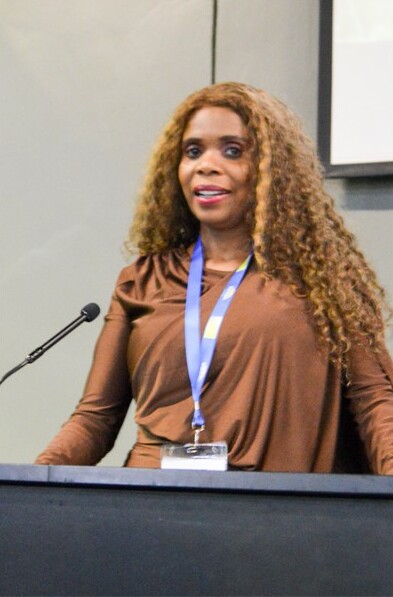
MMC for Economic Development and Spatial Planning, Sarah Mabotsa, said the process is intended to allow residents and stakeholders to express their views before any decision is taken.
“The proposal before Council seeks to honour the Ndebele nation as the original landowners of the area on which the airport is situated,” Mabotsa said.
She explained that the proposal falls within the metro’s naming policy, which allows for the commemoration of individuals, places and events of historical or cultural significance.
“Council has therefore approved the commencement of a public participation process to allow Tshwane residents and stakeholders an opportunity to provide input on the proposal before any final decision is taken.”
Mabotsa said the proposed names submitted as part of the application seek to recognise the cultural and historical significance of the area’s original inhabitants.
The debate now places Wonderboom Airport at the centre of broader questions about heritage, economic development and historical recognition.
While supporters of the renaming proposal view it as an opportunity to acknowledge the area’s pre-colonial history, opponents argue that restoring the airport’s operational performance and economic contribution should remain the city’s immediate priority.
Public participation meetings are expected to be announced in the coming months, after which the Council will consider submissions before making a final decision on the airport’s future name.
Do you have more information about the story?
Please send us an email to bennittb@rekord.co.za or phone us on 083 625 4114.
For free breaking and community news, visit Rekord’s websites: Rekord East
For more news and interesting articles, like Rekord on Facebook, follow us on Twitter or Instagram or TikTok or WhatsApp Channel