Beware of flooded streets, motorists and pedestrians cautioned
Due to the continuous downpour, motorists are cautioned to avoid the low water bridges at the intersection of End and Rabie Streets, and on Smuts Avenue in Centurion, which are currently flooded.
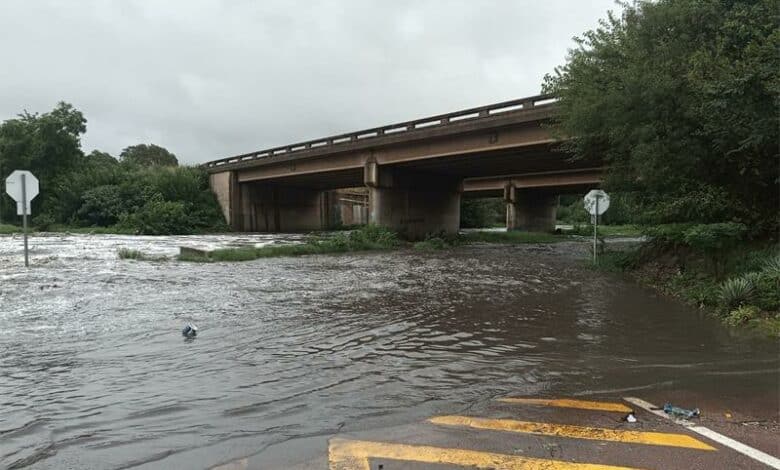
Motorists and pedestrians in Tshwane are urged to exercise caution as persistent heavy rainfall continues to batter the region, bringing with it safety risks and disruptions.
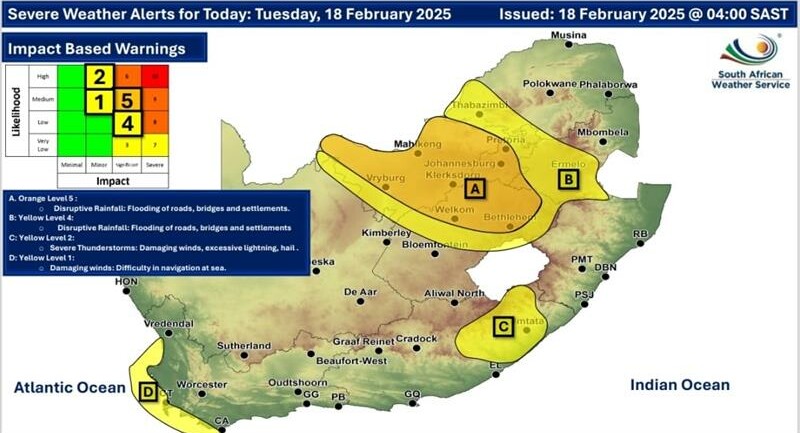
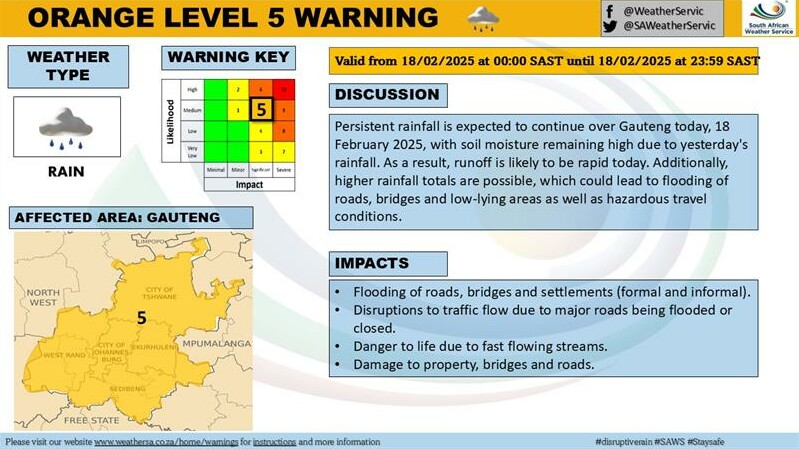
Tshwane Emergency Services (EMS) has issued a warning following an Orange Level 5 alert from the South African Weather Service (SAWS), indicating disruptive rain over most parts of Gauteng, including Tshwane.
The adverse weather conditions, which have been ongoing since Sunday, February 16, are expected to persist until Wednesday, February 19.
Due to the continuous downpour, motorists are also cautioned to avoid the low water bridges at the intersection of End and Rabie streets and on Smuts Avenue in Centurion, which is currently flooded.
Motorists and pedestrians in Tshwane are urged to exercise caution as persistent heavy rainfall continues to batter the region, bringing with it safety risks and disruptions.
Tshwane Emergency Services (EMS) has issued a warning following an Orange Level 5 alert from the South African Weather Service (SAWS), indicating disruptive rain over most parts of Gauteng, including Tshwane.
The adverse weather conditions, which have been ongoing since Sunday, February 16, are expected to persist until Wednesday, February 19.
Due to the continuous downpour, motorists are also cautioned to avoid the low water bridges at the intersection of End and Rabie streets and on Smuts Avenue in Centurion, which is currently flooded.
⚠️ Please avoid this low water bridge.
📍Rabie and End Street, Centurion pic.twitter.com/5wbPFpebAx
— City of Tshwane (@CityTshwane) February 18, 2025
⚠️ Please avoid the low water bridge on Smuts Avenue, Centurion. pic.twitter.com/7LDT0gZ1Rc
— City of Tshwane (@CityTshwane) February 18, 2025
This comes after Tshwane Mayor Dr Nasiphi Moya reported yesterday that the low-water bridges in Region 4, including those in streets like End and Rabie, River and End, Main and Nellmapius, and at the Centurion Hotel were not overflowing.
Relieved to report that low-water bridges in Region 4 – End & Rabie, River & End, Main & Nellmapius, and Centurion Hotel – are not overflowing. Traffic is flowing smoothly.
Ps. Our teams are on the ground, addressing service requests. Please note that some may take longer due to… pic.twitter.com/iRNZ8QTe1x— Dr Nasiphi Moya (@nasiphim) February 18, 2025
Tshwane EMS spokesperson Lindsay Mnguni emphasised that the heavy rains pose significant risks.
“The heavy rainfall has the potential to cause localised flooding in low-lying areas, informal settlements, and susceptible roads.
“It may also lead to mudslides, rockfalls, and soil erosion, which could jeopardise the safety of residents and damage infrastructure.”
Mnguni noted that severe lightning strikes are another concern, as these could result in house or structural fires.
He said motorists should remain alert as major roads may become flooded, leading to traffic disruptions and an increased risk of vehicle accidents due to slippery conditions and poor visibility.
“Power failures and other infrastructure damage are also possible, and some communities may find themselves temporarily inaccessible or cut off,” said Mnguni.
He added that fast-flowing streams and rivers pose a direct danger to people’s lives.
Residents are advised to follow these safety tips to mitigate the risks posed by the heavy rainfall:
– Stay indoors whenever possible and avoid outdoor activities that could expose you to lightning, such as fishing or golfing.
– Avoid seeking shelter under isolated trees or tall objects during thunderstorms.
– Motorists and pedestrians should exercise extreme caution on slippery roads with reduced visibility.
– Move to higher ground immediately if you notice rising water levels.
– Refrain from crossing swollen streams or travelling on bridges and roads in low-lying areas prone to flooding.
Mnguni assured residents the emergency services will continue to monitor weather reports and remain on high alert for any related emergencies.
“Residents are strongly encouraged to report any fire or rescue incidents by calling 107 toll-free or 012 358 6300/6400.”
When reporting an emergency, residents are reminded to remain calm, provide the correct address, and share their contact numbers to allow operators to follow up if necessary.
He added that residents must also stay informed and monitor short-term weather forecasts and any warnings or alerts issued by the SAWS and other credible sources.
Minister of Cooperative Governance and Traditional Affairs (Cogta), Velenkosini Hlabisa has also called on the public to remain alert as heavy rains persist in several parts of the country.
He emphasised that disaster response teams are actively monitoring the situation and remain on high alert to provide assistance where necessary.
“While our dedicated teams are on high alert, the first line of defence is always preparedness.
“We urge the public to not take risks, avoid flooded roads, stay informed, and follow official warnings.
“The safety of everyone during this time remains a priority,” he said.
Hlabisa said the National Disaster Management Centre (NDMC) is co-ordinating response efforts with provincial and local authorities to ensure a swift and effective reaction to emergencies.
“Communities are urged to assist vulnerable individuals, such as the elderly and children, in taking precautions and to delay non-urgent trips to areas affected by heavy rains.”
He urged residents to monitor news broadcasts, radio bulletins, and official social media platforms for real-time updates and alerts.
WATCH:
Do you have more information about the story?
Please send us an email to bennittb@rekord.co.za or phone us on 083 625 4114.
For free breaking and community news, visit Rekord’s websites: Rekord East
For more news and interesting articles, like Rekord on Facebook, follow us on Twitter or Instagram or TikTok.