World Wildlife Day 3 March: Mamelodi researcher’s vulture research boosts population
An expert at the Pretoria Zoo's unwavering dedication and passion have made a substantial impact on the conservation of vultures.
When Sarah Chabangu was growing up in Mamelodi, her big dream was to one day play a role in conservation.
With her first experiment to save a speckled mouse bird from her mother’s garden, she knew she wanted to work to protect animals, pets, and nature.
“My mother loved gardening and I was always around her feet in the garden. Then one day I picked up a speckled mousebird chick and I became so attached to him and raised him on ProNutro,” she said.
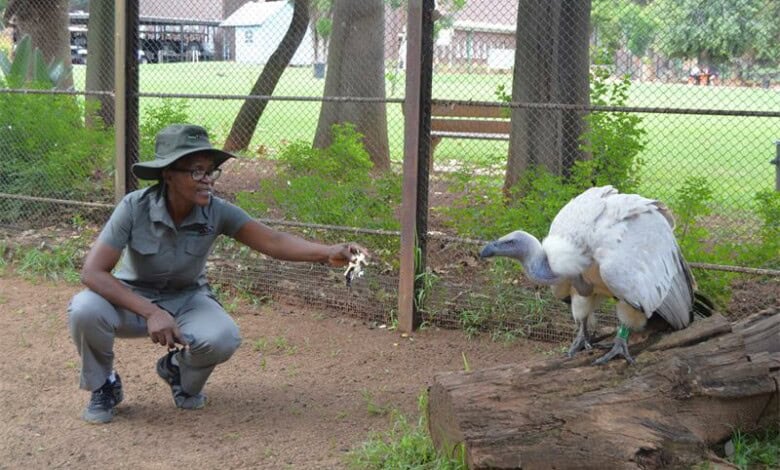
Today, as a respected expert, Chabangu heads the Pretoria Zoo’s Bird Department as a senior curator and has already made a name for herself with the zoo’s vulture breeding programme over the past two decades.
The programme focuses on raising vulture chicks from the endangered Cape vulture with parent pairs in the zoo and releasing them into the wild with the vulture conservation organisation Vulpro.
This initiative is the only one in Africa solely focused on Cape vultures.


According to the latest global assessment, the Cape vulture population in 2021 was estimated to be between 9 600 and 12 800.
Their status with the International Union for Conservation of Nature is vulnerable. This means they face a high risk of extinction in the wild.
Since the inception of the programme in 1996, it has played a critical role in the conservation of the vulnerable Cape vulture (Gyps coprotheres), with Chabangu, her team, and other roleplayers making a significant contribution by supplementing wild populations with captive-bred birds.
Chabangu faced many challenges to reach her current position from the first bird she rescued in her mother’s garden.
“I could not relate to the obvious careers then referring to the nursing, teaching, policing, medical doctors, and lawyers but always knew that I wanted to do something which combine animals, plants, and their environment. Until I came across a book on careers A-Z at the local library through which I discovered the career on Nature Conservationist.”
Starting her conservation studies in Afrikaans at Technikon RSA in the 1990s, she translated her study guides word for word with her mother’s help. “And an Afrikaans dictionary!”

The Cape vulture (Gyps coprotheres), also known as Cape griffon and Kolbe’s vulture, is an Old World vulture in the family Accipitridae. It is endemic to southern Africa, and lives mainly in South Africa, Lesotho, Botswana, and in some parts of northern Namibia.Photo: Elize Parker.
Today, she values this humble beginning, as it taught her the importance of observation and documentation in research.
During her research on vultures, Chabangu also resumed and finished her studies for a B-tech degree in Nature Conservation.
She joined the Pretoria Zoo in 1995 as a volunteer in the Bird section, but had an opportunity to work with chimpanzees, Cape fur seals and African wild cats which formed part of the Bird section as well as rhinos and antelopes in another section in the zoo.
“I received a call back for a position as temporary nature conservator in December 1996 where I was allocated a subsection with vultures and other animals. I was appointed a full time conservator the following year. This is where my work on Cape vulture breeding program started. I searched for information on vultures, did a lot of observations trying to figure out why they were not breeding and also met with the Vulture Study Group chairperson, Gerhard Verdoorn, for input to my observations and recommendations. I developed a “ vulture management plan” in 1997 with recommendations to stimulate the birds to breed.”
With the support of her then curator, Charlotte Bailey, changes were made to the aviary as per her recommendations.
“Then the vultures started breeding and we pulled out eggs for artificial incubation and rearing for a number of years. In 2012/13 we pulled out first eggs to encourage second egg laying to maximise breeding. This initiative presented us with an opportunity to allow pairs to raise first chicks while we artificially hatched and raised second chicks because vulture pair produces only one chick per season or year.”
When the Conservation status of the species changed from vulnerable to endangered in 2015, the zoo collaborated with Vulpro and other stakeholders and successfully released three chicks back into the wild with the aim of supplementing wild populations. In 2024 a second batch of three chicks were released at Shamwari Nature reserve at Eastern Cape.


Vulpro, led by Kerri Wolter, was initially based near Hartebeespoort but now operates from Shamwari Private Nature Reserve in the Eastern Cape.
Wolter told Rekord they are thankful to the Pretoria Zoo for joining forces with them in supporting wild populations through the supplementation of captive bred offspring.
“Allowing the non-releasable birds to continue breeding also contributes to the greater conservation goal of reducing population declines by bolstering wild populations,” said Wolter.
Of the original group of injured birds from the 90s, only one remains today.
Visitors to the zoo may find visiting the vultures sometimes a bit boring, but Chabangu believes they are delightful and enriching to observe.
“We changed the visitors’ perception that vultures are not active outside feeding times through stimulation using environmental enrichment techniques. Today, the public enjoy watching our vultures interacting with different enrichment items including watermelons and jelly cakes.”
She has often shared her expertise with overseas zoos during international visits and ensures that the birds under her care are entered in the National Stud Book.
She remains committed to continuing the conservation programme sustainably, with a focus on returning the releasable birds to a habitat in which they will be free.
“These birds belong in the wild.”
– Click here to see a video of the Cape vultures at the Pretoria Zoo:
Do you have more information about the story?
Please send us an email to bennittb@rekord.co.za or phone us on 083 625 4114.
For free breaking and community news, visit Rekord’s websites: Rekord East
For more news and interesting articles, like Rekord on Facebook, follow us on Twitter or Instagram or TikTok.