Residents plead for action on deteriorating Laezonia roads
Safety, damage to vehicles, and difficulty accessing properties are among some of the biggest concerns for residents in the area.
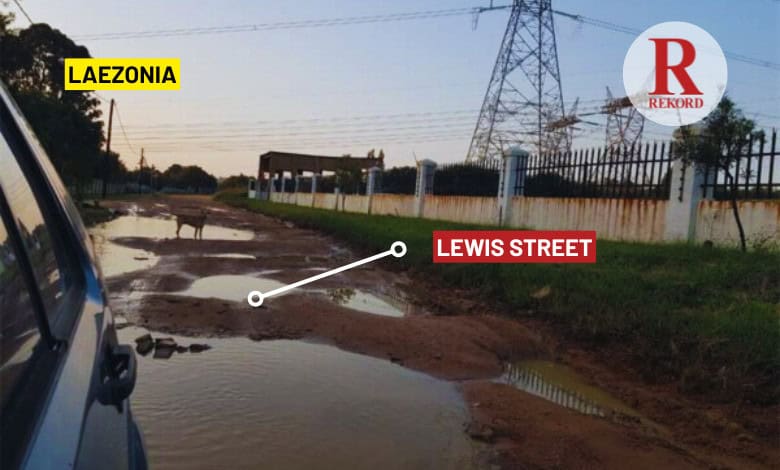
Residents of Laezonia are pleading with the Tshwane metro to urgently address the severely deteriorated roads in the area, citing growing safety concerns, damage to vehicles, and difficulty accessing homes.
Natalie Plociennik, a resident who frequently drives along Francina Street, highlighted that while grading had begun in informal settlements, the roads most critical to her access, including Koedoe Road and Rudie and Francina streets, remain untouched.
She said there has been no evidence of grading on these streets since early 2024.
“Francina is slightly drivable, but you have to be really cautious, while Koedoe is completely unsafe,” she said, adding that she currently avoids Koedoe entirely due to its hazardous condition.
Plociennik described driving as stressful and the roads as difficult to navigate, especially as a single woman concerned about safety after dark.
“Getting stuck in a ditch after daylight hours would be a safety concern,” she said.
She also noted damage to her car from the large holes scattered across the roads and emphasised the risk they pose to other motorists.
While emergency services have not yet been needed at her home, she confirmed that her security company experiences delays navigating the poor roads.
“Some residents have been trying to patch the roads, but it’s getting too much,” she added.
Plociennick also revealed that many now drive along the verges of Alleta Street to avoid large holes.
She believes that as taxpayers, the roads that residents rely on should be properly maintained.
Residents also claim that the metro last graded Bodley Road on February 18, while Rudie, Koedoe, and Francina were last graded by a private company on March 7.
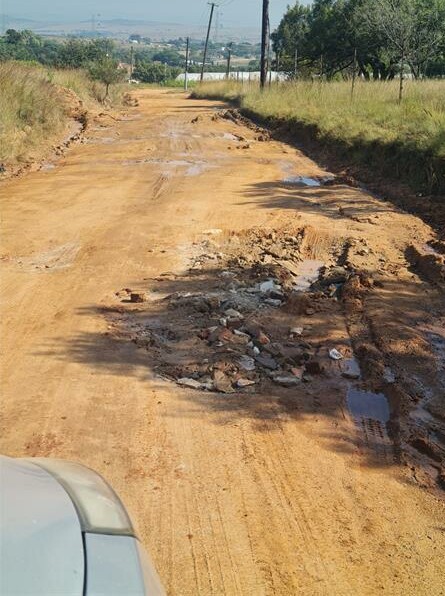
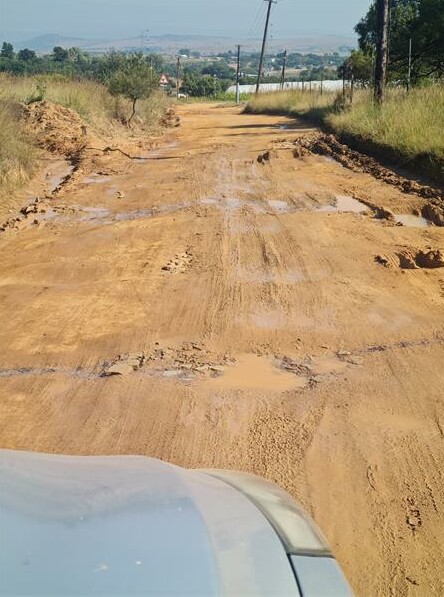
These latest complaints come in the wake of previous appeals to the municipality.
In March, the Chairperson of Environment and Agriculture Management, Hluphi Gafane, acknowledged that unpredictable and extreme weather had severely affected infrastructure across Tshwane.
“The relentless heavy rainfall has led to widespread damage to infrastructure and environmental challenges that require immediate attention,” she stated.
Gafane identified Laezonia as one of the areas hardest hit by excessive water saturation and said a resident’s complaint to her office triggered an on-site inspection.
“With the support of MMC Kholofelo Morodi, a dedicated team was mobilised to assess the damage,” she said.
During the visit, the urgency for intervention became evident, and although the initial repair timeline was set at two weeks, the response was accelerated.
“Within just three days, the team returned to Laezonia to level and rehabilitate the affected roads,” Gafane said.
She praised the Region 4 Roads Department for swift action and expressed gratitude for community collaboration.
“Their efficiency and commitment exemplify the positive impact that can be achieved when government and communities work together,” she said.
However, at the time, residents still believed that those efforts had fallen short.
In a previous interview with Rekord, Elke Haas stated that gravel roads had only been graded once this year.
“The heavy rain has rendered most of the roads utterly inaccessible,” she said.
She explained that residents often had to tow cars out of the mud themselves.
Haas criticised the metro’s grading approach, noting it ignored natural water run-off paths and even exposed underground cables.
“The grading has resulted in a flat, not slanted, surface that encourages water to stand instead of flow,” Haas added.
Another resident, Liz Pattison, recalled a time when she could not drive safely in the area for weeks.
“The road is passable right now, but it’s deteriorating rapidly,” she said.
She also mentioned that a security officer patrolling an Eskom servitude in the area could not access the entrance because it was flooded.
“It’s very concerning that security officers can’t even do their jobs due to the poor condition of the roads, which often become flooded,” she stated.
Annelicia Goss expressed her discontent, stating that the roads are not drivable.
“There is constant sliding and a risk of getting stuck when driving.
“Residents are now dumping garden refuse on the roads, making it much more dangerous to drive on.
There are also major security risks if something were to happen at night,” she warned.
Goss called for a permanent solution, suggesting that the roads need to be tarred, similar to those in nearby Mnandi and Gerhardsville.
“Just scraping no longer works. Not everyone can afford a large vehicle to get in and out of Laezonia.”
The metro had yet to provide a comment by our time of publication.
Do you have more information about the story?
Please send us an email to bennittb@rekord.co.za or phone us on 083 625 4114.
For free breaking and community news, visit Rekord’s websites: Rekord East
For more news and interesting articles, like Rekord on Facebook, follow us on Twitter or Instagram or TikTok.